“Let’s break down what’s happening with U.S. Corporate Profits 2025 and why investors are paying close attention to every quarterly report.”
Q1 2025 Reality Check for U.S. Corporate Profits 2025”
Alright, let’s cut through the corporate jargon and get into what’s really going on with U.S. profits lately. If you’ve been watching the headlines, you know it’s been a wild ride, recoveries, faceplants, the whole rollercoaster. Investors and analysts? They’re sweating over every new report because the numbers have been swinging like a caffeinated pendulum. Here’s the lowdown on late 2024 through the messy start of 2025.
Q4 2024 Recovery and U.S. Corporate Profits 2025. Q4 2024: And We’re Back!
“Q2 2025 shows promising signs, with several sectors stabilizing—good news for U.S. Corporate Profits 2025 overall.”
“Sector Insights for U.S. Corporate Profits 2025”
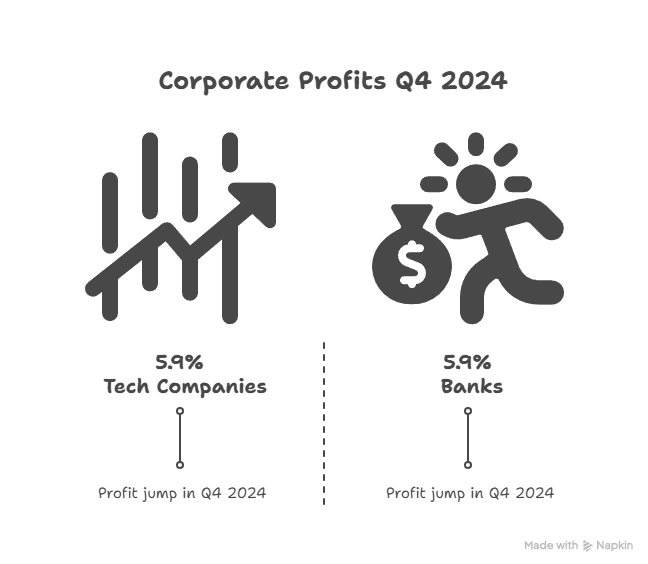
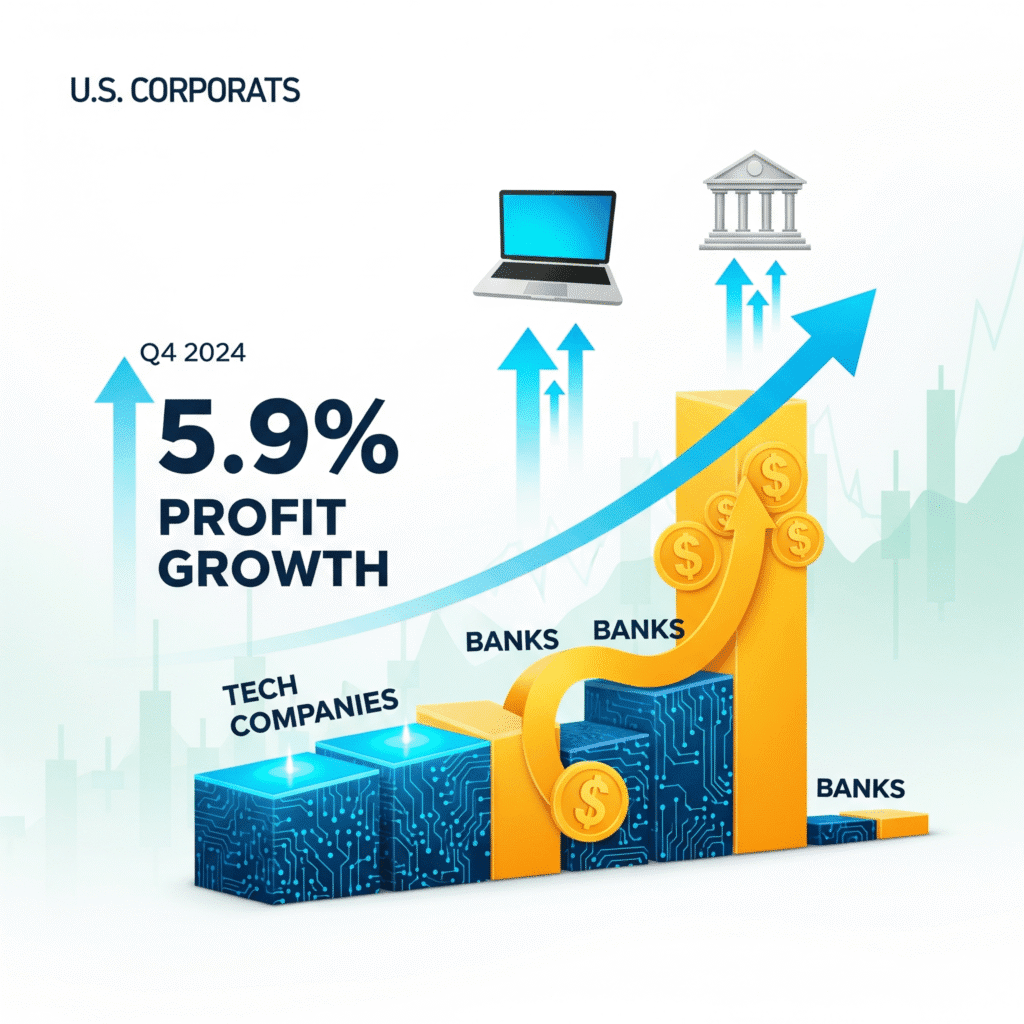
So, Q4 2024? Absolute comeback energy. After a meh Q3, companies basically said, “Hold my beer,” and profits jumped 5.9% that’s $3.3 trillion, which, yeah, is a lot of zeroes. Tech companies were crushing it thanks to everyone obsessing over AI and cloud stuff. Banks also made a killing on trading and fees (no surprise there), and digital services kept raking in cash.
The context? The economy itself was humming along with GDP up 2.4%, shoppers splurging over the holidays, and the government tossing money into roads and bridges. Basically, the vibes were good, and it showed up in the numbers.
“Tech companies, especially those leveraging AI, continue to dominate profits—just like Nvidia AI Financial Growth 2025 shows, where AI-driven strategies significantly boosted earnings.”
Q1 2025 Reality Check for U.S. Corporate Profits 2025
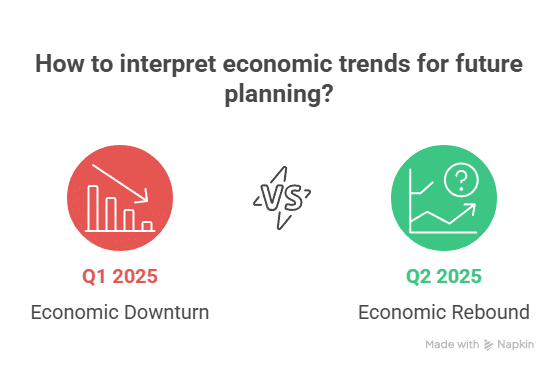
But then Q1 2025 comes swinging in like a wrecking ball. Profits slipped 3.6% (down $118 billion, give or take). Ouch. Manufacturers got hammered by higher costs and snarled supply chains. Retailers? Suddenly people weren’t spending as much. Maybe too many folks maxed out their cards in December. Energy companies got whiplash from wild commodity prices. Altogether, stuff just slowed down.
The economy actually shrank a bit GDP dipped 0.2%. Imports were up, but people and companies started pinching pennies. Analysts called it “unusually weak,” which is finance-speak for “yikes.”
Q2 2025: Maybe Not a Total Disaster?
Now, for some optimism (don’t get used to it): Q2 is showing some rebound signs. GDP’s back up, growing at a 3% clip. Inflation’s cooling off too—the PCE price index dropped to 2.1% from 3.7%. That gives companies a little breathing room on costs.
Full earnings aren’t out yet, but the vibes are better. Sectors are stabilizing, companies are tweaking prices, and the worst seems to be over (well, for now).
“Economic factors like interest rates also play a major role in corporate profitability, as highlighted in Mortgage Rates Rise 2025 Fed Decision, which explains how Fed policies impact borrowing costs and business margins.”
Sector Gossip
Tech’s still the cool kid at the lunch table. AI, cloud, and security are keeping those margins fat. Finance? Banks are still making bank, literally, off trading and investment deals. Manufacturing and retail are grinding through higher costs and weird consumer trends. Lots of focus on squeezing out efficiency wherever they can. Energy and materials? Total mixed bag. If you bet on the right commodities or hedged your risks, you’re probably sleeping okay. If not uh, good luck.
What’s Lurking on the Horizon?
Trade drama with China or whoever is always in the background, ready to mess up supply chains and input costs. The labor market’s another headache: unemployment’s still low, but job growth is crawling, and wages keep nudging up. That’s a tricky balance for companies that need a lot of workers.
Even though inflation’s cooled off a bit, it’s still lurking around like an unwanted houseguest. Companies aren’t out of the woods yet.
So yeah, things are better than the Q1 panic, but there’s still plenty to keep the C-suite up at night. Welcome to the new normal.
U.S. Bureau of Economic Analysis (BEA): As the primary source for U.S. economic data, the BEA provides detailed reports on corporate profits, GDP, and other key economic indicators. https://www.bea.gov/data/income-saving/corporate-profits
Quick Hits
- Earnings Rollercoaster: U.S. corporate profits? All over the place lately. It’s like the economy sneezes and earnings catch a cold. Some sectors get whacked harder than others.
- Sector Winners & Losers: Tech and finance? They’re cruising, steady as ever. Meanwhile, manufacturing, retail, and energy are in the trenches fighting through all kinds of mess.
- Watch the Signs: Stuff like GDP growth, inflation, and what’s up with jobs? All that jazz gives you a heads-up on how companies are actually doing or about to do.
- Play It Smart: The companies that survive the chaos? They’re the ones that keep shaking things up innovating, diversifying, trimming the fat. Playing it safe is a fast ticket to “meh” profits.
Federal Reserve Economic Data (FRED): This extensive database from the Federal Reserve Bank of St. Louis offers historical data on thousands of economic time series, including corporate profits. It’s a great tool for analysts and investors.
FAQs Because People Always Ask
1. So, why’d U.S. corporate profits dip in Q1 2025?
Short version: people were holding onto their wallets, input costs kept climbing, and sectors like manufacturing and retail were basically on a rollercoaster (not the fun kind).
2. Which sectors are actually winning in 2025?
Tech and finance are killing it thanks to the AI gold rush, everyone is glued to digital everything, and wild trading action. The rest? Eh, not so much.
3. Does GDP growth really matter for profits?
Big time. When the economy’s on the up, people spend more, invest more, companies rake it in. But when things slow down? Yeah, profits shrink, and nobody’s happy.
4. Should companies freak out about inflation?
If they can’t jack up prices? Heck yeah. Inflation eats those margins for breakfast. Good news: it cooled off a bit in Q2 2025, so there’s some breathing room. For now.
5. What should investors actually pay attention to?
Don’t just stare at the headlines. Dig into sector trends, trade rules, job market vibes, and obviously upcoming earnings reports. That’s where the real story’s hiding.