“The fast food industry 2025 faced challenges like inflation, labor costs, and shifting consumer tastes.”
The 2025 Fast Food Industry: Challenges, McDonald’s Rebound, and What’s Next
Early 2025: Challenges in the Fast Food Industry 2025
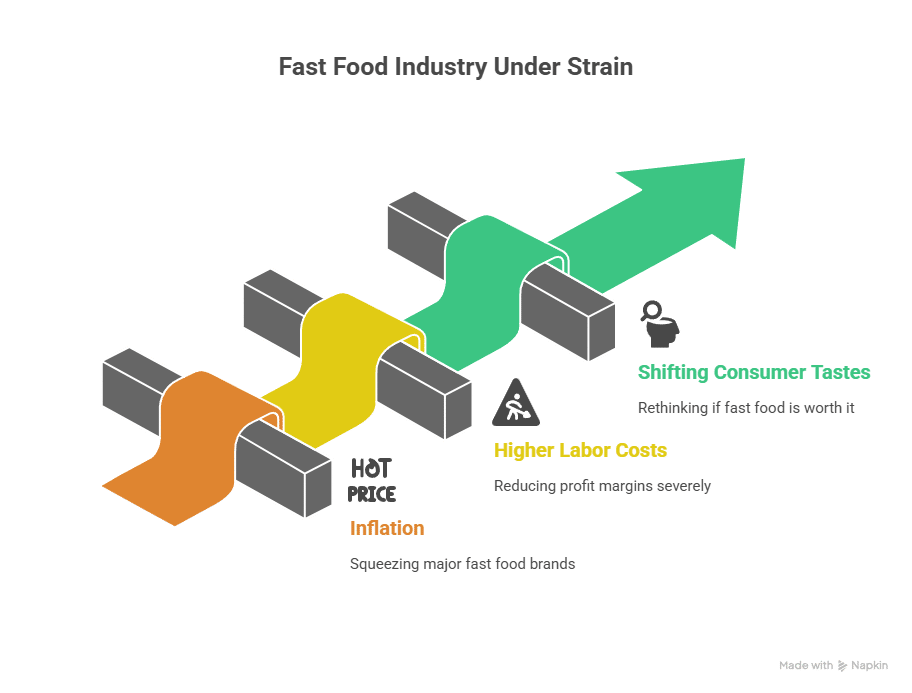
Here’s the deal if you want a business take, let’s strip away the snark and shoot straight. At the start of 2025, the U.S. fast food sector was under real strain. Sales were down, stores were closing, and consumer tastes were shifting. Major brands McDonald’s, Subway, you name it were squeezed by inflation, higher labor costs, and people rethinking whether fast food was worth the money. That old “value meal” suddenly felt a lot less like a value.
For a deeper understanding of how market trends affect consumer spending, check out our analysis on the May 12th market rally and its impact on today’s economy.
The Issues Were Clear
- Menu prices jumped.
- Younger consumers leaned toward healthier, fresher food—think fast-casual, not fast food.
- Labor was tough to find and more expensive to keep.
- Everyone was throwing around coupons to keep traffic up, which hammered margins.
According to McDonald’s Q2 2025 earnings report, the company showed strong signs of recovery with improved sales and revenue growth.
McDonald’s Q2 2025: How They Managed to Pivot,
McDonald’s, though, managed to pivot. By Q2 2025, their numbers turned around. U.S. same-store sales, which had dropped 3.6% in Q1, bounced back up by 2.5%. Global sales grew 3.8%. Revenue hit $6.8 billion, up 5%. Earnings landed above expectations, and net income popped double digits.
What Drove the Turnaround?
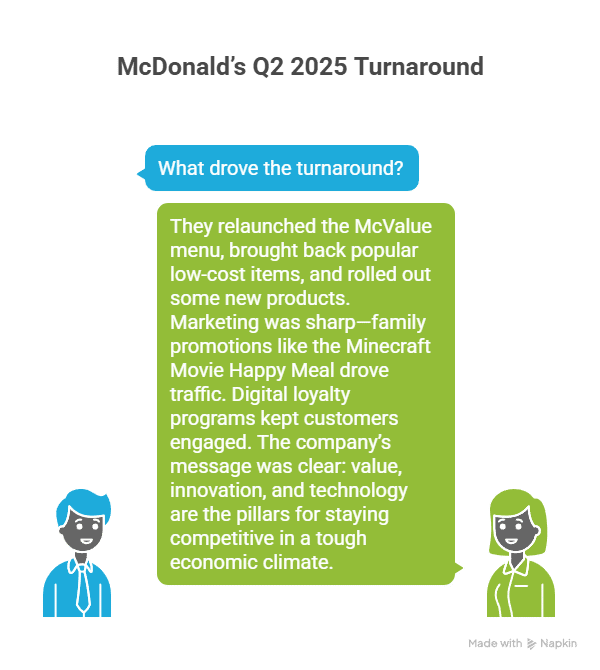
- They relaunched the McValue menu, brought back popular low-cost items, and rolled out some new products.
- Marketing was sharp—family promotions like the Minecraft Movie Happy Meal drove traffic.
- Digital loyalty programs kept customers engaged.
- The company’s message was clear: value, innovation, and technology are the pillars for staying competitive in a tough economic climate.
Industry Lessons: Price Sensitivity, Innovation, and Digital Engagement
Across the industry, the lesson is obvious: Price sensitivity is huge, but innovation and digital engagement are just as critical. Brands that can’t or won’t adapt—Subway, for example, still losing stores—are at real risk, no matter how much they try to modernize.
Mixed Results from Other Chains
- Chipotle posted rare declines as spending tightened.
- Domino’s delivery slowed as customers pushed back on fees.
- Starbucks had fewer visits but higher average tickets.
- Shake Shack saw less traffic but more spend per customer.
To explore how AI is transforming personal finance and what it means for investors in 2025, read our article on How AI Is Revolutionizing Personal Finance in 2025.
Why Did the Industry Stumble Earlier in the Year?
- Inflation hit hard, pushing menu prices up 30-50% compared to prior years.
- Consumers got pickier, especially younger ones.
- Everyone was hooked on digital deals, which cut into profits.
- Labor costs just kept climbing.
What This Means for Investors and Franchise Owners
For investors and franchise owners, the Q2 bounce at McDonald’s is a sign that adaptation pays off. Chains need to focus on value, customer experience, and operational efficiency, not just expansion. The brands that innovate on menu and tech will stay relevant. The rest risk falling further behind.
Industry data from Statista’s fast food sector overview provides valuable insights into the broader market trends shaping the fast food landscape in 2025.
What Consumers Can Expect Next
For consumers, expect more app-based discounts, loyalty rewards, and fresh menu items—assuming you’re willing to jump through a few digital hoops to get the deals.
Bottom Line
The fast food sector isn’t out of the woods, but there’s a path forward for those who adapt quickly. In this environment, standing still is not an option.
Looking Ahead: What’s Next for the Fast Food Industry 2025
Let’s not kid ourselves—the fast food landscape is shifting, fast. To stay in the game, brands need to:
- Keep menus evolving. Balance healthier options with good value, but don’t be afraid to get creative.
- Get sharper with pricing—think bundles and promos that actually make sense for today’s wallet-conscious customer.
- Go all-in on digital. If you’re not meeting customers where they are on their phones and at their doors—you’re losing ground.
- Rethink store formats. Smaller spaces, more drive-thrus. Convenience is king.
- Actually connect with the communities you serve, instead of just mailing it in.
Final Thought on Adaptation
Bottom line? Brands willing to pivot and move quick will stay relevant. The rest? They’ll fade out.
In Summary: Staying Resilient in a Tough Market
“The fast food industry 2025 shows that adaptability and innovation will determine who thrives.”
Let’s be honest, 2025 started rough for the fast food world. Some folks thought the industry was bulletproof—turns out, not so much. But then you see results like McDonald’s Q2 earnings, and it’s clear: smart value plays, fresh ideas, and a focus on what customers actually want can turn things around.
Whether you’re putting money into these brands, running a franchise, or just grabbing lunch on the go, adaptability is going to separate the winners from the losers. Fast food isn’t leaving the American table anytime soon, but staying relevant is going to take real hustle. Evolve or get comfortable losing market share it’s as simple as that.
Frequently Asked Questions (FAQs)
1. Why did the fast food industry struggle at the beginning of 2025?
The industry faced several challenges including rising menu prices due to inflation, shifting consumer preferences toward healthier fast-casual options, labor shortages and higher wages, plus heavy discounting that squeezed profit margins.
2. How did McDonald’s manage to reverse its sales decline in Q2 2025?
McDonald’s relaunched its value menu, introduced new products, ran effective marketing campaigns like the Minecraft Movie Happy Meal, and boosted customer engagement through digital loyalty programs.
3. Are other fast food chains showing similar signs of recovery?
Results are mixed. While McDonald’s posted strong gains, chains like Subway continue to lose stores, Chipotle saw rare sales declines, and others like Starbucks and Shake Shack have varied traffic and spending trends.
4. What role does digital technology play in the fast food industry’s future?
Digital ordering, app-based discounts, and loyalty programs are crucial for attracting and retaining customers, helping brands compete in an increasingly competitive and price-sensitive market.
5. What can consumers expect from fast food brands in the near future?
Consumers should expect more value-driven deals, fresh menu items, increased digital ordering options, and a focus on convenience like drive-thru expansions, often requiring app engagement to access the best offers.