🎧 Prefer listening? If you’d like to hear a two-person discussion on How AI Is Revolutionizing Personal Finance in 2025, click here to play the podcast.
Introduction: “AI in Personal Finance 2025”
“AI in personal finance 2025 is transforming how we budget, invest, and protect our money.”
How AI is revolutionizing personal finance in 2025 is changing the way people manage money—through smarter budgeting tools, AI-driven investments, and fraud detection.
In 2025,AI in artificial intelligence (AI) isn’t just powering tech giants and space exploration—it’s changing how ordinary people manage their money. From budgeting apps that learn your habits to AI-powered investment advisors, the financial world is entering a new era of automation, personalization, and smart decision-making.
AI in personal finance is more than a buzzword. It’s a real-world solution that simplifies complex decisions, minimizes human error, and maximizes financial outcomes. In this article, we explore how AI is transforming personal finance and how you can harness its power to secure your financial future.
The future of AI in personal finance is moving beyond basic budgeting and into investing, debt planning, savings automation, and income growth.
Smart Budgeting: AI in Personal Finance 2025: The Big Changes Ahead
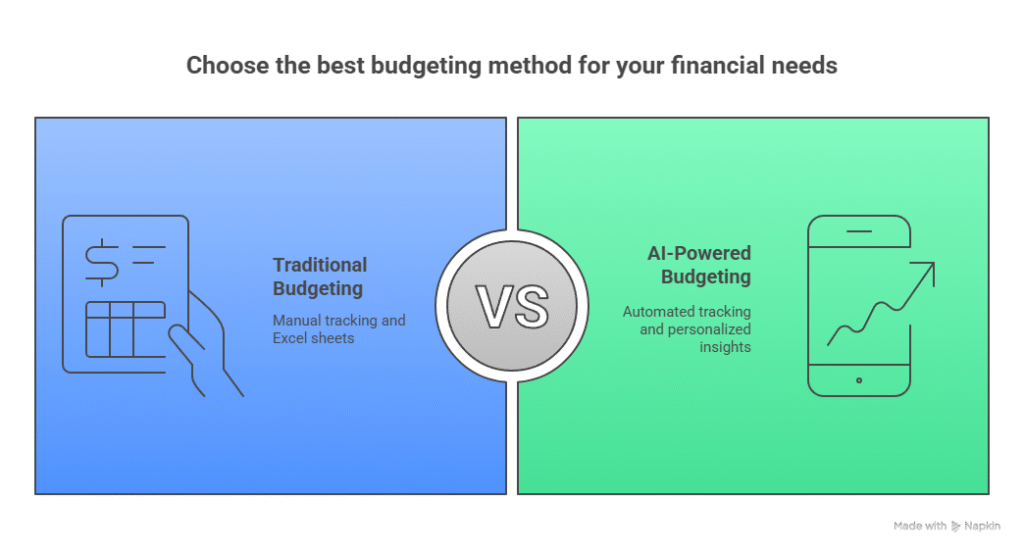
Gone are the days when budgeting meant manually updating Excel sheets. Today, apps like Cleo, YNAB (You Need A Budget), and Mint use AI to automatically categorize spending, predict future expenses, and offer customized savings tips.
- Example: Cleo uses AI-powered chat to interact like a financial assistant. Ask, “How much did I spend on coffee this month?” and Cleo will respond instantly with tailored insights.
- Benefits:
- Personalized spending alerts
- Dynamic savings goals
- Real-time financial advice
These tools help users take control of their money by providing actionable insights based on past behavior and future predictions.
Some creators even use explainer video tools like InstaDoodle to visually break down budgeting strategies, making financial literacy easier for first-time investors.
Read for more information on how budgeting works and why it matters in personal finance.
2.Key Trends in AI in Personal Finance 2025
Investment decisions can be intimidating, especially for beginners. Enter robo-advisors like Betterment, Wealthfront, and SoFi. These platforms use AI algorithms to recommend portfolios based on your financial goals, risk tolerance, and time horizon.
- Benefits:
- Low fees compared to human advisors
- Automated rebalancing of portfolios
- Tax optimization strategies
According to a 2025 study by Deloitte, 38% of U.S. investors now use robo-advisors, citing convenience and efficiency.
3. AI for Credit Score Monitoring and Improvement
AI tools like Experian Boost and Credit Karma use predictive algorithms to help users track their credit scores and suggest actionable ways to improve them. Some apps even simulate how certain financial decisions—like paying off a loan—will impact your score.
- Why it matters: A higher credit score means better loan terms, lower interest rates, and more financial freedom.
- Bonus: Some tools alert you in real time if there are suspicious activities that could affect your credit.
“Let’s break down how AI is revolutionizing personal finance in 2025 by looking at the most impactful tools available.”
“Fraud detection is another powerful example of how AI is revolutionizing personal finance in 2025 and protecting consumers.”
4. AI in Fraud Detection and Financial Security
AI’s role in fraud detection is crucial. Banks and fintech platforms now use machine learning to detect anomalies in transaction patterns.
- Example: If your card is suddenly used in two countries within an hour, AI can flag this as suspicious and freeze the transaction.
- Benefit to users: Enhanced security without needing to constantly monitor transactions manually.
Cybersecurity is becoming smarter, faster, and more efficient, reducing the risk of identity theft and fraud.
💳 Want to know why younger Americans are saying goodbye to plastic?
Discover why Gen Z is ditching credit cards in 2025 and embracing smarter spending habits — it’s a trend that’s reshaping the future of money!

5. Personalized Financial Coaching via AI Chatbots
Chatbots like Erica (Bank of America), Eno (Capital One), and AI integrations in finance apps act as personal financial coaches.
- What they do:
- Provide reminders to pay bills
- Alert users about unusual spending
- Suggest ways to save money
AI chatbots are available 24/7 and eliminate the need to call customer service for basic financial questions.
6. AI-Powered Tax Filing and Planning “In 2025, AI tools are reshaping how we manage money.”
Tools like TurboTax now use AI to optimize your tax return, scan for missed deductions, and provide live tax advice. AI can analyze your past returns to predict future liabilities and suggest tax-saving strategies.
- Features:
- Audit risk assessment
- AI chatbot to answer tax queries
- Integration with financial accounts for real-time updates
This not only saves time but also maximizes returns and reduces stress during tax season.
7. Future Outlook: What to Expect Beyond 2025
The AI revolution in personal finance is just beginning. Upcoming innovations include:
As AI adoption grows, content creators are increasingly using platforms like InstaDoodle to explain investing, saving, and tax planning through engaging visual storytelling.
- Voice-activated banking assistants (like Alexa but for money management)
- AI that negotiates bills on your behalf
- Hyper-personalized financial products based on lifestyle and behavior
Experts predict that by 2030, AI will handle more than 60% of day-to-day personal finance tasks for U.S. consumers.
“From budgeting to tax prep, how AI is revolutionizing personal finance in 2025 isn’t just exciting—it’s empowering.”
“From smarter budgeting to safer investments, AI is revolutionizing personal finance in 2025 in ways that benefit everyone.”
“Robo-advisors—powered by AI—now manage over $1 trillion in assets, using algorithms for automatic rebalancing, tax‑loss harvesting, and customized portfolio allocations based on your goals and risk profile.” investopedia
Final Thoughts: Embrace the AI Advantage how “AI is revolutionizing personal finance in 2025”
Whether you’re trying to save more, invest smarter, or avoid fraud, AI offers practical, powerful tools that make managing money easier than ever. You don’t need to be a tech expert to benefit. Most of these apps and services are user-friendly, secure, and built to empower users.
For those who prefer visual learning, tools like InstaDoodle can simplify AI finance concepts through short explainer videos
As the digital world evolves, those who embrace these innovations will not only stay ahead financially but also enjoy peace of mind and greater control over their financial journey.
You can also read our blog article on https://pennypowerplay.com/teenager-small-business-story/
Frequently Asked Questions (FAQs)
1. How is AI used in personal finance in 2025?
AI is used in personal finance to automate budgeting, manage investments through robo-advisors, detect fraudulent transactions, offer real-time financial coaching via chatbots, and simplify tax planning. These tools help users make smarter, faster financial decisions with less manual effort.
2. What are some examples of AI-powered budgeting apps?
Popular AI-powered budgeting apps in 2025 include Cleo, YNAB (You Need A Budget), and Mint. These apps analyze your spending habits, predict future expenses, and suggest personalized ways to save money.
3. Are AI financial tools safe to use?
Yes, most AI financial tools are built with strong encryption and fraud detection systems. They’re often safer than traditional methods because they can spot anomalies in real time and alert you instantly about suspicious activity.
4. Can AI help me improve my credit score?
Absolutely. Tools like Experian Boost and Credit Karma use AI to track your credit activity, simulate outcomes of financial decisions, and provide personalized tips to boost your credit score over time.
5. Will AI replace financial advisors completely?
AI won’t fully replace human advisors, but robo-advisors are becoming more popular for basic investment management. They offer lower fees, automated rebalancing, and personalized recommendations—making them ideal for many users, especially beginners.