“🎧 Listen to this article: Master Your Money in 2025 with the Powerful 70/20/10 Budget Rule — a simple guide to smarter budgeting this year.”
70/20/10 budget rule — it’s more than just a trending finance term in 2025. It’s a simple, powerful money management strategy that’s helping Gen Z and millennial take control of their finances. Whether you’re living paycheck to paycheck or aiming to build long-term savings, this rule can transform how you budget.
How the 70/20/10 Budget Rule Works in 2025
Let’s be real – budgeting sucks. You start with good intentions, but by the second week, you’re ordering takeout and telling yourself “I’ll do better next month.” Sound familiar? That’s exactly why so many people are switching to the 70/20/10 rule this year.
Many young Americans are combining the 70/20/10 budget rule with emotional saving strategies like revenge saving to take back control of their finances in 2025.
I learned this the hard way. Last January, after my third failed attempt at using a budgeting app, my friend Sarah (a financial coach) sat me down and said: “You’re making this too complicated. Just try 70/20/10 for three months.”
Skeptical but desperate, I gave it a shot. Three months later? I’d saved $2,000 without feeling deprived. Here’s how it works and why it might be the solution you’ve been looking for.
Many Gen Z workers are turning to the 70/20/10 budget rule to manage rising living costs and build savings without feeling overwhelmed.
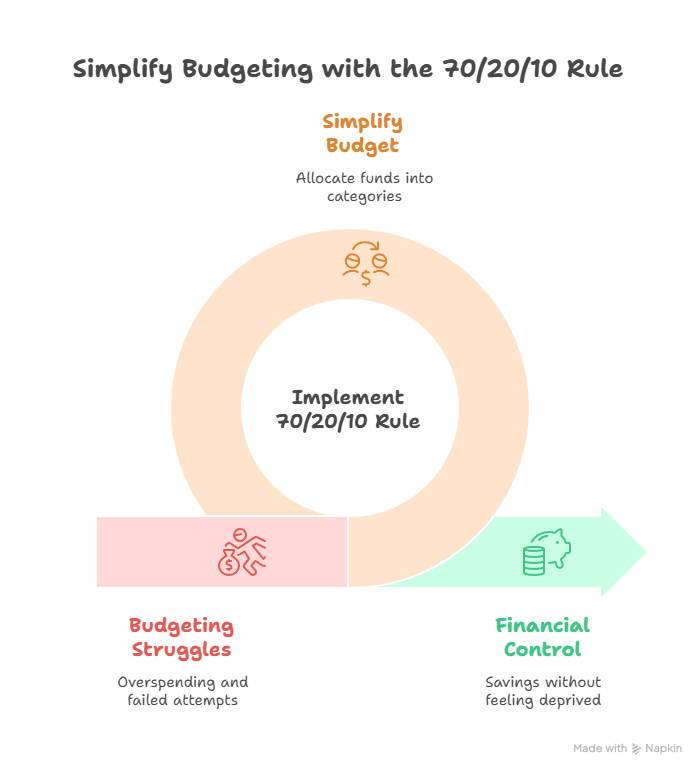
What Exactly Is the 70/20/10 Rule?
It’s dead simple:
70% of your take-home pay goes to living expenses
20% goes to savings
10% goes to investing or debt payoff
No complicated categories. No guilt over occasional treats. Just three buckets that cover everything.
If you’re looking for another simple strategy, the $1$100 Rule helps Gen Z break their budget into manageable pieces, similar to the 70/20/10 method.
Why This Beats Traditional Budgeting
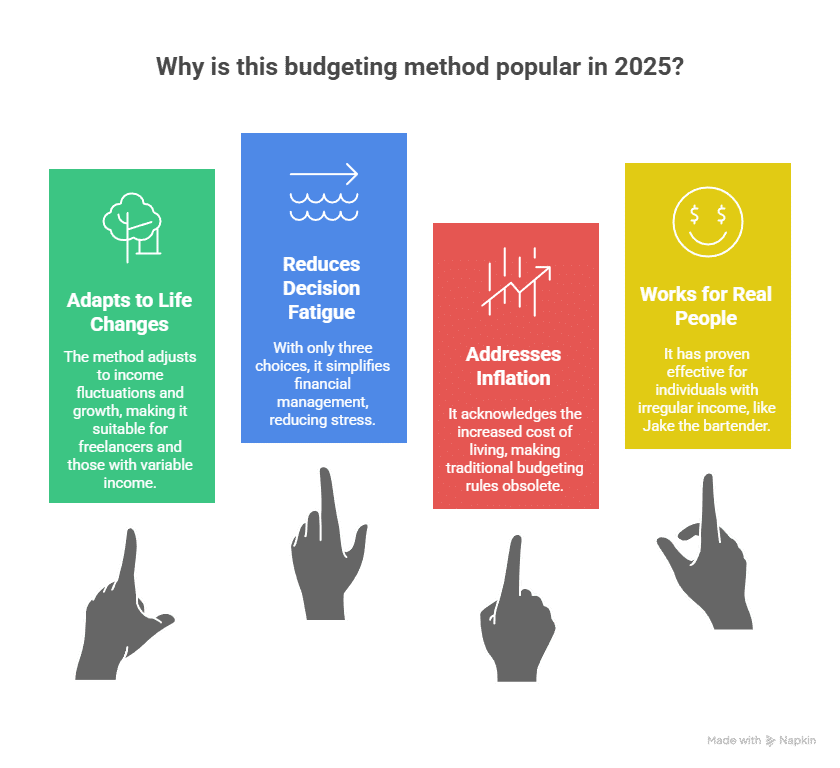
It moves with your life – Got a raise? The percentages stay the same but the dollar amounts grow
It’s freelancer-friendly – Works even when your income changes month-to-month
It reduces decision fatigue – Only three choices to make about your money
Why Everyone’s Talking About It in 2025
Reason 1: Inflation Made Old Budgets Obsolete
Remember when financial experts said to spend no more than 30% on rent? In 2025, that’s laughable for most of us. The 70/20/10 rule acknowledges reality – sometimes necessities take up most of your paycheck, and that’s okay.
Reason 2: We’re All Burned Out on Budgeting Apps
A recent survey found that 72% of people stop using budgeting apps within 90 days. The constant tracking, the guilt trips when you overspend – it’s exhausting. This method? You check in once a month.
Reason 3: It Works for Real People
Take my neighbor Jake, a bartender with irregular income:
“Some weeks I make $1,500, others $800. Before, I’d either spend it all or stress about where every dollar went. Now I just adjust the percentages slightly each month. Last year I saved $5,000 without even trying.”
How to Make It Work For You
Step 1: Find Your Real Numbers
Calculate your average monthly take-home pay. If your income varies:
Add up your last 3 months’ income
Divide by 3
That’s your baseline
Step 2: Set Up Your Buckets
For example, if you bring home $3,500/month:
Category Percentage Amount What It Covers
Living Expenses 70% $2,450 Rent, food, utilities, Netflix, the occasional takeout
Savings 20% $700 Emergency fund, vacations, future goals
Investing/Debt 10% $350 Retirement, stocks, or extra debt payments
Step 3: Automate What You Can
Set up automatic transfers to savings on payday
Use separate accounts for each category (I use Ally Bank’s “buckets” feature)
For investing, try round-up apps like Acorns
Step 4: Be Flexible
Some months you’ll spend 75% on living expenses. That’s life! Just adjust next month. The goal is balance over time, not perfection every 30 days.
Need help starting your own budget? NerdWallet’s guide on how to create a realistic budget is a great place to begin.
Who This Works Best For
1 Middle-income earners ($40k-$90k)
2 Freelancers/gig workers
3 People who hate tracking every purchase
When You Might Need to Adjust
This might not fit if:
Your essential bills eat up more than 70%.
You’re aggressively paying off high-interest debt.
You make enough to invest more than 10%.
In those cases, try a 60/25/15 split instead.
The Psychology Behind Why It Works
Dr. Emily Roberts, a behavioral economist, explains:
*”The 70/20/10 rule works because it creates clear boundaries without being restrictive. People stick with budgets that acknowledge human nature – we need some flexibility and occasional treats.”*
According to the U.S. Bureau of Labor Statistics, household expenses in 2025 continue to rise—making a structured budgeting method more important than ever.
Give It a Try
Here’s my challenge to you: Try this for just one paycheck. See how it feels to:
Cover your bills without stress.
Watch savings grow automatically.
Make progress on debt without deprivation.
The best budget isn’t the most complicated one – it’s the one you’ll actually stick with. And in 2025, with everything feeling so uncertain, that might be exactly what we need.
Over to you: Have you tried percentage-based budgeting? What’s your biggest money struggle right now? Share below – let’s help each other out!
Why the 70/20/10 Budget Rule Still Makes Sense in August 2025
The financial landscape hasn’t softened too much over the past months. Just taking a look at the latest Consumer Price Index report from July 2025 shows that the costs of goods and services for day-to-day expenses—rent, groceries, etc.—continue to weigh down on young earners.
With interest rates still fluctuating and side hustles becoming a practical means for many to cover costs, the 70/20/10 budget rule is one of the only remaining budget systems that offer flexibility to adjust.
Quick Stat (August 2025): According to a Gallup poll, more than 68% of Gen Z and Millennials now use simple percentage-based budgeting instead of the old-fashioned category-based budgeting.
This way of budgeting is gaining even more traction on how people would like to put order without anxiety to their finances, particularly for those managing two ongoing incomes, part-time gigs, or family.
Frequently Asked Questions (FAQs)
1. What is the 70/20/10 budget rule?
The 70/20/10 rule is a simple budgeting method where you divide your after-tax income into three categories: 70% for living expenses, 20% for savings, and 10% for investing or debt repayment. It’s popular in 2025 for its ease of use and flexibility.
2. Is the 70/20/10 budget rule suitable for low-income earners?
Yes, but it may require slight adjustments. If essential expenses exceed 70%, you can temporarily shift to a 75/15/10 or 80/10/10 split. The goal is progress, not perfection—start where you are and adjust as needed.
3. How do I apply the 70/20/10 rule if my income changes every month?
Calculate your average income from the past three months and base your budget percentages on that. This method works especially well for freelancers and gig workers with irregular income streams.
4. Can I use budgeting apps with the 70/20/10 rule?
Absolutely. While the rule is low-maintenance, you can still use apps like YNAB, Mint, or even Acorns (for investing) to automate savings and track categories. The key is not to overcomplicate your system.
5. What’s the difference between the 70/20/10 and 50/30/20 budget rules?
The 70/20/10 method prioritizes essential expenses more heavily than the 50/30/20 rule. While 50/30/20 allocates 30% to “wants,” the 70/20/10 rule offers a more savings-focused structure, making it ideal during times of high inflation or for those with tighter budgets.