“Strong economic literacy is the foundation of life, and that’s why financial education in 2025 is more important than ever for anyone trying to build security.”
This shift in sentiment marks a turning point from survival to strategy, where informed financial choices will define who stays secure in 2026.
🎧 “Prefer listening? financial-education-2025-audio-nov6.mp3
In late 2025, households are still adjusting to post-inflation realities and higher borrowing costs. The Federal Reserve’s recent signal to pause rate cuts has left many families reassessing budgets, while credit card delinquencies and BNPL defaults continue to rise. This new phase of cautious optimism makes financial education not just helpful, but necessary for everyday survival.
This is why financial education 2025 stands at the center of every discussion about personal security and long-term planning.
Why Financial Education 2025 Is More Urgent Than Ever

“Financial education in 2025 is not a luxury it’s a survival skill.”
Financial education in 2025 is more important than ever. Strong money skills are no longer optional they’re essential for stability and independence.
“What you pay is the price. “Value is what you get,” said Warren Buffett, and he was spot on. However, understanding the distinction between cost and value has become crucial and even more difficult in the increasingly complex financial environment of today. The New Landscape: Misinformation Meets Innovation
Financial advice is everywhere. Social media platforms like Instagram and X are full of “finfluencers” dishing out investing tips, budgeting hacks, and crypto predictions. However, real financial education 2025 demands learning how to separate credible advice from viral noise. Yet, under the surface lurks a growing problem: misinformation.
In 2025, fake money tips will propagate rapidly many fueled by AI, bots, clickbait, or partial truths. These messages can sway decisions, leading to losses or scams. The solution? Smarter financial education and sharper critical thinking. That’s the core of financial education 2025—teaching people how to question before they act.
Meanwhile, financial life has real novelty. “Buy Now, Pay Later” (BNPL) is mainstream but often misunderstood. It’s tempting, but without proper budgeting and awareness of hidden fees, it can pull people into unexpected debt. Programs focused on financial education 2025 are already helping younger users understand these hidden pitfalls.
To strengthen your financial foundation this year, you can explore these practical budgeting tips for 2025 that help you manage money more effectively.

Technology and Financial Education 2025
“Technology and financial education in 2025 are now inseparable, as AI, blockchain, and fintech tools reshape how we save, spend, and protect our money.”
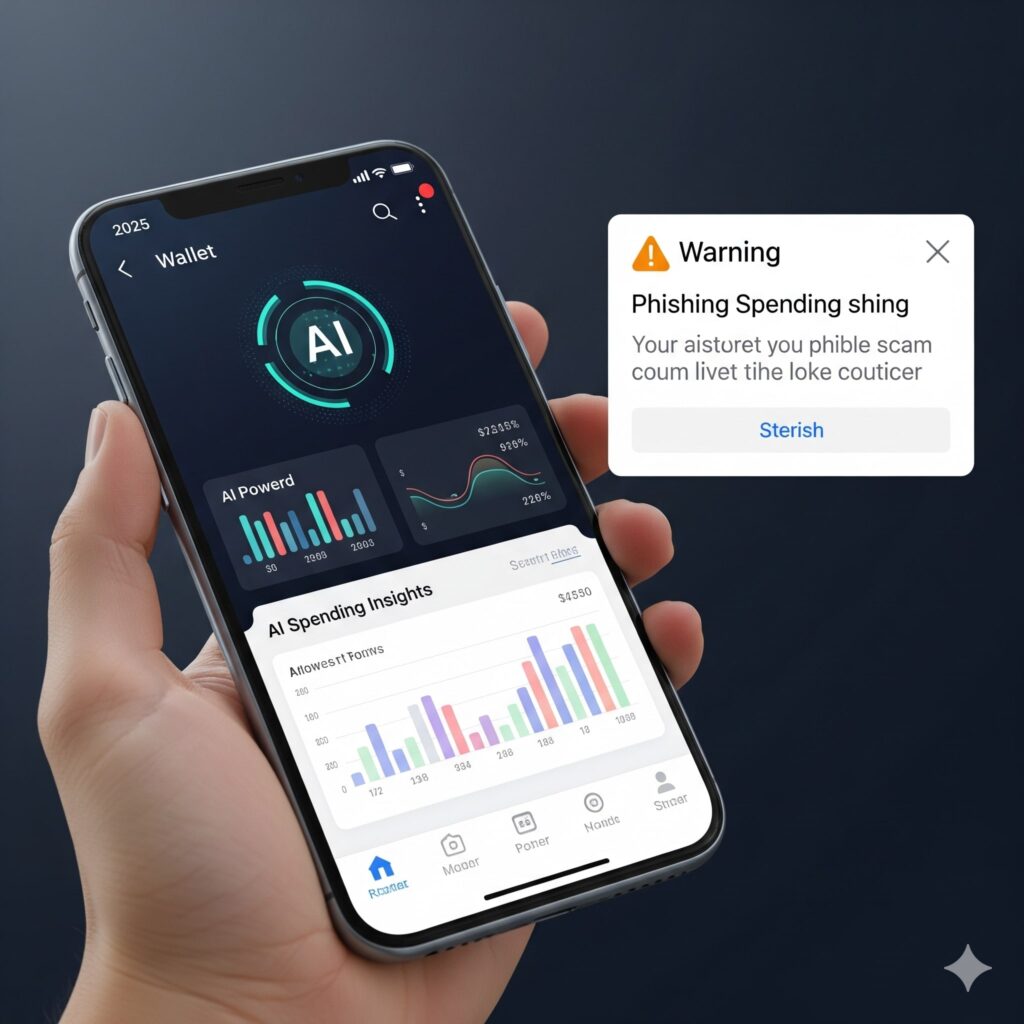
In 2025, AI chatbots and personalized finance assistants have become mainstream, helping users predict expenses, automate savings, and even detect fraud. Yet, without basic financial literacy, many users still misinterpret or overtrust these tools. That’s why financial education 2025 integrates lessons on digital safety, AI awareness, and privacy protection. leading to costly errors or data leaks.
- Real-time spending trackers and smart insights help us see where our money goes.
- Open banking and fintech services connect accounts in new ways.
- Blockchain provides transparency and quicker payments..
But with new conveniences come new risks. AI phishing attacks and deepfake fraud can fool even well-informed users. Therefore, digital safety, how to recognize scams and safeguard personal information must be covered in financial education by 2025. The best financial education 2025 programs now combine cybersecurity basics with real-world money lessons.
Financial literacy is no longer just about money management it’s about digital defense. This expanded definition makes financial education 2025 essential for every digitally active consumer.
AI-generated investment scams have become a rising concern this year, with deepfake advisors and cloned voice messages tricking thousands of users. Financial education must now include AI scam awareness as a key life skill.
“Without financial education in 2025, tools like BNPL or AI apps can quickly become debt traps.”
“As highlighted by the OECD earlier this year, only 11 percent of teenagers could solve complex financial problems—an alarming gap that shows how vital it is to strengthen financial education in 2025, especially in our increasingly digital world.”
Globally, governments are starting to act. This shows how financial education 2025 has become a global priority rather than a local experiment. In 2025, the OECD and World Bank launched initiatives urging schools to integrate financial literacy into STEM programs. In India, the Reserve Bank’s “Money Smart 2.0” campaign and U.S. state-level financial education mandates both reflect the same realization: money skills are now life skills.
Similarly, the European Union’s 2025 “Financial Skills for All” framework and Japan’s digital money curriculum reflect a global consensus: financial literacy is now as vital as digital literacy. From Europe to Asia, financial education 2025 represents a shared commitment to smarter financial citizenship.
Global Push for Money Literacy 2025
Building Strong Habits: Financial Education 2025 and Beyond
Numbers tell a clear story:
- Only 27% of adults worldwide are financially literate in 2025, That’s why financial education 2025 must focus not only on access but also on practical application helping people translate theory into daily action with the U.S. slightly ahead but still concerning at 35% among Gen Z reporting low confidence in managing daily finances.
- In 2025, U.S. adults still answer only about half of basic financial questions correctly—a figure that hasn’t improved in nearly a decade.
- U.S. financial confidence dips further among women, Black Americans, Hispanic Americans, and younger generations.
- According to WalletHub, since 2009, nearly 47% of American adults have given themselves a “C” or worse when evaluating their personal finance knowledge, an increase of 12 percentage points.
Basic financial concepts like risk, inflation, diversification, and compound interest are difficult for many adults worldwide to understand. The renewed emphasis on financial education 2025 aims to close that understanding gap through better tools and learning platforms. That’s a clear barrier to building real financial security.
“Without strong financial education in 2025, budgeting, saving, and debt management can collapse under the pressure of modern financial products like BNPL.”
Real Consequences of Financial Illiteracy
“Student loan struggles highlight why financial education in 2025 is urgent, because millions of borrowers are navigating repayment challenges without the right guidance.”
Technology is reshaping how we save and invest, and our guide on AI in personal finance 2025 shows how smart tools can optimize your financial decisions.
Top 5 Free Online Courses in Finance (financial education 2025)
- Financial Markets by Yale University (Coursera) – This popular course provides an overview of financial markets, including behavioral finance, risk management, and banking.
- Introduction to Corporate Finance by Corporate Finance Institute (CFI) – This free course is a great starting point for those new to corporate finance and provides a solid foundation for more advanced topics.
- Financial Accounting by MIT (Open Learning) – A course that teaches you how to analyze financial statements and valuation models to assess a company’s performance.
- Behavioral Finance by Duke University (Coursera) – Explore how psychological biases can affect financial decisions and learn strategies for making better choices in spending and saving.
- Personal Budgeting using Microsoft Excel by Great Learning – A short, practical course that teaches you how to use Excel to manage your personal budget.
For deeper insight into how market shifts connect with personal finance stress, read Market Correction 4th Nov 2025: What Investors Should Know to understand what triggered the pullback and what it means for everyday investors.
Knowledge gaps don’t stay theoretical they hit hard:
1. Student Loan Burdens Financial education 2025.
- As of Q2 2025, total U.S. student loan debt stands at $1.81 trillion, owed by over 43 million borrowers.
- Average federal student loan debt per person is around $39,075
- A large share of borrowers are struggling. Less than half (about 38%) are actively making payments; one in three are 90+ days past due.
- Collections resumed in May 2025, putting struggling borrowers at risk of wage garnishments, credit damage, or tax refund intercepts.
A new repayment reality: interest on SAVE income-driven plans restarted August 1, 2025 some borrowers face around $3,500 more in annual interest.
2. Persistent Financial Stress
Nearly half of Americans say their finances are behind expectations, and many face shocking setbacks annually. As NEFE found, almost one in three U.S. adults say their current financial life is worse than expected.
As inflation cools but wages lag, many households are experiencing a “silent squeeze,” where real purchasing power remains lower than pre-2020 levels.

Learn more about how automation and smart tools are shaping personal finance in our full analysis on AI in Personal Finance 2025
3. Risk of an Emergency
Trends indicate that a significant percentage of adults do not have the necessary savings to cover less emergency conditions, although the data is not always clear as of 2025. People who lack financial literacy often find themselves in difficult situations when problems arise, especially if they depend on digital options such as BNPL and immediate credit.
The Power of Financial Literacy
Financial education isn’t just feel-good advice it delivers real impact:
- Adults with strong financial literacy are over 5 times more likely to feel confident handling financial change (28% vs 5%).
- They’re also more likely to:
- Avoid risky investments (36% vs 24%)
- Recognize overconfidence (30% vs 19%)
- Question initial information instead of accepting it blindly.
- Avoid risky investments (36% vs 24%)
If you’re struggling with debt, this step-by-step debt to financial success guide can help you create a clear path toward financial freedom.
For a quick, practical breakdown of how disciplined financial habits actually work in real life, this short video explains the mindset difference clearly. Video source: YouTube (embedded for educational reference).
Building a Foundation: What Works in Financial Education 2025
Here’s how you can build real financial muscle in 2025 and why it matters more than ever:
Start with Basics
- Budgeting: Keep tabs on your earnings and outlays to comprehend and control stress, not to exert control over yourself.
- Saving: Resilience is increased by even modest, regular contributions.
- Identify the difference between good and bad debt, especially how interest and BNPL structures can quietly compound risk.
Practice Smart Digital Habits
- Use fintech tools wisely (e-budgeting apps, digital wallets).
- Learn to spot scams: phishing attempts, deepfakes, false financial “gurus.”
Treat fintech as a tool not a shortcut to saving and investing.
Early Money Habits
- Most children serve money habits for the age of 12. Introduction of sports or age education helps create a basis for self -confidence for adulthood.
- Families and schools should make money, talk naturally, discuss saving, budgets, and even investing early.
Planning with Flexibility
- In an unstable labor market and uncertain pension options, it is no longer to rely on tradition.
- Make pension and emergency plans that are tax-efficient and adaptable.
- Set clear goals, review them regularly and be prepared to adapt to equipment and risk changes.
Lifelong Learning
- Finance evolves crypto, AI advice, and new fintech. Keep learning.
- Use trusted sources and qualified advisors.
- See your financing regularly and make up for a change in life.
For readers focused on long-term growth, learning how to build wealth through investing in 2025 is essential to achieving lasting financial independence.
Conclusion: Financial Education 2025 as a Tool for Empowerment
“Mastering financial education in 2025 will empower you to thrive in uncertain times.”
Financial education is required in 2025; it is not an option. Without deliberate learning, more people will fall into avoidable traps like debt, stress, and scams due to low financial literacy and growing complexity.. But knowledge gives you control, clarity, and confidence. That’s the ultimate promise of financial education 2025—empowerment through understanding. It opens options from better savings and investing to peace of mind.
Start today. Learn, teach, talk about money. A smart, stable financial future starts with everyday choices and the courage to deepen your understanding. By applying financial education 2025 principles, individuals can transform uncertainty into opportunity.
As 2025 winds down, it’s the right time to reset financial goals, review investments, and embrace continuous learning. The year ahead will reward those who turn knowledge into daily financial discipline. Financial education in 2025 is not optional; it’s the single most important tool for navigating uncertainty.
“In the end, financial education in 2025 isn’t just knowledge it’s empowerment, giving you the clarity and confidence to thrive in uncertain times.”
As central banks prepare for another policy review in early 2026, now is the time for individuals to strengthen their financial habits and build resilience against future market surprises.
FAQs on Financial Education in 2025
1. Why is financial education more important in 2025 than before?
Because of rapid changes in technology, new financial products like BNPL, and the rise of misinformation online, making sound money decisions has become harder. Without financial literacy, it’s easier to fall into debt traps or scams.
2. What are the biggest risks of ignoring financial education today?
The risks include mounting debt (especially with student loans and BNPL), poor savings habits, vulnerability to online fraud, and low financial confidence in an unstable economy.
3. How can young people start building financial literacy early?
Start with basics: budgeting, saving regularly, and learning the difference between good and bad debt. Families and schools should talk about money openly, encouraging financial awareness before adulthood.
4. What role does technology play in financial education in 2025?
Technology offers powerful tools like AI-driven budgeting apps and fintech platforms, but it also creates risks such as phishing scams and deepfake fraud. Financial education helps people use tech wisely while staying safe.
5. What are practical first steps for someone who feels financially unprepared?
Track income and expenses, create a small emergency fund, avoid high-interest debt, and use trusted sources (books, courses, certified advisors) to learn continuously. Even small actions today can build long-term stability.