AI money management apps are transforming personal finance in 2025 by bringing advanced automation and behavioral coaching to daily budgeting.
“Some finance bloggers and educators are even using visual AI tools like InstaDoodle to turn complex money concepts into simple explainer videos for their audience.”
The management of money in 2025 looks very different from what it did just a few years ago. Artificial intelligence moved from the boardroom and trading floor into everyday personal finance, guiding individuals with the same intelligence once reserved for money managers and private banks.
As a result, millions of people today in the US, UK, and Canada rely on an AI-powered budgeting partner that can track spending, encourage smart savings, and predict financial decisions. These apps do more than just crunch numbers; they learn personal money habits, identify invisible risks, and motivate users to stay disciplined.
🎧 For those who prefer listening over reading, you can now listen to this blog post.
How AI Money Management Apps Redefine Budgeting
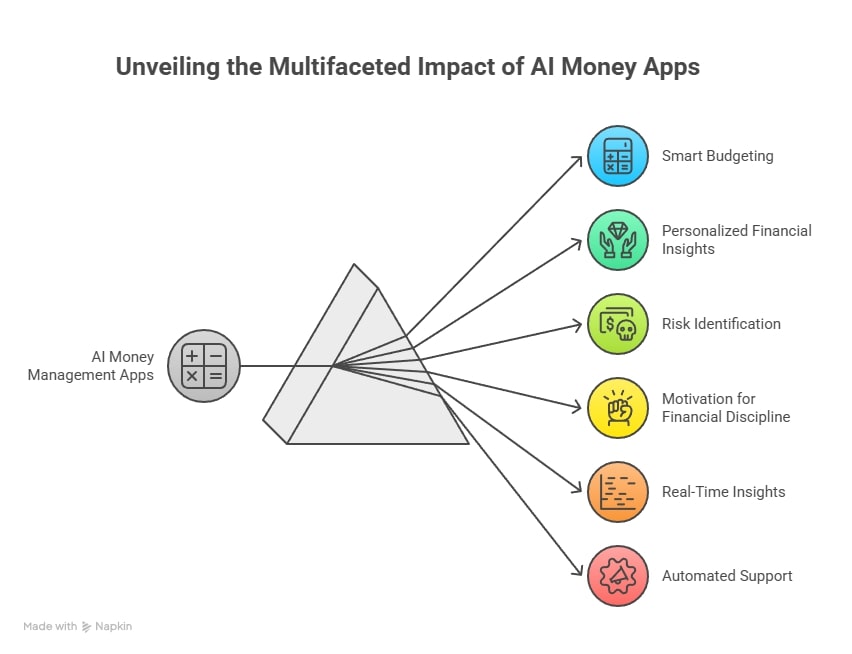
AI money management apps are becoming essential tools for smart budgeting in 2025.
These tools are a necessity in an age of rising living costs and unpredictable economic cycles. Real-time insights, automated support for budget decisions, and behavioral signals are just some of the ways this gap between knowing what to do with money and actually doing it is bridged.
“Many personal finance creators now pair these AI budgeting insights with visual explainers using tools like InstaDoodle, making financial literacy easier for beginners.”
The article delves into the ways in which AI money apps are redefining personal finance and highlights three of the most influential platforms: Clio, Monarch Money, and You Need a Budget (YNAB).
What does AI money management mean today?

AI means digital money management tools using machine learning:
- Analyze expenses in real time
- Predict future expenses and cash flow
- Suggest savings and budget tasks
- Provide behavioral training
- Automate routine financial tasks
Instead of passively recording transactions, these applications act as an intelligent financial companion. They reduce friction, guide daily money choices, and help in building long-term financial stability.
This shift reflects the broader trend of AI in personal finance in 2025, where machine learning is increasingly guiding everyday money decisions, not just investments.
Perhaps the biggest change, though, is one of access: tools that were once only accessible via financial advisors are now in the pocket of the everyday user, especially young people learning how to build wealth from scratch.
For a broader view of AI-powered tools that help consumers save money, check out Bankrate’s guide “9 AI-Powered Apps That Help You Save Money.”

These apps work best when you understand how AI personal finance tools fit into your full money routine, from budgeting to investing.
Clio: AI Finance Bot that makes money personally
Cleo is different because it’s interactive: It’s a friendly, direct, and at times brutally honest financial coach in chat form. Based on whether they want to be held bluntly accountable or positively reinforced, users choose either “Roast” mode or “Hype” mode.
Leading AI money management apps, like Clio, Monarch Money, and YNAB, are reshaping how people handle daily finances.
Great powers
- Real-time expense information
- Intelligent alerts about unusual expenses
- Automated micro-savings & savings goals
- Personal cash flow tips
- Interest-free cash advance for short-term relief rooms
Clio was designed for economical everyday life. The tone is calm, the experience feels human, and the behavioral signals are based on actual consumption patterns, not general advice.
In Western markets, where digital banking is mature and data sharing happens seamlessly, users rely on Cleo to stay aware of habits, prevent overdrafts, and build emergency money in the background.
For more insights on automated saving tools, read our post on apps to save money automatically in 2025: https://pennypowerplay.com/apps-to-save-money-automatically-2025/
Monarch Money: An Integrated Financial Command Center

Monarch Money is ideal for those who want a bird’s-eye view of their entire financial life in one place. It brings together banking, credit, loans, investments, and even property valuations into one integrated dashboard.
What makes Monarch special?
- Comprehensive financial tracking, including net worth modeling
- Smart budgeting with customizable settings
- Family and couple goal planning
- Tracking investment results across accounts
- Collaboration tool for partners and families
Monarch has very solid support in the US and Canada, where it’s easy to connect accounts due to its open finance infrastructure. To many households, it’s a modern alternative to spreadsheets and a traditional financial advisor.
Particularly appealing to young families and professionals, it offers visibility and structure in long-term planning without having to change bank providers.
YNAB: Zero-based budgeting powered by intelligent automation
YNAB has obtained a loyal group of followers, particularly among users who enjoy structure and accountability. Zero-based budgeting on the platform systematically apportions every dollar to a purpose.
AI enhances the experience by automating classification and improving the accuracy of forecasts.
Key strengths
- Assigns a role to each dollar
- Real-time rule-based adjustments
- Provides smart signals when consumption goes off track
- Loan Goals and Repayment Plan
- Comprehensive education, workshops and community resources
Users commonly report changes in financial behavior with YNAB, not just better budgeting. The app calls for intention, awareness, and discipline.
For those Western audiences who understand subscription models and digital economics, YNAB marries behavioral psychology with automated planning guidance.
How AI Money Apps Build Better Habits

What distinguishes these platforms from traditional budgeting tools is the addition of the behavioral intelligence layer. It is where AI learns how users behave, rather than tracking only what they spend.
“To communicate these behavioral insights visually, finance bloggers often create whiteboard explainers using tools like InstaDoodle to simplify saving and spending psychology.”
Much of this behavioral coaching aligns closely with the psychology of saving money, where awareness, feedback loops, and small nudges drive long-term financial discipline.
Common motivation strategies:
Behavioral coaching is a game-changer in AI money management apps, helping users build better financial habits.
- Avatar-based coaching and friendly chats
- Savings challenges and weekly goals
- Alerts based on lifestyle triggers
- Positive reinforcement for reaching milestones
- Reality checks when spending drifts
These features turn money management from a chore into a guided system. Users do not just save more; they understand themselves better.
For readers interested in going beyond budgeting and learning how to grow wealth over time, explore our detailed breakdown on how to build wealth through investing in 2025: https://pennypowerplay.com/how-to-build-wealth-through-investing-in-2025/
Advantages and limitations to consider
Profit
- Real-time correct visualization of expenses
- Better savings continuity
- Personal guidance
- Reduction of financial stress
- Ability to identify waste and inefficiencies
Limitations
While the promise of convenience is strong, users must still vet each AI money management app carefully for its security and privacy standards before linking accounts.
- Works best with modern banking systems and open finance standards
- Confidence in privacy and security is paramount
- Results are based on the responses given by the user and the honesty in those responses
Safety remains a central focus area: the tools work with bank-level encryption and regulated banking partners, but users should always review privacy policies and account permissions.
Where These Apps Work Best
Supported Regions
| App | Primary Markets |
|---|---|
| Cleo | US, UK, some Europe |
| Monarch Money | US, Canada |
| YNAB | Global support, strongest in US, UK, Canada, Europe |
These platforms perform best in Western markets, where banking APIs, automated transaction import, and open finance rules facilitate account connectivity.
A note for Indian readers
Some users in India might still benefit from YNAB’s budgeting philosophy and manual imports. While digital finance in India is fast developing, AI budgeting tools are still in their infancy locally. Apps like Fi, Jupiter, CRED, and INDmoney represent early steps towards similar experiences in this area.
The future of AI in personal finance
Over the next three years, personal finance technology will likely continue to evolve:
- Emotional budget adjustment
- Voice-activated financial assistant
- Predictive alerts that forecast cash shortages
- Real-time fraud prevention at the consumer level
- Integration with investment robo-advisors
- Rules of adaptation of lifestyle
Personal finance is turning towards a world in which artificial intelligence tracks spending, but also shapes habits, reduces anxiety, and supports long-term value creation.
As these tools evolve, the balance between human judgment and AI-driven financial guidance will continue to shape how individuals manage, save, and grow their money.
The West sets the pace for other markets. As open banking standards go global, the rest of the world will follow suit.
The rise of AI money management apps marks a turning point for efficient, automated personal finance.
Final Thoughts
The integration of predictive analytics and voice commands will soon make the next generation of AI money management apps feel less like tools and more like genuine financial partners.
AI is changing the way people understand their money and manage it. Clio, Monarch Money, and YNAB show just how intelligent automation coupled with behavioral coaching can transform small daily decisions into long-term financial success.
This is why using an AI money app in 2025 isn’t just about convenience, but a step toward being more aware, confident, and disciplined regarding money. The faster the user develops these habits, the stronger his or her financial future will be.
FAQs
Many beginners find AI money management apps easy to use and highly effective for improving their financial routines.
Is it safe to link bank accounts with AI money apps?
Yes, leading apps use bank-grade encryption and partner with regulated institutions. Always verify security credentials before linking accounts.
Are these tools accessible for beginners?
Absolutely, Cleo and YNAB are really beginner-friendly.
Do these apps work outside the United States?
YNAB and Cleo have global features, while Monarch is strongest in the US and Canada.
Do I still need a financial advisor if I use AI finance apps?
These apps guide daily habits, not complex financial planning. Advisors can still be of use to high-net-worth users.
Can AI help cut spending?
Yes, behavioral nudges, alerts, and forecasting make spending patterns visible to help users stay on track.
“This article may contain affiliate links. If you purchase through them, we may earn a small commission at no extra cost to you.”
Related Articles