How human intuition and AI tools work together to reshape investing decisions in the modern financial world.
Human vs AI investing is shaping how decisions are made in modern financial markets, and the story below shows why the human mind still holds a crucial advantage.
🎧 Prefer listening? Here’s a short audio summary explaining how human judgment and AI tools work together in real market decisions.
Human vs AI Investing: Why the Human Mind Still Matters
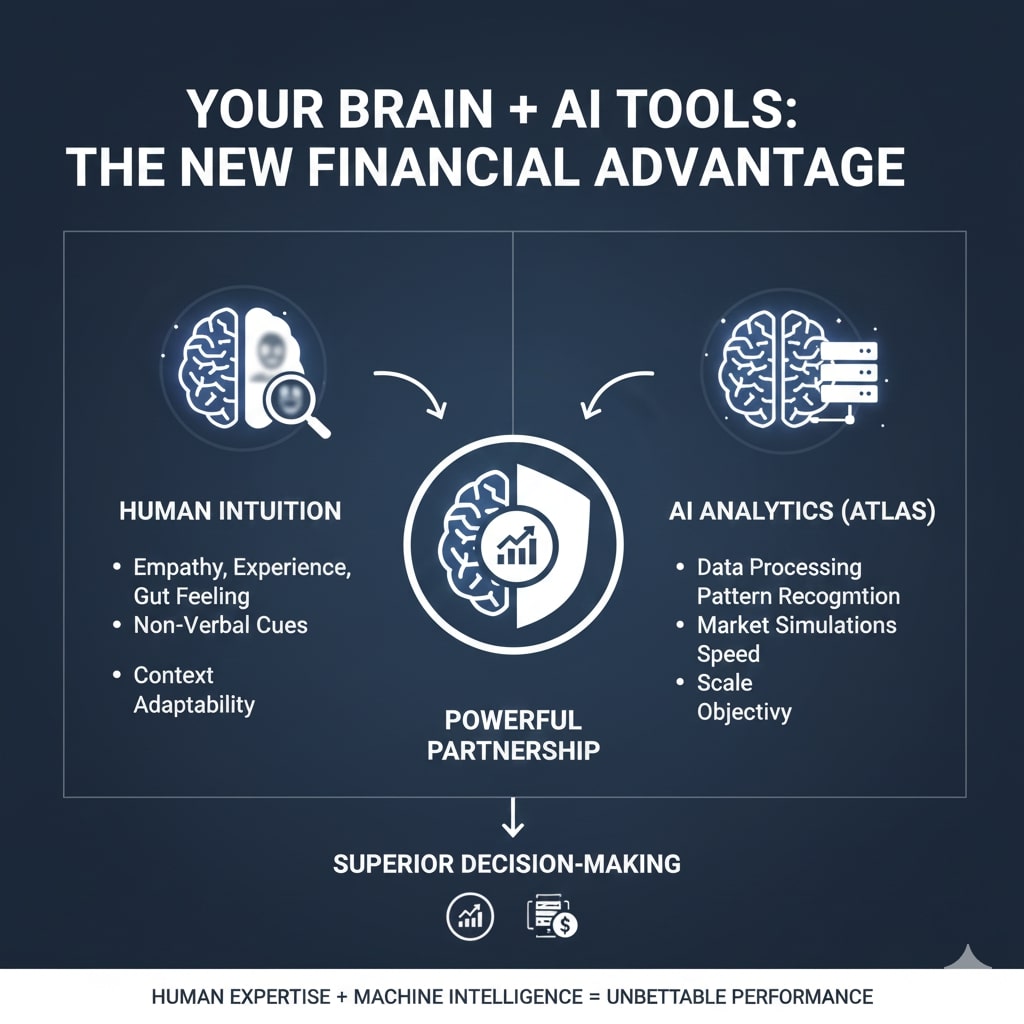
Imagine a scene that happens every day in big investment offices and trading floors all over the world.
A young, smart financial expert, let’s call her Sarah, is looking closely at her computer screen. She has just finished a deep study of a medium-sized drug company, one that has been doing okay for many years. Sarah uses a special AI tool, a super-smart program that can take in and check huge amounts of information much faster than ever before. This AI, which we’ll call “Atlas,” has just finished its job.
If you’re new, this step-by-step guide on how to start investing will help you build wealth from scratch.
Atlas checked the company’s money reports from the last five years. It compared them with 10,000 similar companies. It ran 50,000 tests of what might happen in the market. It looked at every piece of number-based information from how fast they sell their products to how much debt they have all in just a few seconds. The answer, given with the cold, sure voice of a machine, is a loud “Buy.” The numbers look perfect. The company is financially very healthy. The past trends suggest the stock price is about to jump up in a big way.
But Sarah stops. She pauses.
Last week, she listened to the company’s meeting with investors. She didn’t just hear the words; she noticed the mood. She watched the CEO’s face on the video call. When a top expert from another firm asked a tough question about a delay in a new drug test, the CEO’s answer sounded fine, but his tone was a little off. His shoulders were slightly slumped. His eyes quickly looked away for a moment. It was a small sign of worry, a human feeling that Atlas, with all its power, could not see or understand.
The AI says “Buy.” Sarah’s gut feeling, which she has trained over years of watching people and how the market thinks, whispers “Wait.”
She decides not to place the huge order. Instead, she makes a small, safe trade.Two days later, a new government rule is announced. It affects exactly the issue the CEO seemed nervous about, and the stock price falls 15 percent. Sarah’s moment of doubt, her human reading of a purely human signal, saves her company millions of dollars.
This story shows the new truth of the money world. Human vs AI investing is no longer a fight. It’s a partnership.
It gives the clear answer to this question: In a world run by smart machines, what is the real advantage for a human professional? The answer is not to fight the machine, but to team up with it. The real advantage is the smooth, powerful mix of Your Brain + AI Tools.
If you’re exploring automated investing, check out our full guide on robo advisors here: https://pennypowerplay.com/robo-advisors-2025-investing/
Human vs AI Investing: Why Numbers Alone Aren’t Enough
1. Why AI Took Over the Numbers
To see the human advantage, we first have to agree on how powerful the machine is. AI hasn’t just joined the financial markets; it has completely changed how we look at numbers. The reason is simple: AI is great at doing things that are very hard for the human mind.
AI today handles what humans are terrible at:
| Human Problem | AI Skill | Simple Explanation |
| Too Much to Think About | Checking Thousands of Data Points | AI can take in and compare millions of pieces of information from global economic news to small trade details all at once, without getting tired or making mistakes |
| Missing the Signs | Finding Hidden Patterns in Market Swings | Smart computer programs can find complex, secret connections in how the market changes that a person would never see. For example, small changes in trading volume before a big price move |
| Slow Speed | Running Tests That Used to Take Days | AI can run tests on trading plans using decades of past data in just minutes. This lets people quickly check if a plan is good and make it better |
| Feelings Getting in the Way | Guessing Price Changes Based on Connections | AI models are completely fair and objective. They calculate the exact effect of one thing (like a rise in interest rates) on another (like a stock price) without being affected by human fear or greed |
Before choosing between human advice and automated investing, it helps to understand the broader role of AI through this AI and personal finance guide.
“The machine is better at these things, but that’s not a threat; it’s a help.”
AI is the best calculator ever. It does the math, not the meaning. It tells us what happened and how much, but it can’t yet understand the why or what it means in a full, human way.
Explain in Simple Terms: AI is the Calculator. It does the math, not the meaning.
The main job of AI in finance is to give us a solid, number-based starting point. It is a strong, tireless machine that sorts through all the numbers, giving us a clear signal that is free from human mistakes and emotional twists. This is the new basic level of work. Any professional who tries to beat this level using only a simple spreadsheet is already far behind. In human vs AI investing, AI handles the data, humans handle meaning.
2. What Humans Still Do Better: The Human Touch
If AI owns the world of numbers, the human brain keeps a special, important area: the world of human factors. This is the area of context, feelings, and things you can’t measure with numbers that truly drive how the market acts. Markets are, after all, a mirror of what people decide, and people’s decisions are always based on feelings and context.
No computer program, no matter how smart, can truly understand:
•Fear During a Crash: AI can see a lot of selling, but it can’t understand the deep, sudden fear that makes everyone panic and sell everything. It also can’t guess when that fear will suddenly stop.
•Rumor vs. Fact: A language program can read a news story, but it can’t judge if a secret source on social media is telling the truth. It can’t tell the difference between a planned leak and a simple rumor.
•Political Drama Changing Markets: AI can track new laws, but it can’t read the small, changing power plays in a global fight, or the possible market effect of a surprise election result caused by public anger.
•CEO Confidence, Jokes, or Worry: As Sarah’s story shows, the small, non-spoken signs the voice tone, the body language, the pause carry huge weight. These are signs of a hidden truth that only a human, with a lifetime of social learning, can figure out.
•Cultural Changes Affecting Buyers: The success of a stock like Tesla wasn’t just about its money reports. It was powered by a shared belief in Elon Musk’s new ideas, a cultural move toward a greener world, and the strong, almost family-like loyalty of its customers. These are social and psychological things that are too complex for simple money models
Understanding emotions is the secret advantage in human vs AI investing.
To simplify behavioral finance concepts for beginners, many bloggers now create visual breakdowns using tools like InstaDoodle making data easier to interpret.
The human job is to add the contextual layer that turns simple data into real wisdom. We are the ones who find the meaning. We are the ones who can look at a perfect set of numbers and say, “The numbers are right, but the person giving them is hiding something,” or “The numbers are weak, but a big cultural shift is about to make them explode.”
According to a comprehensive report from McKinsey, leading firms are already using AI tools across analytics and decision-making, indicating how quickly AI is reshaping finance: https://www.mckinsey.com/capabilities/quantumblack/our-insights/the-state-of-ai
3. Where Human + AI Works Together: The Perfect Team
The future of making money in finance is not about humans winning over machines, or machines winning over humans. It’s about them working together perfectly. The best investment plans today are built on a team model where AI and human smarts are given jobs that fit their best skills.
The rise of AI investing strategies reflects how quickly the global AI economy is evolving.
This same human-AI collaboration is also driving massive investments by global technology companies, especially in emerging markets, as explained in this deep dive on why big tech is investing heavily in India’s AI future.
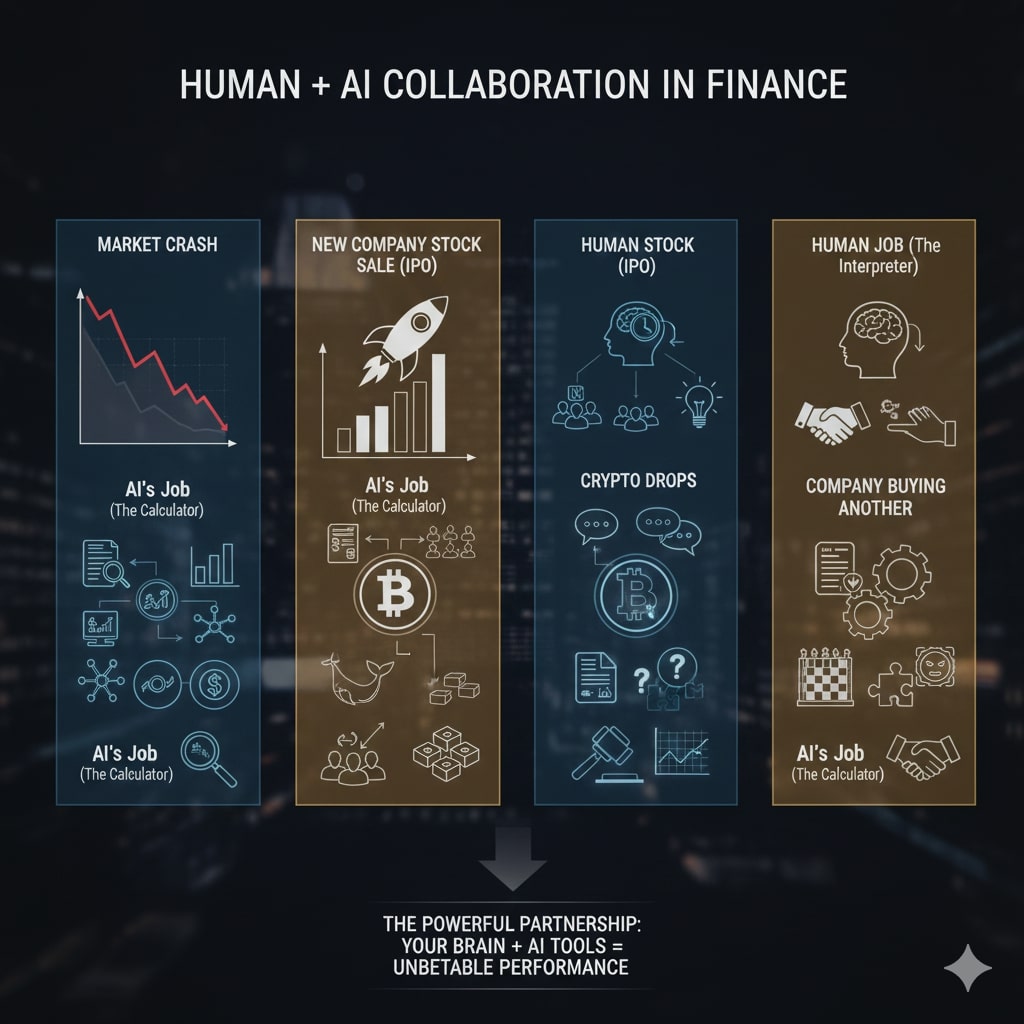
This is the new way of working for the top professional:
| Situation | AI’s Job (The Calculator) | Human Job (The Interpreter) |
| Market Crash | Find selling patterns, track where money is flowing, and see which assets are being sold without thought versus those being sold with a plan . | Decide if the panic is reasonable, find the moment of biggest fear (when everyone gives up), and decide when to buy against the crowd. |
| New Company Stock Sale (IPO) | Check money reports, compare the company’s value to others in the industry, and test the business plan under different economic situations. | Judge if the leaders are trustworthy, check the quality of the company’s work culture, and guess the long-term success of the product’s story and market fit. |
| Crypto Drops | Track where money is moving across different trading platforms, follow big investors (whales), and check blockchain data for strange trading patterns. | Understand the general feeling on social media, read between the lines of government statements, and look at the deep ideas or new technology driving the digital currency. |
| Company Buying Another | Read legal papers, find possible problems with government rules, and create models for the financial benefits and costs of putting the two companies together . | Figure out the big-picture reason for the purchase, check if the two company cultures will fit well, and judge if the leaders have the real will to make the merger work . |
In every case, the AI gives the speed, size, and fairness of the data, while the human gives the judgment, context, and gut feeling needed to act. The AI gives you the map; the human chooses the final stop and the best road to take.
4. The Blind Spot Trap: Fast but Clueless vs. Slow but Wrong
The biggest risk in this new time is not that AI will take human jobs, but that humans will get lazy and let the machine do all their thinking. This is the Blind Spot Trap.
The real shift in human vs AI investing is how decisions are made.
Warn your readers:
•People who only trust AI will become fast but clueless. They will be able to make trades quicker than anyone, but they won’t truly understand why the trade is a good idea. When the market changes when the AI’s basic rules stop working they will have a powerful tool they don’t know how to fix or stop. They become button-pushers, not thinkers
•People who only trust their gut feeling will be confident but wrong. They won’t be able to keep up with the sheer amount and speed of data checking that AI provides. Their gut feeling, while useful, will be based on too little or old information, leading to strong, but wrong, decisions. They become old-fashioned, using a simple map when they need a GPS.
The winners in tomorrow’s markets will be hybrid thinkers. These are the people who see the AI’s answer not as the final word, but as a very smart guess that needs a human check. They use the AI to clear away the noise, which frees up their brainpower to focus on the important, human questions that the machine cannot answer.
This needs a new skill: thinking critically about what the computer tells you. It means asking: What information is the AI missing? What human factor is it failing to see? What is the unmeasurable risk that only I can spot?
5. How Students Can Use AI Today: Let the Machine Do the Boring Work
For students and future professionals, using AI in finance is not something for the future it is needed right now. The goal is not to use AI to cheat on schoolwork, but to use it to learn faster and focus on the most important thinking. Students entering human vs AI investing must learn to use AI tools early.
If you want to explore how everyday investors are already using AI to manage their budgets and automate smarter financial habits, check out our detailed breakdown of the latest AI money management apps here: https://pennypowerplay.com/ai-money-management-apps-budgeting-2025/
Tell them: Don’t outsource thinking. Outsource the tedious tasks.
Here are simple tools students can start with to build their perfect team skill set:
Many finance educators also use visual AI tools like InstaDoodle to turn complex investing concepts into simple whiteboard explainers that students grasp faster.
| Tool Category | What it Does and Why it Helps | What the Student Should Focus On |
| Stock Finders (AI-Powered) | Uses smart programs to quickly sort through thousands of stocks based on complex rules (e.g., “Find all companies with low debt and high positive public opinion over the last three months”). | Creating Ideas: Use the tool to quickly find a list of possible investments, then use human analysis to study the top 5 in detail. |
| Back-testing Platforms | Runs a trading plan against decades of past market data in minutes to see how much money it would have made and how risky it is. | Checking Risk: Understand that past data has limits. Figure out why a plan failed in a certain time (e.g., “It failed during the 2008 crisis because people stopped trusting the banks, a human factor the model didn’t see”). |
| Public Opinion Trackers (Text-Based) | Uses smart text-reading programs to check millions of news stories, social media posts, and forums to measure the general feeling about a stock or industry. | Reading the Context: Don’t just look at the score. Read the source material to understand what is causing the feeling (e.g., Is it a real product review or a planned effort to push the stock price up?). |
| AI-Based Money Apps | Automatically handles personal money tasks, finds the best ways to save, and suggests different investment mixes based on how much risk you can handle. | Learning Finance: Use the app’s suggestions as a starting point to learn the basic rules of modern investment and how to spread out your money. |
By learning to use these tools, students can skip the boring work of gathering data by hand and jump straight to the most valuable part of the job: checking, understanding, and making smart plans.
6. What Professionals Are Doing: The Co-Pilot Model
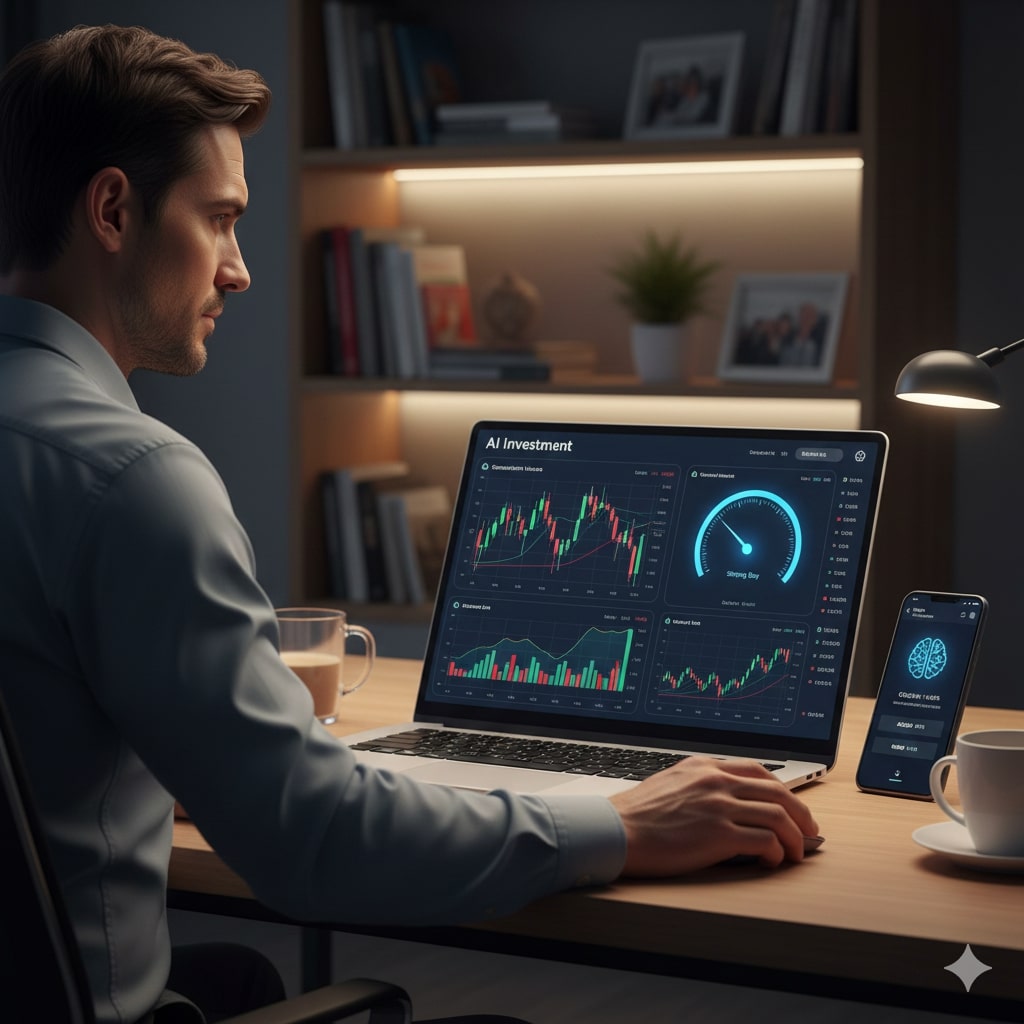
The change has already happened in big companies. The most successful investment firms are not firing their experts and replacing them with AI; they are simply giving them super-human tools. This is the Co-Pilot Model.
Some finance teams also use AI video explainers internally to present data insights and strategy summaries visually using tools like InstaDoodle.
Investment firms now:
1.Use AI to Scan Money Reports and Documents: AI programs are used to do the first, complete check of all number-based and text-based information. This includes checking thousands of legal papers, government reports, and meeting transcripts to find problems or key phrases that a person might miss.
2.Apply Human Judgment Before Acting: The AI gives a suggestion (e.g., “Buy Stock X”). This suggestion is never acted on automatically. It goes to a human fund manager or expert who then adds the human factor. They ask: Does this suggestion fit with our company’s long-term goal? What is the risk from world politics? What is the CEO’s reputation?
3.Treat AI as a Co-Pilot, Not a Boss: The AI is seen as an incredibly powerful, fair partner. It is there to help the human, not to tell them what to do. The final choice, the ultimate responsibility, and the extra money-making edge all stay firmly with the human.
Professionals who master human vs AI investing gain an unbeatable edge.
This co-pilot relationship is the heart of the modern financial expert. It is the understanding that data without good judgment is just noise, and good judgment without data is just a guess.
7. What Investors Should Remember: Understanding is the New Edge
The most basic truth of investing never changes: Investing is never free of human feelings.
The market is a complex system that changes all the time, driven by the shared hopes, fears, and beliefs of millions of people. Even the most perfect, mathematically correct computer program fails if people lose trust in the system, in the money, or in the future. The 2008 financial crisis was not a failure of data; it was a failure of human judgment and trust. The market getting better afterward was not because of new data; it was because of renewed human confidence.
For a deeper look at how AI-driven optimism can sometimes distort valuations and create risky market bubbles, read our analysis on the AI investment bubble phenomenon here: https://pennypowerplay.com/ai-investment-bubble-2025-alliance-explained/
This is why understanding is the new edge.
The “edge” in finance is the extra money you make compared to the average market. In the past, you got this edge by having better data or trading faster. Today, AI is giving everyone those things. If everyone has the same powerful AI tools, the data advantage disappears.
The new way to get an edge is the ability to:
•Understand the AI’s answer better than the next person.
•Find the human factor that the AI missed.
•Use better human judgment on the machine’s suggestion.
The future of human vs AI investing depends on judgment, not speed.
The professional who can look at the AI’s “Buy” signal and correctly understand the CEO’s worried tone as a crucial, more important factor just like Sarah did is the one who gets the edge. They are the ones who are truly ahead of the game.
These behavioral finance insights explain why human judgment remains essential even as AI-driven investing trends reshape global markets.
Powerful Takeaways: The Teamwork Rules
The arrival of AI in finance is not a fight where one side must lose. It is an evolution that demands a higher level of human skill and smart choices. To succeed in this new world, you must remember these truths:
•Data doesn’t guarantee wisdom. It only guarantees information. Wisdom is the human ability to add context and judgment to that information.
•Tools improve decisions, not replace them. A better hammer doesn’t make a better builder; it lets a good builder work faster and better.
•AI speeds up research, not responsibility. The machine can do the hard work, but the human is still fully responsible for the result of the investment choice.
•Understanding is the real edge. In a world where number-based data is common, the ability to figure out human behavior, political changes, and cultural trends is the ultimate way to stand out.
The rise of AI brings a big challenge to human intelligence. It forces us to decide what it means to be a thinking person who makes decisions in the age of the computer program.
If AI gives everyone the same data, what will still separate winners from the rest?
1. Will AI replace financial analysts?
AI won’t replace analysts. It replaces repetitive work like scanning reports and running calculations. The edge still comes from human judgment, interpretation, and context, which AI cannot understand.
2. Can AI predict stock market crashes?
AI can detect early signals, unusual volume patterns, and risk trends, but it can’t predict human fear or sudden emotional reactions. Crashes are triggered by psychology, not just data.
3. What is the real benefit of using AI for investors?
AI speeds up research and reduces mistakes. It helps identify opportunities faster, but the investor still needs to decide if the idea makes sense in the real world.
4. How should students start using AI in finance?
Use AI tools for screening stocks, back-testing strategies, tracking sentiment, or learning basic financial rules. Let the machine do the boring part so you can develop real thinking skills.
5. What skill will matter most in the AI-driven financial world?
The winning skill is hybrid thinking: the ability to combine machine-generated insights with human understanding of behavior, culture, leadership, and political signals.
Want more insights like this? Visit PennyPowerPlay.com and explore the future of money, technology, and human decision-making.
👉 If you found this helpful, share it with someone who believes AI will replace human investors. They need to read this.
Related Articles