This is why crypto tax after 100 trades becomes overwhelming for many traders.
When people enter the crypto world, taxes feel harmless.
You buy a coin.
You sell it later.
You calculate the difference.
That feels logical. Familiar. Almost boring.
Most beginners assume crypto taxes work like stock taxes. Buy low, sell high, pay tax on profit. Simple.
And for a while, that belief is true.
But crypto has a way of slowly changing the rules without announcing it. The moment trading activity increases, the same system that felt manageable starts collapsing. Somewhere between 80 and 120 trades, most people hit what can only be called a breaking point.
Crypto taxes don’t break suddenly.
They break gradually as trading volume, platforms, and income sources grow.
This guide explains why crypto tax tracking becomes unmanageable, the mistakes most traders make, and the systems professionals use to stay compliant without stress.
Spreadsheets stop making sense. Numbers don’t match. You are no longer sure what you actually earned. And tax season suddenly feels heavier than market losses.
This is what we call the 100-trade tipping point.
Not because the law changes, but because human systems fail.

The Early Phase: Why Crypto Taxes Feel Easy in the Beginning
Let’s start with how most people begin.
A student buys a small amount of Bitcoin.
A professional invests part of a bonus.
An investor experiments with Ethereum or an altcoin.
In this early phase:
- Trades are infrequent
- One exchange is used
- Wallet activity is minimal
- Memory still works
If you make 10 or 20 trades in a year, you can:
- Download a trade history
- Check prices manually
- Calculate profit using Excel
At this stage, crypto taxes do not feel dangerous. Many people even say, “I’ll handle taxes myself.”
This is where the trap begins.
The Silent Shift: When Crypto Turns From Investing to Activity
Crypto encourages activity.
You don’t just buy and hold anymore. You start:
- Swapping tokens
- Exploring DeFi
- Chasing yields
- Testing strategies
- Moving funds across wallets
None of this feels dramatic. Each action feels small and harmless.
But tax systems don’t care how small a transaction feels. They care about events.
And crypto creates a lot of them.
Why Crypto Tax After 100 Trades Changes Everything
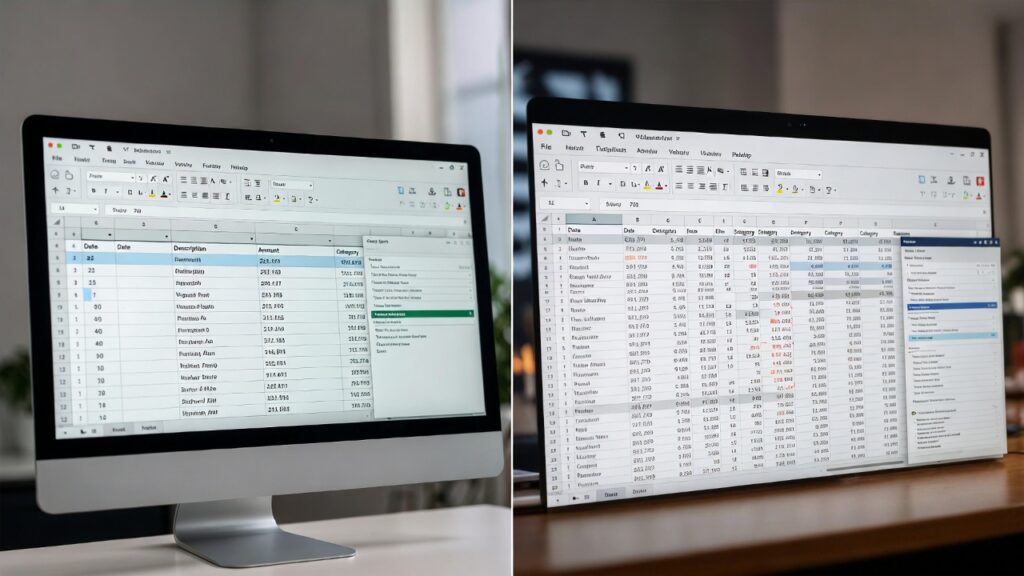
There is nothing legally special about 100 trades.
But practically, it marks the point where:
- Manual tracking breaks
- Errors become invisible
- Stress becomes constant
The problem is not intelligence. It is scale.
Crypto taxes become unmanageable after 100 trades because crypto produces more data than the human brain can track accurately over time.
Let’s break down exactly how this happens.
1. Crypto Creates Too Many Taxable Events
In traditional investing, taxation usually happens at one moment. When you sell and convert to cash.
Crypto does not work that way.
In most tax systems across the world, the following are taxable:
- Selling crypto for fiat
- Swapping one crypto for another
- Converting crypto into stablecoins
- Using crypto to buy goods or services
So if you:
- Swap ETH to another token
- Then swap again
- Then move to a stablecoin
You may have triggered multiple taxable events, even if you never touched cash.
This is where traders get confused.
One trade in your mind may actually be two or three tax calculations.
At 100 trades, you are not dealing with 100 calculations. You are dealing with hundreds.
2. Every Transaction Has Its Own Price and Time Context
Crypto prices change constantly.
Every transaction happens:
- At a specific minute
- At a specific price
- On a specific platform
Now add:
- Exchange fees
- Network fees
- Fees paid in crypto
Even a small missing fee can change profit numbers.
And crypto fees are tricky. Sometimes they are deducted in the same asset. Sometimes in another asset. Sometimes they are invisible unless you dig deep.
After 100 trades, missing one or two details is guaranteed.
And small errors compound silently.
3. Wallet Transfers Destroy Manual Accuracy
Moving crypto between your own wallets is not taxable.
But spreadsheets and basic tools cannot understand ownership.
To a spreadsheet:
- Sending crypto out looks like a sale
- Receiving crypto looks like income
Unless every transfer is manually labelled, your records become distorted.

Now imagine:
- Multiple exchanges
- Hot wallets
- Cold wallets
- DeFi protocols
At scale, distinguishing transfers from trades becomes nearly impossible without automation.
This is one of the biggest reasons crypto tax reports go wrong.
4. Hidden Income Quietly Accumulates
Crypto income is not always obvious.
You earn:
- Staking rewards
- Airdrops
- Yield farming income
- Referral bonuses
These often arrive automatically. No trade. No decision.
But tax authorities usually treat these as taxable income, valued at the price when received.
Most traders forget them.
Not intentionally. Simply because crypto income does not feel like income in the traditional sense.
Ignoring it does not remove liability. It only delays consequences.
5. Tax Rules Are Complex and Vary by Country
Crypto tax rules are not intuitive.
You must consider:
- Short-term vs long-term holding periods
- Different tax rates for income and capital gains
- Cost basis methods like FIFO or LIFO
Two traders with identical trades can owe very different taxes depending on:
- Holding period
- Accounting method
- Country of residence
Manually optimising this across hundreds of transactions is unrealistic.
This is where confusion turns into anxiety.
Many tax authorities worldwide classify crypto swaps and disposals as taxable events, a point also explained in this general crypto tax overview by Investopedia:
https://www.investopedia.com/terms/c/cryptocurrency-tax.asp
6. The Psychological Cost of Manual Tracking
This part is rarely discussed.
Poor tracking creates mental stress.
Traders:
- Avoid checking records
- Delay filing taxes
- Guess numbers
- Fear audits
Eventually, people stop trading not because markets are bad, but because administration feels overwhelming.
The tax burden becomes heavier than the financial risk.
Why Crypto Tax Is Not Just a Finance Problem
Here is the most important insight.
Crypto tax becomes unmanageable after 100 trades not because the tax rate increases, but because the data volume explodes.
Crypto tax is a:
- Data accuracy problem
- Classification problem
- Process problem
This is exactly the type of problem finance alone cannot solve.
This is where AI enters quietly but powerfully.
This is why crypto tax after 100 trades stops being a simple calculation and becomes a system-level problem.
This move away from manual tracking reflects a larger trend where AI is reshaping personal money management, a change explained in detail here: https://pennypowerplay.com/ai-in-personal-finance-2025/
How AI Changes Crypto Tax Management
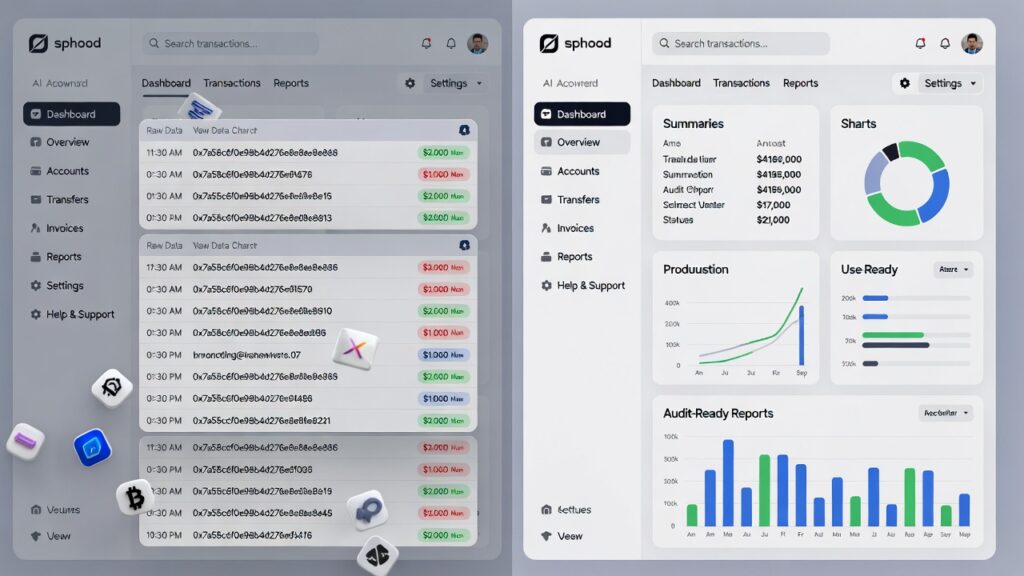
AI does not magically reduce taxes.
It reduces chaos.
AI-based crypto tax systems are built to do what humans struggle with:
- Handling large datasets
- Applying rules consistently
- Detecting patterns
- Eliminating repetitive errors
They help by:
Collecting Data Automatically
They connect to exchanges, wallets, and blockchains to pull every transaction into one place.
Understanding Transaction Intent
They identify whether an action is:
- A trade
- A transfer
- Income
- Expense
Filling Missing Information
They fetch historical prices, timestamps, and fee values accurately.
Applying Tax Rules at Scale
They calculate gains and income using chosen accounting methods across thousands of records without fatigue.
Creating Audit-Ready Reports
They produce clean, structured reports that accountants and tax authorities understand.
This is not luxury. It is infrastructure.
This limitation of human effort versus system-led execution reflects a broader investing reality, where data-heavy decisions increasingly favor automation, as discussed in this comparison of human judgment and AI-driven investing at https://pennypowerplay.com/human-vs-ai-investing/.
How This Benefits Students Worldwide
For students, crypto is not just an investment. It is education.
Students benefit because:
- They learn real-world finance early
- They understand how data affects money
- They avoid early compliance mistakes
AI tools allow students to experiment responsibly without administrative overload.
It teaches them a critical lesson early: modern finance is data-driven.
For students entering crypto and investing early, understanding foundational money concepts is critical before complexity grows, which is why this beginner-friendly investment guide provides essential context:
https://pennypowerplay.com/investment-guide-for-beginners/
How This Helps Working Professionals
Professionals trade crypto alongside careers.
They do not have time to manually reconcile hundreds of transactions.
AI systems help them:
- Save time
- File accurate returns
- Maintain peace of mind
For professionals, automation is not about convenience. It is about reliability.
Why Investors Cannot Scale Without Systems
For serious investors and active traders, tax systems are part of risk management.
Without accurate tracking:
- Performance metrics are wrong
- Strategy decisions are flawed
- Compliance risk increases
Since crypto taxation is only one part of a broader compliance picture, having a clear understanding of modern tax planning strategies helps traders avoid costly mistakes as activity increases:
https://pennypowerplay.com/tax-planning-2025/
AI allows investors to:
- See real profits after tax
- Scale activity safely
- Focus on strategy, not spreadsheets
At scale, systems are not optional.
The Real Lesson of Crypto Tax After 100 Trades
The lesson is simple and universal.
You cannot scale a manual process.
Long-term success in crypto, just like traditional investing, depends on building repeatable systems rather than relying on memory or effort alone, a principle also central to building wealth sustainably through investing:
https://pennypowerplay.com/how-to-build-wealth-through-investing-in-2025/
Crypto trading scales activity faster than humans can track it.
When tracking fails, stress replaces confidence.
In 2025, managing crypto is not just about market knowledge. It is about information management.
Final Thoughts
Crypto taxes feel simple at the start.
They rarely stay simple.
After 100 trades, most people realise that crypto tax is not about calculations. It is about systems.
This is where finance meets AI in a very practical way.
AI does not replace financial thinking. It supports it.
For students, professionals, and investors around the world, systems turn complexity into clarity.
And in crypto, clarity is freedom.
For most people, crypto tax after 100 trades is the point where manual tracking completely fails.
FAQs: Why Crypto Taxes Become Unmanageable After 100 Trades
1. Why do crypto taxes become complex so quickly?
Because crypto creates many taxable events beyond simple buy and sell transactions.
2. Are crypto-to-crypto swaps taxable?
In most countries, yes. They are treated as selling one asset and buying another.
3. Are wallet transfers taxable?
Transfers between your own wallets are usually not taxable but must be tracked correctly.
4. Are staking rewards taxable?
In many jurisdictions, staking rewards are treated as income at the time received.
5. Can Excel handle crypto taxes?
Excel may work for small activity but becomes unreliable as transaction volume grows.
6. How does AI help with crypto taxes?
AI automates data collection, classification, calculation, and reporting at scale.
7. Is crypto tax software only for big traders?
No. Anyone with frequent trades or multiple wallets benefits from systems.
8. What happens if crypto taxes are reported incorrectly?
Incorrect reporting can lead to penalties, interest, and audit risk.