How inflation affects your salary is something most people never think about until life starts feeling tighter. You work hard. You show up. You get paid. Yet every year, your money seems to stretch a little less.
Yet every year, life feels tighter.
🎧 Prefer listening? Here’s a short audio summary of this article.
Your paycheck hasn’t changed much. But your grocery bill has. Rent has climbed. Gas costs more. Health insurance takes a bigger bite. Even small things, coffee, streaming, school supplies, now feel heavier.
No one sent you a tax bill.
But you’re paying one anyway.
It’s called inflation.
And it quietly reduces the value of your money before you even touch it.
Most people think of taxes as something the government takes. Inflation is different. It doesn’t ask. It doesn’t show up as a line item. It simply makes every dollar and euro worth a little less than last year.
That’s why so many people feel stuck, even when they’re doing “everything right.”
This is the silent tax.
Inflation doesn’t just impact salaries in isolation. It’s part of a larger global economic shift affecting salaries, savings, and purchasing power worldwide. To understand the full picture, read Global Inflation Explained: Why Money Feels Tight in 2026.

How Inflation Affects Your Salary in Real Life
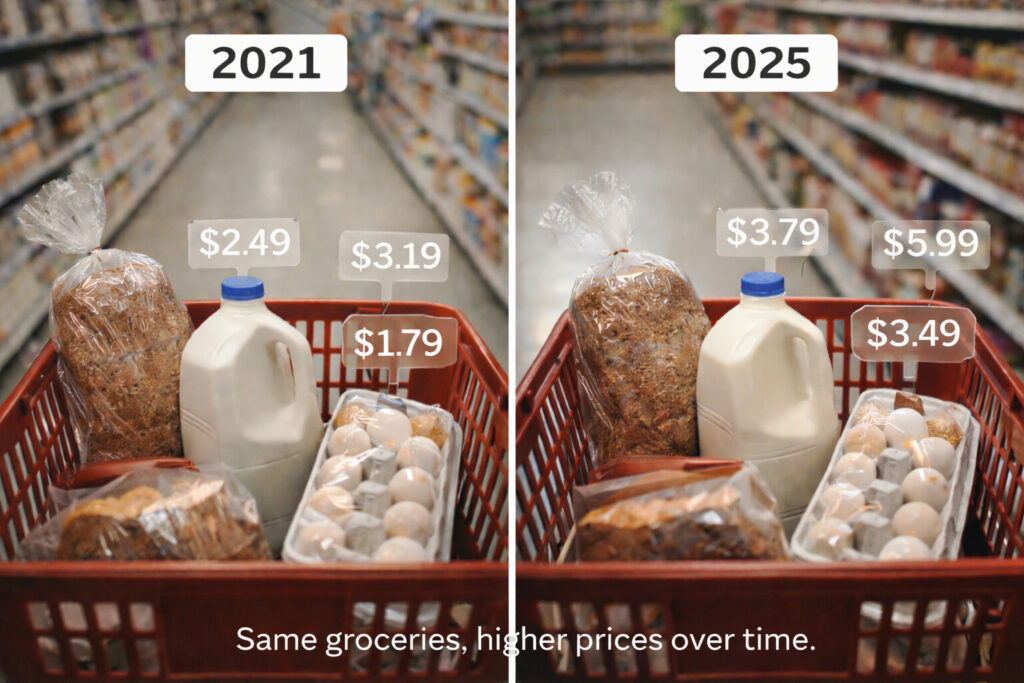
Inflation means prices rise over time. That’s the simple definition.
But in real life, it feels like this:
According to the latest data from the U.S. Bureau of Labor Statistics, everyday costs like food, rent, and energy keep rising faster than most wages.
- Your rent goes up 6%, but your salary goes up 2%.
- Groceries cost $40 more per month than last year.
- Insurance premiums rise again.
- Your savings earn almost nothing in a regular bank account.
On paper, you’re not poorer.
In reality, you are.
Your money buys less.
If your salary stays the same while prices rise 5%, you just took a 5% pay cut without agreeing to it.
That’s the silent tax.
It doesn’t feel dramatic in a single month. It feels like death by a thousand tiny cuts.
This is why so many middle-income families feel like they’re falling behind even with decent jobs. You’re not imagining it. The system has shifted.
You might relate to what’s described in this piece on why the middle class feels poorer. It captures this quiet squeeze that hits people who are trying to be responsible.
A Simple Example

Let’s say in 2021 you earned $60,000 a year.
Your rent was $1,200.
Groceries cost $400 a month.
Utilities were $150.
Gas was $120.
Health insurance was $250.
Fast forward a few years.
Your salary is now $63,000. That sounds like progress.
But now:
- Rent is $1,450
- Groceries are $520
- Utilities are $190
- Gas is $160
- Health insurance is $320
You “earned more,” but your monthly costs jumped by over $500.
That extra $3,000 per year in salary disappeared before you even saw it.
You didn’t change your lifestyle.
Inflation did.
Why It Feels So Personal
Inflation isn’t just economic. It’s emotional.
It shows up as:
- Guilt when you buy something small for yourself
- Stress at the checkout counter
- That quiet fear when you open a bill
- The feeling that you can’t get ahead no matter how hard you try
This emotional side is why financial stress is becoming so common. Many people carry a constant background anxiety about money. If this sounds familiar, you’ll relate to what’s explored in financial anxiety in 2025.
Inflation doesn’t only shrink your wallet. It shrinks your sense of control.
Why Saving Alone Isn’t Enough Anymore
This is another way how inflation affects your salary, not by taking money away directly, but by quietly reducing what your savings can actually buy over time.
A Small Moment That Says Everything
Emma is a school administrator in Michigan. She earns a steady salary and lives what most people would call a “normal” life.
One evening, she stood in the grocery store staring at a carton of eggs.
Last year, it cost $2.
Now it was $4.79.
She didn’t storm out. She didn’t complain. She just stood there for a second longer than usual.
Not because she couldn’t afford eggs.
Because something inside her whispered, “When did this become normal?”
That quiet pause is what inflation really looks like.
It’s not panic.
It’s not headlines.
It’s that tiny moment where you realize your money doesn’t stretch the way it used to.
Emma went home and opened her banking app. She saw that her income had barely moved in three years, but her monthly expenses had climbed every single quarter.
Nothing dramatic had happened.
Life had simply become more expensive while her pay stayed the same.
That’s how the silent tax works.
Not in one big blow.
But in hundreds of small, invisible ones.

Our parents were taught:
“Save your money. Keep it safe in the bank.”
That advice made sense in a different world.
Today, if your savings earn 1% and inflation runs at 4%, you’re losing 3% every year.
Your money is working against you.
This doesn’t mean saving is bad. It means parking all your money in cash is no longer protection. It’s slow erosion.
You need two layers:
- Safety for emergencies
- Growth to outrun inflation
That second layer is what most people are missing.
Regaining Control in an Inflated World
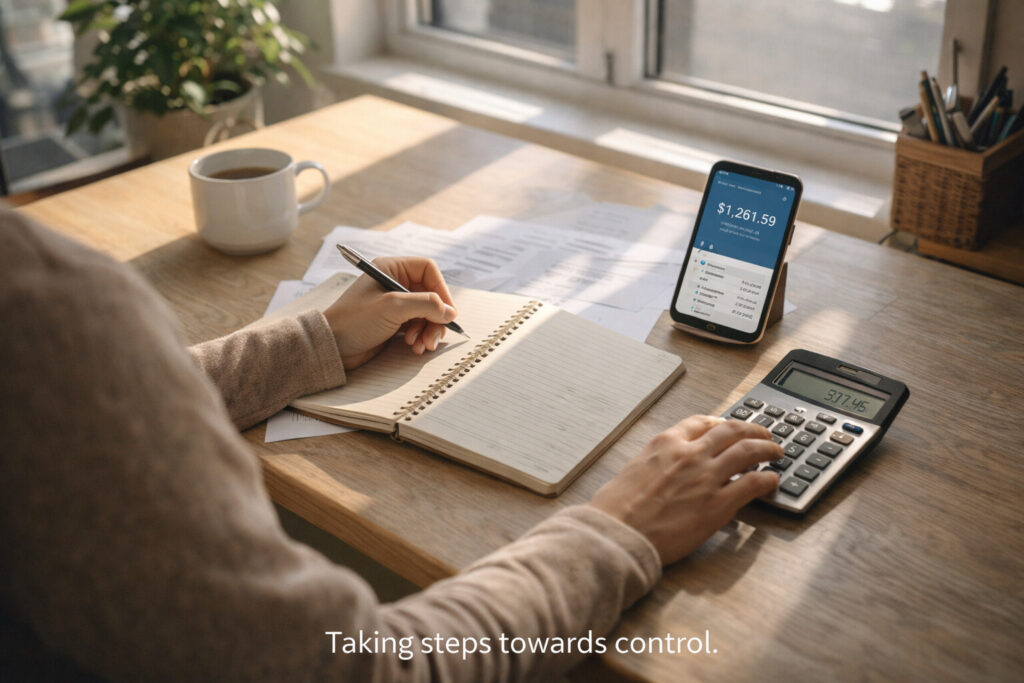
How inflation affects your salary is not always visible in a single month. It shows up slowly, year by year, as prices rise faster than paychecks. What once felt comfortable starts feeling tight, even though your income looks the same on paper.
You can’t stop inflation.
But you can stop being passive inside it.
Here’s how normal people fight back.
1. Make Inflation Visible
Track your real spending. Not just totals, but categories.
When you see that groceries rose 18% in two years, it stops feeling like “your fault.” It becomes data.
This is where smart budgeting helps. Not restrictive, but aware. A simple framework like the one in these budgeting tips for 2025 can give you clarity without guilt.
Awareness is power.
2. Design a Life That Can Breathe
Inflation hurts most when every dollar is already assigned.
A flexible lifestyle beats a fancy one.
That doesn’t mean cutting joy. It means choosing where your money actually adds value.
There are practical ways to save without feeling deprived. This guide on saving money without sacrificing your lifestyle is a great example of how to keep life enjoyable while staying resilient.
The goal is breathing room.
3. Let Your Money Grow
Inflation is relentless. The only defense is growth.
This is where compound interest becomes your ally.
When money earns returns and those returns earn more returns, you stop running on a treadmill. You start moving forward.
If you’ve never really seen how this works, this explanation of compound interest in long-term wealth is worth your time.
Even small monthly investments can change your trajectory over 10 or 20 years.
You don’t need to gamble. You just need consistency.
For beginners, this guide to low-risk investments for beginners is a calm starting point.
It’s not about getting rich fast. It’s about staying ahead of erosion.
The Bigger Shift You’re Living Through
Inflation today isn’t just about prices.
It reflects deeper changes:
- Aging populations
- Global supply chain stress
- Energy transitions
- Geopolitical tension
- Heavy government debt
This isn’t a temporary blip. It’s a new environment.
And every generation has to learn to survive in its own economic climate.
Your parents fought high interest rates.
You are fighting invisible erosion.
Different battlefield. Same need for awareness.
A Quiet Real-Life Story
Mark is 34. He works in logistics in Ohio.
In 2020, he felt stable.
By 2024, he felt behind.
Same job. Slightly higher pay.
But rent rose. His car insurance jumped. His grocery bill shocked him. He stopped eating out, then stopped traveling.
He blamed himself.
Then he sat down and compared three years of bank statements.
The truth was clear.
He wasn’t reckless.
Inflation had simply moved faster than his income.
Mark didn’t quit his job or start a side hustle overnight.
He did three simple things:
- Built a clear budget
- Automated small monthly investments
- Cut one expense that didn’t add real joy
Two years later, he doesn’t feel rich.
He feels stable.
That’s the real win.

The Real Goal
You don’t need to beat inflation perfectly.
You just need to stop letting it beat you silently.
The goal is not luxury.
It’s dignity.
It’s waking up without constant money stress.
It’s knowing your future self isn’t being quietly robbed by time.
Inflation will exist.
But it doesn’t have to own you.
FAQs
1. Is inflation always bad?
Not entirely. Mild inflation can signal economic growth. The problem is when wages don’t keep up. That’s when people feel poorer even while “the economy” looks fine.
2. Why doesn’t my salary rise with inflation?
Most companies adjust pay slowly. Inflation moves faster. Without regular negotiation or job changes, income often lags behind real living costs.
3. Should I stop saving in cash?
No. Emergency savings are vital. But keeping all your money in cash long-term means losing purchasing power. A mix of safety and growth is healthier.
4. How much should I invest to fight inflation?
Start small. Even $50 or $100 a month matters. The habit matters more than the amount. Growth over time is what counts.
5. Are investments risky during uncertain times?
All investing carries risk. But doing nothing carries a guaranteed loss to inflation. Low-risk, diversified options balance safety and growth.
6. Can budgeting really help with inflation?
Yes. Not by making you rich, but by giving clarity. When you see where money leaks, you regain control instead of guessing.
7. What if I already feel behind?
That feeling is common. Inflation has done that to millions. Start where you are. Stability is built forward, not backward.
Once you understand how inflation affects your salary, you stop blaming yourself and start making smarter, calmer financial choices.
Inflation is quiet.
It doesn’t shout.
It doesn’t warn.
But once you see it, you can stop letting it work in the dark.
And that awareness alone is a form of wealth.