The AI infrastructure race is becoming one of the most important technology trends shaping the future of artificial intelligence.
Artificial intelligence often feels invisible.
I’ve been thinking about this a lot recently while reading about how much infrastructure sits behind the AI tools we use every day.
You type a prompt, click a button, and suddenly an answer appears. A picture is generated. A piece of code is written. From the outside, it looks like pure software.
But the reality behind artificial intelligence is very different.
Every AI system runs on physical infrastructure. Massive buildings filled with servers. Specialized chips designed for complex calculations. Cooling systems powerful enough to prevent those machines from overheating. Electricity flowing constantly through thousands of processors.
In simple terms, AI is not just software. It is a massive global infrastructure project.
And right now, the world’s largest technology companies are racing to build that infrastructure.
Companies like Microsoft, Google, Amazon, and Meta Platforms are investing enormous amounts of money into data centers, advanced chips, and global computing networks.
Some analysts estimate that the total investment tied to AI infrastructure could approach $700 billion over the next several years.
That number might sound shocking at first. But when you understand how AI actually works behind the scenes, the scale begins to make sense.
The Hidden Machines Behind Artificial Intelligence

Most people interact with artificial intelligence through simple tools.
A chatbot answers questions. A recommendation engine suggests a movie. A translation system converts one language into another.
These experiences feel quick and effortless.
What many users never see is the hardware powering those responses.
Training a modern AI model requires enormous computing power. Instead of running on a single computer, these models are trained on clusters of thousands of specialized processors working together.
Inside large data centers, rows of machines process huge amounts of data every second. Fans and liquid cooling systems regulate temperatures so the equipment can run continuously.
If you walked into one of these facilities, you might see long corridors filled with server racks blinking with tiny lights. The noise from cooling systems alone can be overwhelming.
This is the physical layer of artificial intelligence.
And building it is expensive.
Why Big Tech Is Spending Billions
The companies investing heavily in AI infrastructure are not doing it just for experimentation. They see artificial intelligence as the next major technology platform.
For years, cloud computing has been the foundation of the modern internet. Businesses store data online, run software remotely, and use cloud services to power applications.
Artificial intelligence is now becoming part of that ecosystem.
Companies want AI tools integrated into everything from customer support systems to financial analysis software. Developers are building applications that depend on AI models running in the cloud.
As demand for these services grows, the companies providing cloud infrastructure must expand their capacity.
That means building new data centers and upgrading existing ones.
It also means buying enormous numbers of specialized chips capable of running AI workloads.
The race has become intense because the companies that provide the best AI infrastructure may become the dominant platforms for the next generation of digital services.
This is why the AI infrastructure race between major technology companies is becoming more intense each year.
The Semiconductor Engine of the AI Boom

At the center of this infrastructure race is the semiconductor industry.
Artificial intelligence models require hardware capable of handling complex mathematical calculations at extremely high speed. Traditional processors are not always efficient enough for this kind of work.
That is why graphics processing units, or GPUs, have become essential for AI.
Originally designed to handle video game graphics, GPUs are extremely good at performing many calculations at once. This makes them ideal for training neural networks and processing large datasets.
One company that has benefited enormously from this shift is Nvidia.
Its GPUs have become the backbone of many modern AI systems. Technology companies often purchase thousands of these chips at a time to build powerful computing clusters.
As demand for AI grows, the demand for advanced semiconductors grows with it.
This has pushed chip manufacturing into the spotlight as a critical part of the global technology supply chain.
Governments are now investing heavily in semiconductor production, recognizing that chips are essential not only for AI but for many other digital technologies as well.
The surge in demand for GPUs and advanced processors has also triggered what many analysts call a global chip boom. I discussed several companies benefiting from this trend in my article on six semiconductor companies shaping the AI chip boom:
Data Centers: The Factories of the AI Era
When people imagine artificial intelligence, they often think about software engineers writing code.
But in reality, much of the AI revolution is happening inside data centers.
These facilities are sometimes described as the factories of the digital economy.
Instead of producing physical products, they process information.
A single hyperscale data center may contain tens of thousands of servers. These machines store data, run software applications, and train AI models.
Building one of these facilities is not simple.
Developers must consider electricity supply, cooling capacity, network connectivity, and physical security. The buildings themselves can cover hundreds of thousands of square feet.
Construction costs can reach billions of dollars.
Once operational, the facilities must run continuously. Any interruption could affect millions of users relying on digital services.
As artificial intelligence grows more powerful, these data centers are becoming even more important.
When people talk about AI, they usually imagine software running quietly in the background. But the reality is far more physical. Behind every AI tool are buildings filled with servers, cables, and cooling systems. In some cases, the power needed to run those machines is comparable to the electricity used by a small town.
That physical infrastructure is the hidden side of artificial intelligence that most users never see.
According to reports from Nvidia, demand for AI computing infrastructure has surged dramatically in recent years.
The Energy Challenge Few People Talk About
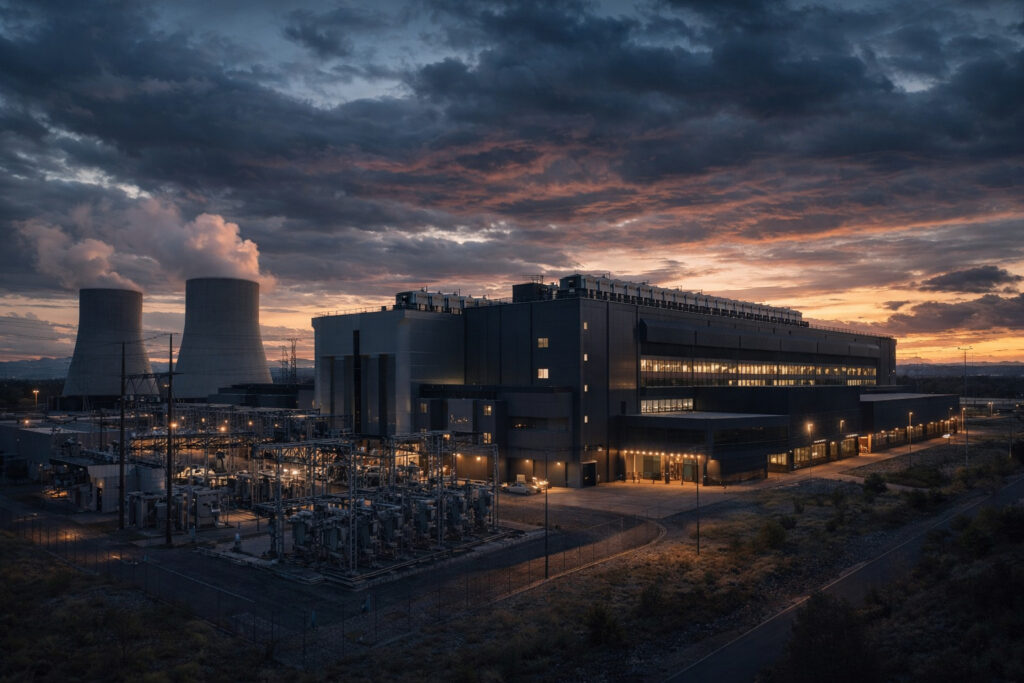
One of the less discussed aspects of the AI boom is energy consumption.
Running thousands of high-performance processors requires a tremendous amount of electricity. These machines generate heat, which means additional power is needed for cooling systems.
The scale can be surprising. Some large data centers now use as much electricity as an entire small city.
As AI adoption increases, global demand for computing power will likely grow as well. This raises important questions about energy infrastructure.
Technology companies are already exploring ways to address this challenge.
Many are signing long-term contracts with renewable energy providers. Others are experimenting with new cooling technologies designed to reduce electricity consumption.
Because of this, energy efficiency is slowly becoming one of the most important issues in AI infrastructure.
Without reliable power, even the most advanced AI systems cannot operate effectively.
Energy demand is quickly becoming one of the biggest challenges in the global AI infrastructure race.
A Global Competition for AI Infrastructure
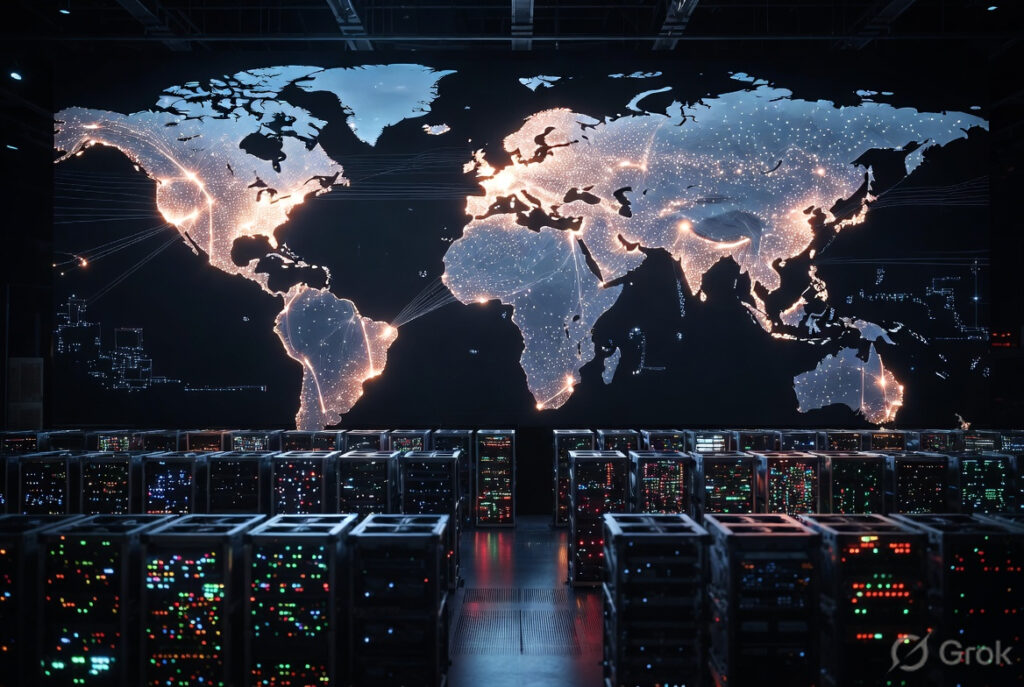
The competition for computing power is also influencing geopolitics and global technology strategy. I explored this dynamic in more detail in my article on how the AI infrastructure race is shaping modern geopolitical tensions:
The AI infrastructure race is not limited to a single country.
Technology companies operate globally, and governments are increasingly aware of the economic importance of artificial intelligence.
Countries want to attract data center investments because these projects create jobs, support local technology ecosystems, and strengthen digital infrastructure.
Regions with reliable electricity, stable political environments, and strong internet connectivity often become attractive locations for these facilities.
In recent years, North America, parts of Europe, and several Asian countries have seen rapid growth in data center construction.
Some governments are also introducing incentives to encourage technology companies to build AI infrastructure within their borders.
This competition reflects a broader trend.
Artificial intelligence is becoming a strategic technology for economic development.
What the AI Infrastructure Race Means for Investors
For investors, the rapid expansion of AI infrastructure is creating opportunities across several industries.
Investors are increasingly paying attention to companies building the hardware and infrastructure behind artificial intelligence. If you’re exploring investment opportunities in this space, you may find my guide on the best AI stocks to watch in 2026 helpful
Semiconductor companies are one obvious beneficiary. As demand for AI chips increases, companies involved in chip design and manufacturing may experience strong long-term growth.
Energy providers may also play an important role. Data centers require enormous amounts of electricity, which could increase demand for reliable power generation.
Cloud infrastructure companies stand to benefit as well. The platforms that host AI applications are likely to capture a large share of the value created by the AI economy.
Beyond these sectors, there is also a growing ecosystem of startups working on technologies related to AI infrastructure.
These companies are developing solutions for data center cooling, chip optimization, network performance, and energy efficiency.
While predicting the success of individual companies is always difficult, the broader trend suggests that infrastructure will remain a critical part of the AI story.
Looking Beyond the Headlines
When artificial intelligence appears in the news, the focus is often on new applications.
Chatbots that answer questions. Tools that generate images. Systems that help write software.
These innovations are impressive, but they are only one part of the picture.
Behind every AI application is a network of physical infrastructure supporting it.
Servers, chips, cooling systems, and power grids all play a role in making these technologies possible.
Understanding this hidden layer can help investors and professionals see the AI revolution from a different perspective.
The real transformation may not only be happening in software.
It is also happening in the infrastructure quietly being built around the world.
Final Thoughts
Artificial intelligence may feel like a digital phenomenon, but the AI infrastructure race shows how physical the technology really is.
The data centers, chips, and energy systems being built today will shape how AI evolves over the coming decades.
The $700 billion being invested in AI infrastructure is not simply a technology trend.
It is the construction of a new economic backbone for the digital age.
For investors, entrepreneurs, and policymakers, paying attention to this infrastructure race may offer valuable insight into where the future of technology is heading.
Because in the end, the companies and countries that build the infrastructure of artificial intelligence may also help shape the future of the global economy.
The companies that win the AI infrastructure race may shape the future of the digital economy.
Frequently Asked Questions About the AI Infrastructure Race
1. What is the AI infrastructure race?
The AI infrastructure race refers to the massive global investment in data centers, advanced chips, and cloud computing networks required to power artificial intelligence systems. Major technology companies are spending billions to build the hardware and energy infrastructure needed for AI development.
2. Why are companies investing billions in AI infrastructure?
Artificial intelligence requires enormous computing power. Companies are investing in data centers, GPUs, and high-performance networks to support AI applications such as chatbots, machine learning models, and automated decision systems.
3. Why are GPUs important for artificial intelligence?
GPUs are specialized processors designed to perform many calculations at the same time. This makes them ideal for training AI models and processing large datasets used in machine learning and deep learning systems.
4. Why do AI data centers consume so much electricity?
AI data centers run thousands of high-performance processors continuously. These machines generate significant heat, which requires advanced cooling systems and additional electricity to keep the infrastructure running efficiently.
5. Which industries benefit from the AI infrastructure boom?
Several industries benefit from the expansion of AI infrastructure, including semiconductor companies, cloud computing providers, energy suppliers, and data center developers.
6. What does the AI infrastructure race mean for investors?
The growth of AI infrastructure may create investment opportunities in companies involved in chip manufacturing, cloud computing, renewable energy, and advanced networking technologies supporting artificial intelligence.
Related Articles
The AI Infrastructure War Impact on Global Technology
Best AI Stocks to Buy in 2026 (Beginner Guide)
AI Chip Boom 2026: Six Companies Shaping the Future
Nvidia AI Financial Growth and the Chip Market
Why Big Tech Is Investing in India’s AI Future