AI chip boom 2026 is no longer a future trend. It is already reshaping how students learn, professionals work, and investors allocate capital.
Look, artificial intelligence didn’t just pop up out of nowhere like some sci-fi plot twist. It’s been simmering away in the background for years in massive data centers, quiet research labs, and the guts of big enterprise software. But these days, you can’t escape it. AI’s fingerprints are all over how businesses run, how people build their careers, and even how money flows around the world. It’s shaking up real, everyday economic choices.
Here’s the thing a lot of folks still overlook: AI isn’t just about clever algorithms or big ideas. It’s fundamentally powered by hardware specifically, chips.
Behind every smart AI model, every personalized recommendation, and every automated process, there’s this enormous layer of physical tech doing the heavy lifting. Analysts over at Bank of America reckon this could catapult the global semiconductor industry past $1 trillion in yearly revenue by 2026. That’s not just a big number; it’s a game-changer for tech and finance alike.
And no, this isn’t some hype-fueled guesswork. It’s based on how AI is actually getting built and deployed right now.
In this post, I’m diving into the six companies poised to ride this wave the hardest. But more than that, I’ll break down what this all means for students figuring out their paths, professionals honing their edges, and investors playing the long game.
AI Chip Boom 2026: Why This Shift Matters Now

Why AI Is Flipping the Script on Computing
Back in the day, computing was pretty straightforward. CPUs handled most jobs, upgrades came in neat cycles, and keeping the lights on didn’t break the bank.
AI? It smashes that mold to bits.
To train these massive AI systems, you need thousands of processors humming in unison. They guzzle power, chow down on data, and demand boatloads of memory. Even after training, just running the models calls for specialized gear that barely existed on a large scale ten years ago.
So, companies aren’t just shelling out for software anymore. They’re pouring money into:
- Chips tailored for AI
- Bespoke processors
- Lightning-fast networks
- Cutting-edge manufacturing tools
- Super-precise testing and design software
This surge is especially visible in large-scale AI data center investments, where long-term capital is being committed to support sustained AI workloads.
This spending spree isn’t tapering off because budgets are tight; it’s ramping up because no one wants to get left behind.
Nvidia: Turning AI Compute into a Full-Blown Empire
People love calling Nvidia an “AI company,” but really, it’s all about infrastructure at heart.
We’ve previously examined how Nvidia’s financial growth reflects its shift from selling individual chips to building a long-term AI infrastructure platform.
What Nvidia’s Up To These Days
Their GPUs are everywhere:
- Training AI models
- Crunching data center tasks
- Fueling scientific breakthroughs
- Powering self-driving tech
What really gives Nvidia the edge isn’t raw speed it’s the whole ecosystem. Developers, big corporations, and cloud giants build their entire operations around Nvidia’s hardware and software. Once you’re locked in, switching feels like ripping out your foundation.
Why Nvidia’s a Long-Term Player
AI isn’t a one-off experiment anymore; it’s an ongoing reality. That plays right into the hands of stable, scalable platforms you can count on. Nvidia nails that.
Takeaways for Students and Pros
You don’t have to snag a job at Nvidia to get value here. Grasping why GPUs are key, how AI scales up, and how infrastructure choices hit the bottom line? That’s gold for anyone eyeing roles in tech, finance, or consulting.
Broadcom: The Unsung Hero of Custom AI and Data Highways

Broadcom doesn’t light up Twitter feeds (or X, whatever we’re calling it now), but it’s embedded in some of the planet’s most crucial AI setups.
Broadcom’s Daily Grind
They specialize in:
- Bespoke AI chips
- Data center networking
- Ultra-fast connections
Rather than peddling generic processors, Broadcom teams up with mega-clients to craft chips for pinpoint AI needs.
Why It Counts
As AI grows up, it’s all about efficiency over bells and whistles. Custom chips cut down on energy and expenses. And don’t sleep on networking AI systems shuffle insane amounts of data, so smooth flow is everything.
Insights for Careers and Investing
For working folks, Broadcom proves that niching down trumps chasing buzz. Investors, take note: the real gold is often in the quiet enablers of massive scale.
Lam Research: Crafting the Machines That Birth AI Chips
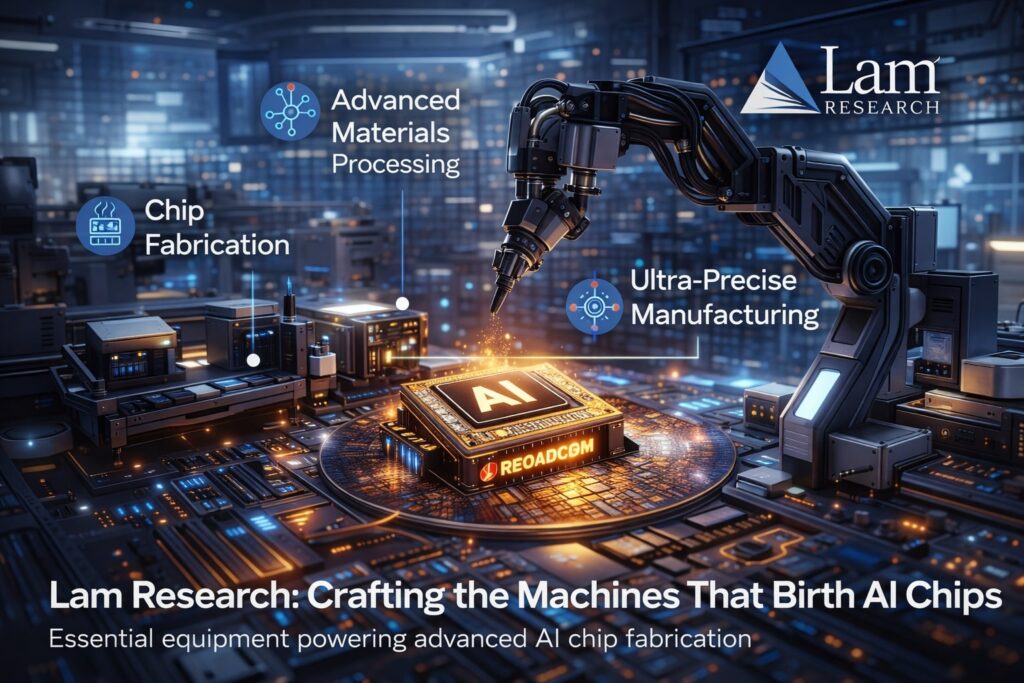
Lam Research isn’t hawking chips to you or me. They’re selling the heavy machinery to the folks who make the chips.
Lam’s Role in the Mix
Their gear handles:
- Chip fabrication
- Processing advanced materials
- Ultra-precise manufacturing
Without this stuff, today’s AI chips wouldn’t even get off the drawing board.
Why Lam’s Indispensable
AI chips are shrinking and getting wildly intricate. Botched production costs a fortune. With AI demand skyrocketing, chipmakers are dumping cash into top-tier tools and Lam reaps the rewards.
Lessons for Students and Pros
AI jobs aren’t all code and algorithms. Dive into manufacturing, materials science, or process engineering, and you’re in the thick of it.
KLA: Where Precision Saves the Day
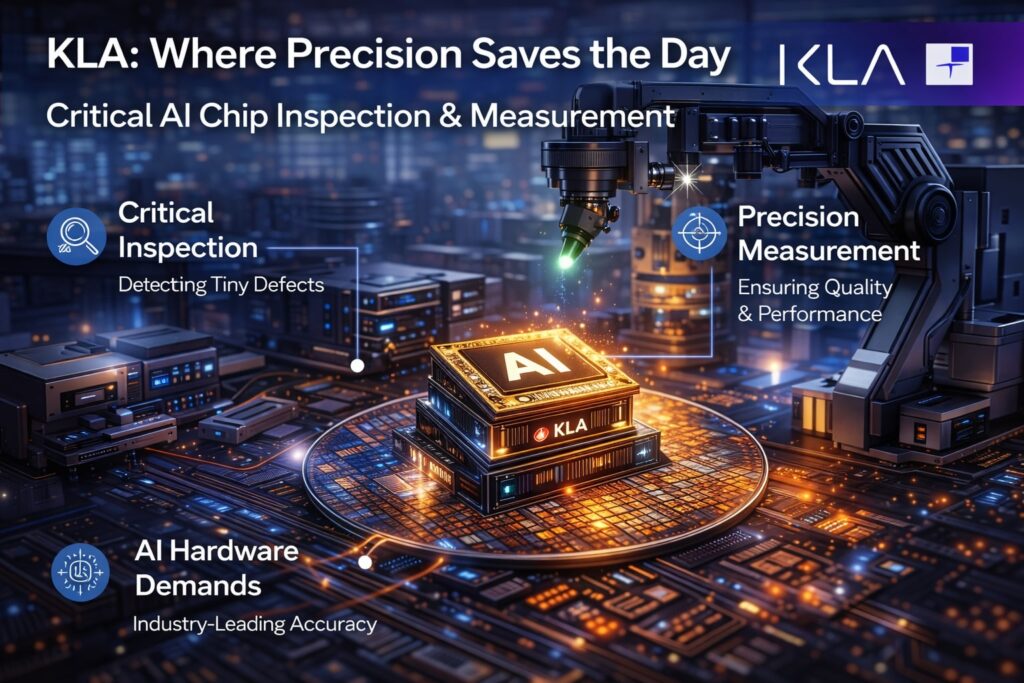
KLA’s all about inspection and measurement the unsexy side of chipmaking that’s absolutely vital.
What KLA Brings to the Table
Their tech spots flaws so tiny you’d need a microscope to see them. As chips get smaller, those defects can tank everything.
KLA’s AI Edge
AI hardware pushes boundaries, making quality checks a make-or-break factor. KLA keeps things reliable and performant.
The Wider View
It’s a classic case: the “dull” companies often turn essential when things get complicated.
Analog Devices: Bridging AI to the Physical World
AI isn’t confined to cloud servers; it’s out there mingling with real-life stuff.
Analog Devices’ Specialty
They make chips that:
- Turn analog signals into digital ones
- Handle power smartly
- Back up industrial and medical gear
Why It Fits AI Perfectly
AI thrives on sensors, efficient energy, and real-world data. Analog Devices is the glue between smart logic and tangible reality.
Career Vibes
This opens doors for students and pros into fields like manufacturing, healthcare, energy, and beyond AI’s tentacles reach far.
Cadence: Sketching Tomorrow’s Chips Today
Cadence supplies the software engineers use to dream up chips way before they’re real.
Cadence in Action
Their tools aid in:
- Designing intricate semiconductors
- Simulating how they’ll work
- Dodging expensive mistakes
Cadence’s Crucial Spot
AI chips are too beastly for old-school design. Software like this is the way forward. Cadence kicks off the innovation chain.
The Grand Scheme
Get this: AI’s now helping design AI chips. That loop? It’s speeding everything up.
What This Means for Students

Too many kids think AI’s just about slinging code. No, that’s half the story.
Get a handle on how AI actually runs GPUs, data centers, cloud setups, and the real costs involved. It’ll make you tougher and more hireable in the long run.
We’ve also explored how AI-driven shifts are reshaping careers, income potential, and skill demand across industries.
For Professionals: Level Up Without a Total Overhaul
You don’t have to pivot to full-time AI wizardry. But wrapping your head around infrastructure helps you:
- Nail smarter calls
- Chat confidently with tech whizzes
- Bring real strategy to the table
Blend your expertise with AI know-how, and you’re leading the pack, not just keeping up.
Investors: Play the Long Game
From an investment lens, the AI chip boom 2026 represents a long-term infrastructure cycle rather than a short-term technology trend.
This perspective also connects with broader concerns around whether today’s AI spending reflects sustainable growth or early-stage exuberance in capital markets.
AI investing isn’t about meme stocks or viral headlines. It’s digging into supply chains, capex trends, and enduring demand.
The semiconductor industry thrives on steady, repeat investments, not flashy one-off cycles.
Conclusion:
The AI chip boom 2026 is already shaping decisions around careers, capital allocation, and global competitiveness.
AI Is Already Rewiring the Economy
Hitting that $1 trillion mark in semis isn’t pie-in-the-sky. It’s echoing the choices companies, governments, and big institutions are making today.
AI isn’t lurking in the future it’s being pieced together, bit by bit, as we speak.
For students, pros, and investors, getting ahead of this curve? That’s your edge.
FAQs
1 Why’s the AI chip boom kicking off now?
AI gobbles up way more power than old-school software. As businesses roll it out big-time, the hunger for custom chips, data centers, and backup hardware has exploded.
2 What’s a $1 trillion semi market really signify?
Chips aren’t sidekicks anymore—they’re foundational, like power grids or the web, with nonstop demand from everywhere.
3 How do students win by grokking AI chips?
It builds a solid base for gigs in tech, finance, analytics, consulting, engineering. Goes beyond just tinkering with tools.
4 Do pros need tech wizardry to cash in?
Nope. Just grasp how AI hardware tweaks costs, speed, and strategy—that amps up your decisions and leadership.
5 Why care about non-Nvidia players in AI?
It’s a whole ecosystem. Making chips, checking them, designing software, handling signals—it’s all as vital as the GPUs.
6 Is this boom just a fleeting bubble?
Analysts mostly see it as a deep, lasting change. AI’s just getting started, and infra spending’s set to roll on for years.
7 How should investors approach AI chips?
Zero in on sustained demand, supply chain smarts, and ongoing investments. Skip the noise and short-term swings.