The AI infrastructure war impact is becoming visible across global markets as geopolitical tensions reshape technology, energy, and investor sentiment.
The War Nobody Expected to Matter to Investors
Most people still imagine war in traditional terms. Tanks crossing borders. Fighter jets in the sky. Headlines about territory.
But something unusual has started happening.
In recent Middle East escalations, missile strikes reportedly targeted facilities connected to digital infrastructure and large technology operations. That changes the conversation entirely. Because today, power is not only measured in weapons or oil reserves. It is measured in computation.
Artificial intelligence runs surveillance systems, logistics planning, cyber defense, and increasingly, economic decision-making itself. When data centers become targets, the objective is no longer symbolic damage. It is to slow intelligence, communication, and coordination.
And the market reaction tells us investors understand this shift faster than most policymakers.
Within hours, global equities moved, oil prices jumped, and risk sentiment changed across continents. What looks like a regional conflict quickly turns into a financial story affecting portfolios everywhere, including India.
Why Data Centers Suddenly Matter in Warfare
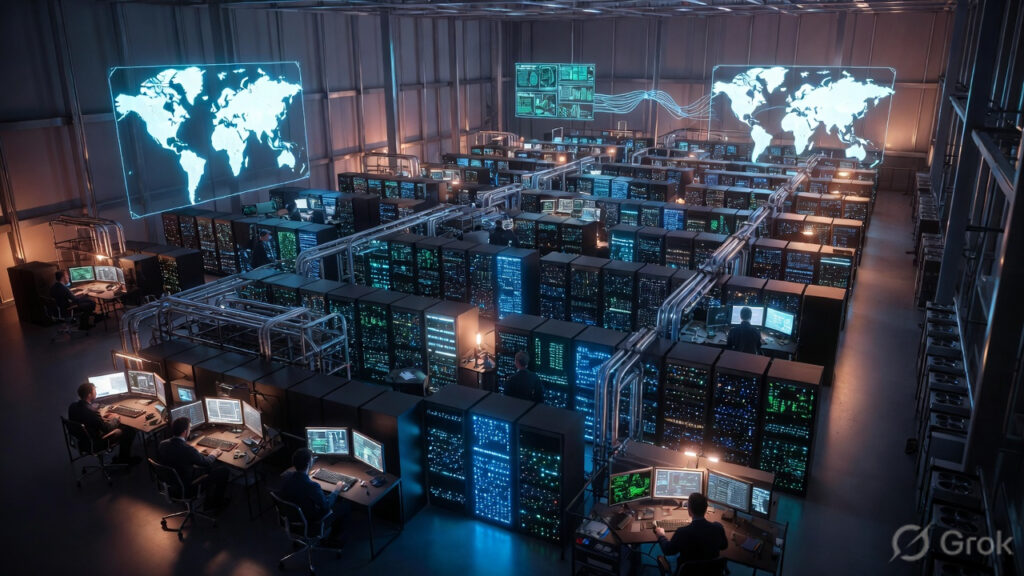
AI sounds abstract until you see what powers it.
Every AI system depends on physical buildings filled with servers, cooling systems, specialized chips, and enormous electricity supply. These data centers process everything from financial transactions to satellite intelligence.
Think of them as the factories of the digital economy.
If a refinery stops working, fuel supply drops.
If a data center stops working, information flow slows.
That distinction matters because modern economies run on data the way industrial economies ran on oil.
Military planners increasingly recognize this. Disrupt computation, and you disrupt decision-making speed. In an AI-driven world, slower decisions can mean strategic disadvantage.
This is why infrastructure once considered commercial is now viewed as strategic.
This shift also raises investor concerns similar to those discussed in my analysis of the AI investment bubble, where rapid innovation often moves faster than real-world infrastructure readiness.
This growing AI infrastructure war impact shows how digital assets are becoming strategic targets.
Security Is No Longer Just About Hackers
Until recently, technology companies worried mostly about cyberattacks. Firewalls, encryption, and software security dominated budgets.
Now executives are asking different questions:
What happens if the building itself becomes the target?
Across the industry, discussions have shifted toward physical resilience:
- Spreading infrastructure across regions instead of mega hubs
- Reinforced construction designs
- Independent power backups
- Geographically diversified cloud networks
This transformation will not be cheap. Building resilient AI infrastructure costs significantly more, and investors are beginning to factor that into future tech valuations.
The era of inexpensive digital scaling may quietly be ending.
Energy Markets React Before Economists Do
At the same time, conflict in energy-sensitive regions immediately affected oil markets.
Energy traders do not wait for confirmed shortages. They react to risk.
According to recent global energy assessments published by the International Energy Agency, geopolitical disruptions often influence energy pricing expectations long before actual supply shortages appear.
The Strait of Hormuz remains one of the world’s most critical oil routes. Even the possibility of disruption sends prices higher because global supply chains depend on predictable energy flow.
When tensions rise:
- shipping insurance becomes expensive
- transport delays increase
- countries begin securing alternative supply
- traders add geopolitical premiums to oil prices
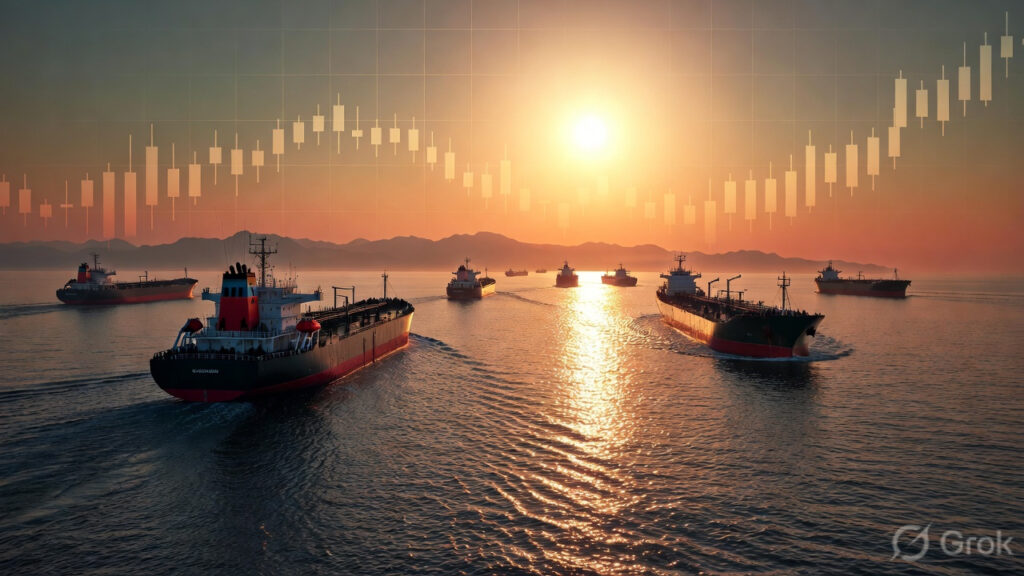
The result is simple. Energy becomes costlier long before physical shortages appear. And since energy sits inside nearly every product and service, inflation pressure spreads quickly.
AI Has an Energy Problem Few Talk About
There is another layer most discussions miss.
Artificial intelligence consumes enormous electricity. Training large AI models requires vast computing power running continuously.
So when energy prices rise, AI becomes more expensive to operate.
Cloud providers absorb some costs initially. Eventually, those costs move downstream:
- higher enterprise software pricing
- increased cloud subscription fees
- tighter startup budgets
- slower experimentation cycles
In other words, geopolitics can indirectly slow AI adoption worldwide.
That connection between oil markets and artificial intelligence is becoming one of the defining economic relationships of this decade.
Investors are now pricing the broader AI infrastructure war impact into global equities.
AI Infrastructure War Impact on Global Markets
Global Conflict Hits Dalal Street
Indian markets reacted quickly as geopolitical tensions intensified following U.S. and Israeli strikes on Iran and retaliatory actions across the region.

Signals were visible even before trading began.
Gift Nifty trends pointed toward a gap-down opening, trading near the 25,230 level, roughly 108 points below the previous Nifty futures close. Traders interpreted this as rising global risk aversion rather than domestic weakness.
By Friday’s closing bell, the impact was clear.
The Sensex dropped 961.42 points, or 1.17%, ending at 81,287.19.
The Nifty 50 fell 317.90 points, or 1.25%, settling at 25,178.65 and slipping below the psychological 25,200 level.
Markets were reacting not to earnings or policy changes but to uncertainty. Investors dislike unpredictability more than bad news itself.
Wall Street Feels the Shock Too
The reaction was global. U.S. markets also closed lower as investors reassessed geopolitical risk and rising energy prices.
The S&P 500 declined about 1.1%, while the Dow Jones Industrial Average lost nearly 0.9% during the session. The technology-heavy Nasdaq Composite fell roughly 1.4%, reflecting pressure on growth and AI-driven stocks.
Technology companies depend heavily on stable global infrastructure and energy availability. When conflict threatens either, valuations adjust quickly.
Money moved toward defensive sectors like energy and utilities, while high-growth technology names faced selling pressure. The message from Wall Street was clear: geopolitical instability can interrupt even the strongest AI-driven market momentum.
This synchronized decline across markets shows how tightly connected global finance has become.
Why Markets React Faster Than News Cycles
Stock markets operate on expectations.
We saw a similar pattern during earlier geopolitical tensions, especially during major trade conflicts that reshaped global capital flows and investor sentiment almost overnight.
Investors immediately begin calculating second-order effects:
For readers who want to understand how traders analyze market momentum during volatile periods, you can explore this trading analysis tool that demonstrates how market signals are interpreted in real time.
Will oil remain expensive?
Will inflation return?
Will central banks delay rate cuts?
Will companies slow spending?
India, being a major oil importer, is especially sensitive. Rising crude prices widen economic pressure through higher import costs and inflation risks.
So even distant conflict reshapes domestic market sentiment.
What This Means for Indian IT Companies
India’s IT sector sits directly inside the global AI ecosystem.
Recent AI infrastructure investments in India show how global technology companies are already preparing for increased computing demand and regional data resilience.
Many Indian firms manage cloud infrastructure, build AI tools, and support enterprise migration linked to overseas data centers. When infrastructure strategy changes globally, Indian service providers feel the ripple.
There are opportunities:
- infrastructure resilience consulting
- AI security implementation
- cloud diversification projects
But also risks:
- delayed corporate technology spending
- cautious client budgets
- slower short-term deal closures
The long-term direction still favors AI adoption. The path simply becomes more uneven.
A Quiet Shift in Salaries and Skills
The workforce impact is subtle but real.
Earlier outsourcing growth rewarded scale. Now companies reward specialization.
Professionals who understand AI systems, cybersecurity, and infrastructure resilience are becoming more valuable. Routine service roles face increasing automation pressure.
The result may not be job loss overall, but widening salary differences between AI-skilled workers and traditional roles.
Inflation: How War Reaches Everyday Life
Most people experience geopolitics through prices, not headlines.
The chain reaction looks like this:
Conflict raises oil prices.
Transport costs increase.
Production expenses rise.
Consumer prices follow.
Fuel, groceries, electronics, travel, and even digital services become more expensive.
A professional in Mumbai may never follow Middle East politics closely, yet still feel its effects through higher living costs and volatile investments.
That is how global instability enters personal finance.
The Rise of Sovereign AI
One long-term consequence may be countries building their own AI infrastructure rather than relying entirely on foreign cloud providers.
Governments increasingly view data centers as strategic assets tied to national security.
This could lead to massive investment cycles in domestic computing infrastructure over the next decade, similar to earlier telecom expansions.
The Bigger Picture: Warfare Is Becoming Economic
Modern conflict now blends multiple layers:
physical strikes
cyber disruption
energy pressure
financial market reaction
AI infrastructure targeting
Wars no longer stay confined geographically. They move through supply chains, markets, and inflation.
Understanding this connection is becoming part of financial literacy itself.
Final Thoughts
The targeting of data centers signals something larger than a regional escalation. It shows that computation has joined oil and trade routes as a pillar of global power.
For investors and professionals, the lesson is simple but important.
Technology, geopolitics, and finance are no longer separate stories. They are one system.
And in the AI age, stability of infrastructure may matter as much as innovation itself.
Understanding the AI infrastructure war impact helps investors prepare for future volatility.
Before we conclude, here are some common questions investors are asking about the growing role of AI infrastructure in global conflicts.
Frequently Asked Questions
1. Why are data centers becoming targets in modern conflicts?
Data centers power artificial intelligence systems, cloud computing, and global communications. In an AI-driven world, disrupting computation can slow decision-making, intelligence analysis, and economic operations. That makes digital infrastructure strategically important, similar to oil facilities in earlier decades.
2. How did the Middle East conflict impact global stock markets?
Markets reacted quickly due to rising geopolitical uncertainty and higher oil prices. Indian indices like Sensex and Nifty declined sharply, while U.S. markets including the S&P 500 and Nasdaq also fell as investors moved toward safer assets and reduced exposure to riskier technology stocks.
3. Why do oil prices rise during geopolitical tensions?
Energy markets price risk immediately. Even the possibility of supply disruption, especially around critical routes like the Strait of Hormuz, increases insurance costs and supply concerns, pushing crude oil prices higher before actual shortages occur.
4. What is the connection between AI and energy prices?
AI infrastructure requires massive electricity consumption. When energy prices increase, operating data centers becomes more expensive, which can raise cloud computing costs and slow AI adoption for businesses and startups.
5. How does global conflict affect Indian investors personally?
Higher oil prices can increase inflation in India, leading to higher fuel costs, expensive goods, and market volatility. This impacts SIP returns, investment sentiment, and overall household financial planning.
6. Will Indian IT companies benefit from AI infrastructure changes?
In the long term, yes. Companies involved in cloud services, cybersecurity, and AI consulting may see increased demand as global firms redesign infrastructure for resilience. However, short-term uncertainty may delay some technology spending.
7. What sectors typically perform better during geopolitical crises?
Energy, defense, utilities, and commodities often perform relatively better because investors shift toward stability and essential industries during uncertain periods.
8. Is geopolitical risk becoming a permanent factor for investors?
Increasingly, yes. Investors now monitor geopolitics alongside inflation and interest rates because conflicts can quickly influence energy prices, supply chains, and global economic growth.
This article reflects ongoing market developments and aims to simplify how global events influence everyday financial decisions.
Disclosure: This article may contain affiliate links. If you purchase through these links, I may earn a small commission at no additional cost to you. This helps support independent research and content creation.