The New Playbook: Choke You Where It Hurts
“China supply chain control is becoming a central lever in global trade, giving Xi Jinping unprecedented influence over modern industries.”
“China supply chain control is reshaping the global trade landscape, giving Xi Jinping unprecedented leverage over modern industries worldwide.”
You know, for ages, the U.S. and China just slugged it out with tariffs kind of like two kids arguing over who gets the last slice of pizza. Soybeans, solar panels, whatever.
But Xi Jinping? The guy’s switched things up big time. China isn’t just threatening, “Fine, we won’t buy your stuff.” Now it’s more like, “Good luck making anything at all without our materials.” Seriously, it’s like someone stealing the car keys and daring you to drive.
“U.S. industries face rising risks due to China supply chain control, which can delay production and increase costs across multiple sectors.”
Forget finished products. China moved the chess game way upstream. They control the weird metals and high-tech bits, rare earths, battery chemicals, fancy biotech stuff that every modern gadget and missile needs. It’s all about “asymmetric dependencies,” whatever the economists want to call it. Basically, China’s making sure it doesn’t need you, but you definitely need them. They can flip the switch and suddenly the world’s assembly lines are gasping for air.
“Companies globally are reassessing strategies to mitigate vulnerabilities created by China supply chain control.”
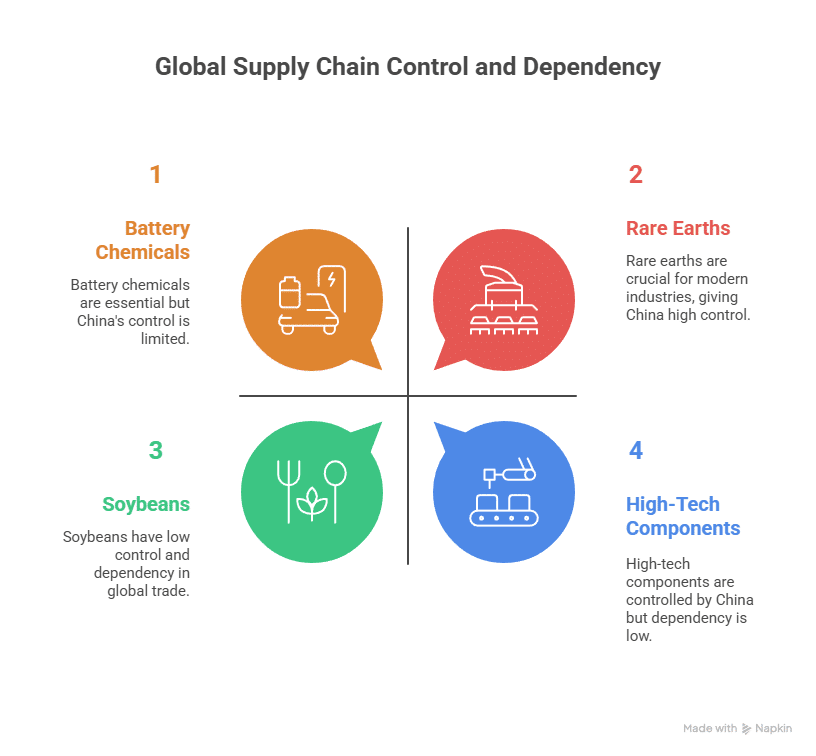
“The vulnerabilities of U.S. industries under China’s control are further explored in our article on U.S. corporate profits and supply chain risks in 2025.”
“Weaponized Supply Chains: How China Supply Chain Control Works”
And get this: They’ve cooked up a mega export license system think over 700 items on the list. Beijing can check who’s buying and cut off whoever they want, whenever they want.
It’s like a velvet rope at a club, but instead of keeping out rowdy drunks, they’re blocking entire industries. They can squeeze a specific company with delays or approvals while letting the rest of the world’s trade hum along like nothing’s wrong. It’s sneaky, almost evil-genius stuff.
“For a detailed analysis of China’s rare earth export controls and their impact on global industries, see this Taylor Wessing briefing.”
U.S. Defense Vulnerabilities from China Supply Chain Control
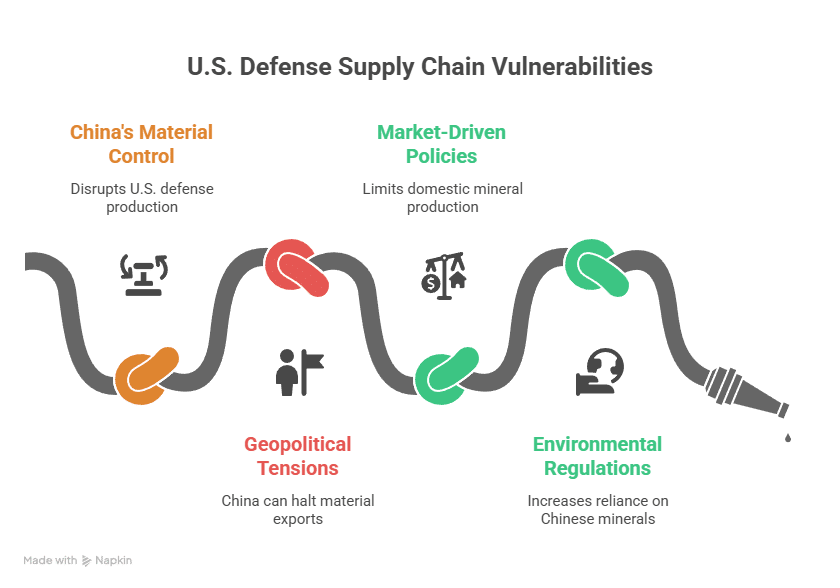
Now, the real gut punch? The U.S. military’s caught right in the crosshairs. America can’t crank out high-tech weapons or even basic electronics without some of these Chinese materials.
If things get spicy geopolitically, China can just close the tap boom, assembly lines freeze, jets and missiles wait for parts that never come. Already, the U.S. defense business is feeling the pinch: delays, rising costs, headaches everywhere from iPhone plants in India to missile factories in Texas.
The U.S. loves market-driven policies and strict environmental rules, which ironically gives China the edge in the minerals game. Sometimes, trying to be the good guy leaves you with your shoelaces tied together.
“For a deeper look at how China is shifting global trade dynamics, see our analysis of the China-US LNG trade shift and its energy impacts in 2025.”
The Catch: Limits to China’s Power
Of course, China’s not invincible. The more they flex this muscle, the more everyone else scrambles to find workarounds. Locking down 95% of the rare earths market? That’s scary. Drop to 85% and suddenly rivals are building their own mines and factories.
The U.S., Japan, and Europe are hustling to “de-risk” and pump cash into homegrown supply chains magnets, chips, batteries, you name it. But let’s be real, that takes time. Meanwhile, China’s picking off Western defense firms, one export license at a time.
It’s all a high-stakes staring contest, really. China’s betting the West will blink first, and honestly, they’ve gotten pretty good at these economic dark arts. Sometimes, pulling the right lever in global trade is just as powerful as rolling out the tanks.
“For an in-depth look at China’s trade strategies and how Xi is leveraging supply chains to influence the U.S., read this Times of India article.”
Global Chessboard: U.S. Countermoves Against China Supply Chain Control
Oh, and if you’re curious, Edward Fishman, the guy behind the video this is riffing on, talks about how the U.S. also uses its own pressure points like financial systems and supply chains to throw elbows in the global power game. The world’s just one giant chessboard. Or maybe a Jenga tower, about to topple.
“The world must adapt to China supply chain control to avoid critical disruptions in technology, defense, and manufacturing sectors.”
Frequently Asked Questions
1. What does “China controlling the supply chain” really mean?
It means China dominates the production of critical materials like rare earth metals, battery chemicals, and other high-tech components that modern industries like electronics and defense rely on. Without access to these, manufacturing in other countries can stall.
2. How does China’s export license system work?
China has a list of over 700 items requiring special export approvals. This system lets Beijing control who can buy what, and when. They can delay or block specific companies while keeping overall trade flowing for others.
3. Why is the U.S. defense industry vulnerable to China’s supply chain control?
Many U.S. defense and tech products depend on materials that China dominates. If China restricts exports, production of weapons, electronics, and advanced technology could be delayed or halted.
4. Can other countries reduce dependence on China for critical materials?
Yes, but it takes time. The U.S., Japan, and Europe are investing in homegrown mines, factories, and alternative suppliers to “de-risk” their supply chains, though building these capabilities isn’t immediate.
5. Does the U.S. use similar strategies in global trade?
Yes. The U.S. leverages financial systems, trade rules, and supply chain dependencies as pressure points in global negotiations, similar to how China uses its material dominance.