🎧 Prefer listening? Check out our podcast episode on China US LNG trade shift trade truce extension for in-depth insights into the 2025 energy and trade impact.
China US LNG trade shift trade truce extension latest on 12/08/2025 highlights how quickly global energy dynamics can change, reshaping trade flows, prices, and geopolitical influence.
China US LNG Trade Shift Impact 2025: Tariffs, Rerouting, and Strategy
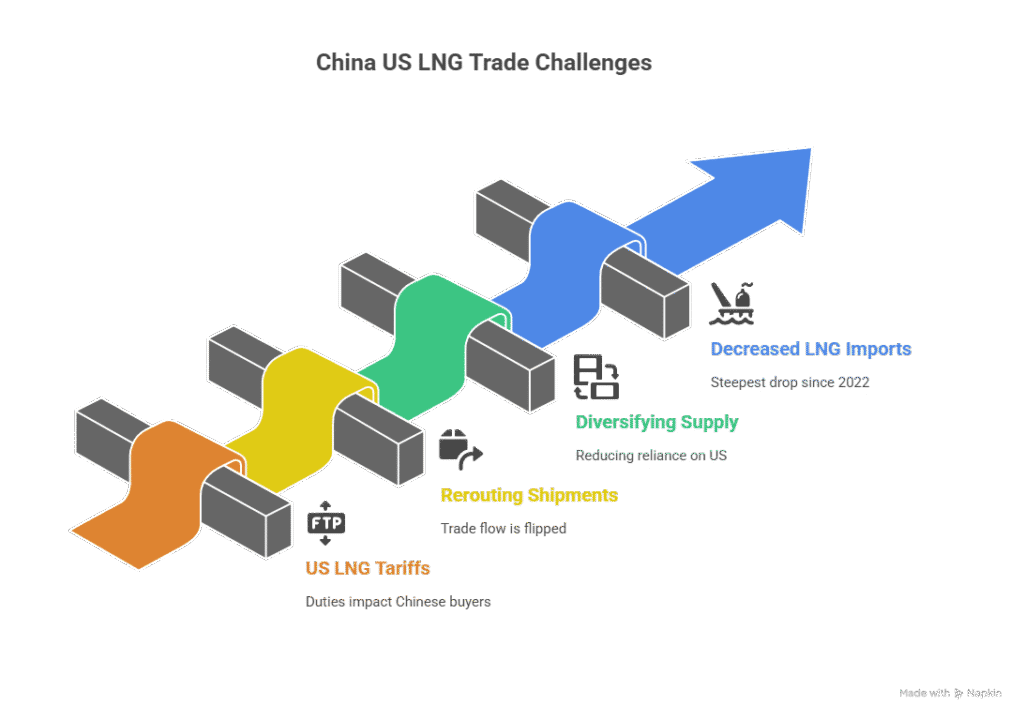
In mid-April 2025, trade tensions cranked up when steep U.S. LNG tariffs were reinstated and China fired back with retaliatory duties as high as 125% on American cargoes. Overnight, the math stopped making sense for Chinese buyers. Instead of canceling long-term U.S. contracts outright, they began rerouting shipments to Europe or other Asian buyers flipping traditional LNG trade flows on their head.
And this isn’t a temporary shuffle. Beijing is doubling down on diversifying supply, signing more Middle East deals, boosting domestic gas output, and leaning harder on Russian pipeline imports via the Power of Siberia network. The result? In the first half of 2025, China’s LNG imports fell by 20% year-on-year the steepest drop since the 2022 global gas crunch. A mild winter, slower industrial output, and cheaper Russian gas made that possible.
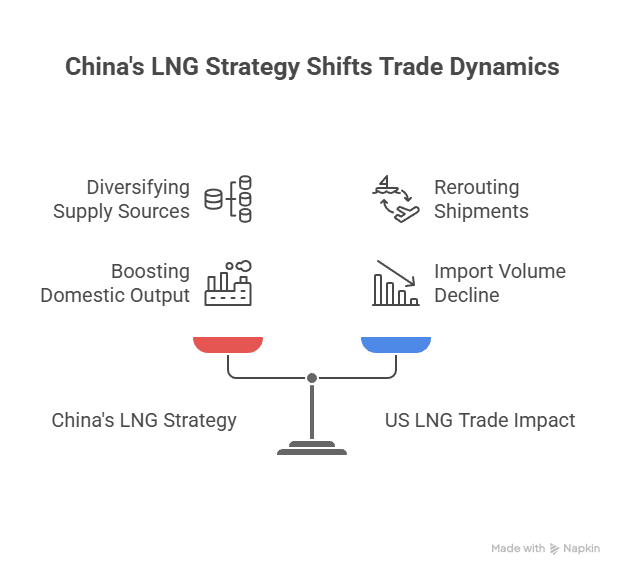
The shift in LNG trade is a key example of the broader trends affecting the China-US economic relationship in 2025.
Cozying Up Elsewhere, China US LNG trade shift trade truce extension
U.S. LNG isn’t winning on price either. Wild Henry Hub swings and long-haul shipping costs make it less appealing compared to oil-indexed contracts from Qatar, Malaysia, or the UAE. Chinese firms are locking in those steady, long-term deals, sidestepping volatility and reducing exposure to U.S. market politics.
Some buyers are even using third-party delivery clauses to legally redirect U.S. cargoes into tariff-free markets. This turns potential losses into trading opportunities—avoiding tariffs while pocketing profit from resales.
To understand the political drivers behind this trade shift, explore how the Trump trade war could impact global markets in 2025.
China US LNG Trade Shift: Impact on U.S. LNG Exporters
The pivot has left American exporters scrambling. Europe’s absorbing the extra volumes for now, but it’s pushing prices down and cooling enthusiasm for new export infrastructure. Without fresh long-term Chinese contracts, future capacity expansions could slow. If this gap sticks, U.S. LNG will have to fight harder for market share elsewhere, which could dent shipping demand and make new terminal projects a harder sell.
China US LNG Trade Shift: Global Trade Power Shifts
This LNG shuffle is part of something bigger: the U.S. isn’t the trade boss it once was. China’s diversifying suppliers, boosting its own production, and building protection against U.S. leverage. It’s a playbook that fits its broader push to reduce dependency on the U.S.—and it’s not just about gas.
India’s running a similar game—signing deals with Qatar, the U.S., Australia, Russia, and flipping cheap Russian crude into refined fuels for export. Meanwhile, Russia’s still a big player in Asia despite sanctions, with China’s investments giving it the leverage to secure rock-bottom LNG prices. And with Europe largely off Russian gas, Arctic shipping routes are becoming a bigger part of the story.
For a detailed analysis on how geopolitical tensions and tariffs are affecting the future of U.S. LNG exports, you can read this report from the Center for Strategic and International Studies (CSIS).
China US LNG trade shift trade truce extension. The U.S.-China Interdependence Puzzle
Here’s the kicker: for all the sparring, the U.S. and China are still tangled up. America’s still a major supplier, and China’s still a big buyer in other sectors. Tariffs hurt both sides, and export bans have a way of boomeranging. Neither wants to push the other so far that the economic damage outweighs the political win. Bottom line: This LNG pivot isn’t just about energy. It’s about leverage, strategy, and who sets the rules for the next phase of global trade. And right now, China’s showing it’s willing to rewrite the playbook.
According to CNN, both Washington and Beijing agreed to extend the trade truce for another 90 days, keeping tariffs on LNG in place while negotiations continue.
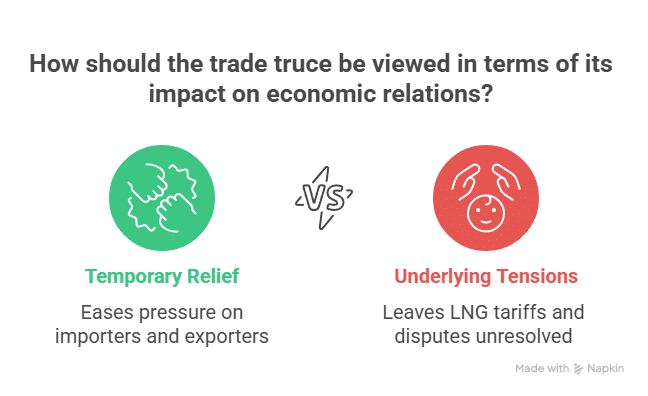
On August 12, 2025, Washington and Beijing announced an extension of their trade truce to sidestep a planned hike in tariffs. According to BBC News, both sides agreed to maintain current duty levels while continuing talks on broader economic disputes. While the deal temporarily eases pressure on importers and exporters, it does not reverse the steep LNG tariffs already in place. Analysts note that the move buys time for negotiations but leaves the underlying tensions and the LNG trade realignment largely unchanged.
FAQs
1. So, why’d China bail on U.S. LNG?
Short answer: politics and price. Tariffs up to 125%, political tension, and U.S. gas that isn’t cheap. China locked in steadier long-term deals with Qatar, Australia, Russia, and others to avoid market volatility.
2. What happens to U.S. LNG now?
American exporters are sending more gas to Europe, which is pushing prices down there. That’s making new export terminal projects less attractive.
3. What’s India up to in all this?
India’s hedging buying from everywhere, securing long-term LNG deals, and flipping discounted Russian crude into fuel exports. It’s turning them into a bigger energy player.
4. Russia’s role what’s the scoop?
Russia’s still supplying LNG and oil to Asia, with China using its investments to negotiate low prices. Arctic routes are adding new trade paths.
5. What’s it mean for U.S.-China relations?
It’s complicated. They need each other but are constantly trying to reduce dependency. China’s diversifying, and the U.S. can’t lean on old leverage the way it used to.
6. What’s the latest update on the US-China trade truce?
On August 12, 2025, both countries agreed to extend the truce until November, pausing new tariffs for 90 days. LNG tariffs remain, so the energy shift continues.