In a world of constant notifications and complex investment apps, Financial Simplicity in 2025 has emerged as the ultimate goal for those tired of the “hustle culture” grind. More than just a trend, it is a conscious shift toward minimalism where mental peace is valued as much as a high salary. By stripping away financial clutter and focusing on what truly matters, people are reclaiming their time and reducing the chronic stress associated with modern money management.
The intent behind this movement isn’t just to save money; it’s to save your sanity. Whether you are navigating a volatile economy or simply trying to escape the “death by a thousand subscriptions,” simplifying your finances allows you to focus on long-term stability rather than short-term noise. In 2025, the most successful individuals aren’t just those with the biggest bank accounts, but those with the simplest systems.
🎧 Prefer listening? Here’s a short audio summary of this article.
What Is Financial Simplicity And Why It Matters in 2025 ?
I. That Feeling in Your Gut: The End of an Era
Okay, let’s get real for a second. Remember 2018? Back then, it seemed like every podcast, Instagram guru, and LinkedIn “thought leader” was preaching the same sermon: “Rise and grind!” Sleep was for the weak. Side hustles were mandatory. If you weren’t working 60-hour weeks while running a dropshipping business on the side, you were basically failing at life.
We bought into it. Hard.
Fast forward to 2025, and… oof. That knot in your stomach every Sunday night? The exhaustion that feels less like “I need a vacation” and more like “I need a whole new life”? Yeah, you’re not imagining it. People are finally waking up. We’re staring at our bank accounts stacked but unsatisfied and realizing the hustle was a scam.
Money was never the end goal. It was supposed to be the tool the thing that gave us freedom, security, and a life we actually enjoyed. Instead, we turned it into a never-ending race where the finish line kept moving.
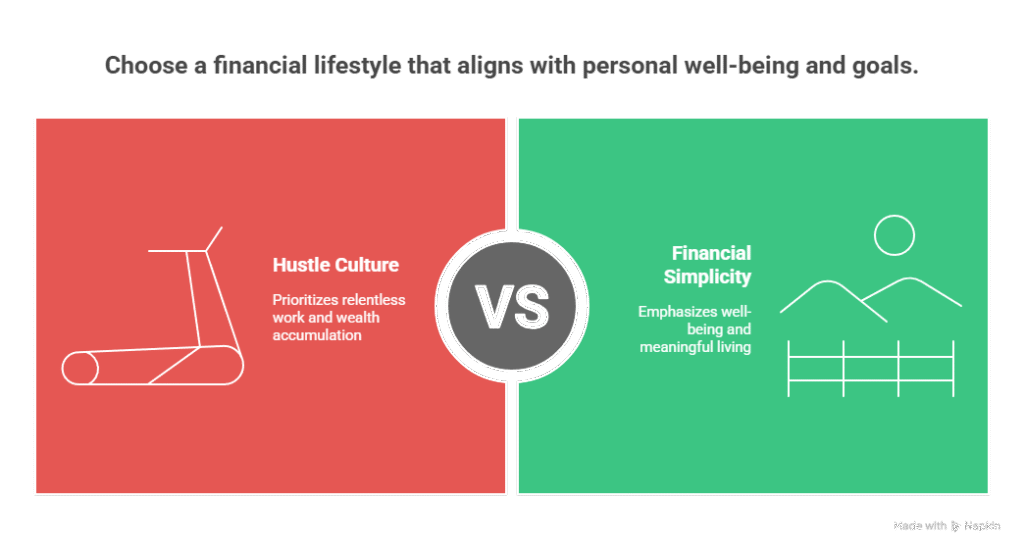
But here’s the good news: A quiet revolution is happening. People are trading burnout for breathing room. We’re ditching the “more, more, more” mentality for something better financial simplicity. And if you’re tired of sprinting on a treadmill that only speeds up, consider this your official invitation to step off.
For those starting their journey toward financial simplicity, these inspiring debt-free success stories show how everyday people turned financial chaos into calm.
II. So, What Exactly is Financial Simplicity?
Forget everything you’ve heard about budgeting like a robot or pinching pennies until your wallet cries. Financial simplicity isn’t about spreadsheets or deprivation it’s about clarity. It’s the art of managing money in a way that reduces stress instead of adding to it.
Think of it like this:
Spend Less Than You Earn (The Golden Rule). Not so you can hoard cash, but so you always have room to breathe.
Debt? Tread Carefully. If it’s not for something that improves your life long-term (like a home), think twice.
Your “Peace Fund” > Emergency Fund. This isn’t just money it’s sleeping soundly at night money.
Spend Like It Matters. Every dollar should feel like a vote for the life you want, not the one you’re pressured into.
Stripping away the noise allows you to find financial stability in 2025 by focusing on core needs rather than temporary wants.
Lifestyle Inflation is a Trap. Got a raise? Great. Now pretend you didn’t. Save it, invest it, or buy yourself freedom not a fancier car.
This isn’t about living in a tiny house with one pair of shoes. It’s about cutting the clutter financial and mental so you can focus on what actually matters.
Struggling with high-interest credit cards? This motivational guide to paying off debt can help you move from credit card stress to financial simplicity.
III. The High Cost of the Hustle: A Collective Burnout
Hustle culture sold us a lie wrapped in a motivational quote. We glorified 70-hour workweeks like they were a badge of honor. Side hustles stopped being fun and turned into survival tactics. Burnout wasn’t a warning sign it was the price of admission.
Then, reality hit.
A 2024 Pew study found that 62% of millennials would take a pay cut for more time and peace. Let that sink in. People aren’t just talking about change they’re walking away from the grind.
Take Marie, for example. She was the “success story” $120K salary, corner office, the whole package. But her life was a loop of stress, screen time, and 2 a.m. Slack anxiety. One day, after a panic attack over a single email, she quit. Went freelance. Halved her income.
Her friends thought she’d lost it. But here’s what she told me:
“I make half as much now, but I feel richer. I traded panic attacks for park benches. Peace is my new paycheck.”
Transitioning away from burnout is easier when you have a clear plan; creating a financial vision board can help you visualize the peaceful life you are reclaiming.
IV. Why Simplicity is Finally Winning in 2025
Two big shifts are driving this:
The Economy Forced Our Hand. Inflation, layoffs, and instability made us realize: A simple life isn’t just nice it’s smart.
We’re Done Pretending. Gen Z workers prioritize mental health over salary (71%, per LinkedIn). Trends like “quiet quitting” and “soft saving” aren’t laziness they’re rebellion.
The numbers don’t lie:
43% of millennials now choose debt-free simplicity over keeping up with the Joneses.
Google searches for “escape hustle culture” skyrocketed 210% since 2022.
Lifestyle inflation is one of the most common traps that keep people stuck in the cycle of working more to spend more.
V. Your Step-by-Step Guide to Financial Simplicity
Ready to opt out? Start here:
Track Your Spending (No Judgment). Use an app or a notebook. The goal? Awareness, not guilt.
Unsubscribe from Temptation. Delete shopping apps. Mute influencers. Your wallet (and sanity) will thank you.
Build a “Peace Budget.” Ask: “What can I cut to work 2 fewer hours a week?”
If a traditional budget feels too restrictive, you might find more success with the 70-20-10 budget rule, which offers a simple way to manage your income while still prioritizing your peace fund.
Start Small with Savings. Even $500 buys you options.
Work Smarter, Not Harder. One sustainable income stream > three soul-crushing side gigs.
Say “No” Without Apology. To expensive outings. To subscriptions you forgot about. To pressure.
Automate the Boring Stuff. Savings, investments, bills set it and forget it.
A survey by the Top Employers Institute reveals62% of Gen Z employees are willing to accept a smaller paycheck in exchange for improved work–life balance, with 82% citing flexibility and 83% prioritizing psychological health benefits
If this shift toward financial simplicity in 2025 resonates with you, explore more real-world money stories at PennyPowerPlay, where finance meets real life and calm beats chaos.
VI. Conclusion: Your Life is the Real Prize
We’ve been sold a broken definition of success one where money matters more than living. Financial simplicity flips the script. It’s not about what you accumulate; it’s about what you protect:
Your time.
Your peace.
Your freedom to choose.
The hustle promised you riches. Simplicity gives you something better: A life you don’t need to escape from.
So, what’s it gonna be?
Still have questions about living a simpler financial life? These are the most common ones people ask in 2025.
FAQ Section
1. What is financial simplicity, and how is it different from minimalism?
Answer:
Financial simplicity is about streamlining your finances to reduce stress and regain control not necessarily living with less. While minimalism often focuses on reducing physical possessions, financial simplicity prioritizes intentional spending, manageable budgeting, and a lifestyle aligned with peace and personal values rather than constant hustle or accumulation.
2. Why are so many young Americans embracing financial simplicity in 2025?
Answer:
Rising burnout, unstable job markets, inflation, and mental health awareness have pushed Gen Z and Millennials to rethink success. Instead of chasing high salaries, many now prioritize peace of mind, flexibility, and meaningful living trading hustle culture for a more sustainable, simple financial approach.
3. Can financial simplicity help me reduce anxiety about money?
Answer:
Yes. By focusing on fewer but more intentional financial choices like avoiding lifestyle inflation, tracking spending, and building a peace fund financial simplicity removes the pressure to constantly earn more. This shift often leads to improved mental well-being and a stronger sense of security.
4. How can I start practicing financial simplicity in my daily life?
Answer:
Begin by tracking your expenses with zero judgment. Cut back on unnecessary subscriptions, mute social media influencers who promote excessive consumerism, and set small savings goals. Focus on creating a “peace budget” that gives you time, flexibility, and freedom not just financial gain.
5. Is it realistic to live a simple financial life while still saving for the future?
Answer:
Absolutely. Financial simplicity isn’t about avoiding saving it’s about doing it mindfully. By living below your means and automating your savings and investments, you can still build wealth over time while enjoying a calmer, more balanced life today.
Related Articles