Gen Z Crypto Trends 2025: Why Young Adults Are Choosing Decentralized Finance. Over Cash
🎧 Prefer listening over reading? Hit play below to hear the full audio version of Gen Z Crypto Trends 2025 and discover how Zoomers are reshaping the future of money.
Imagine this: just a few decades ago, the sound of coins clinking in your pocket or a wallet stuffed with bills was the ultimate symbol of financial power. But in 2025? That sound has faded. For Gen Z—the generation born into Wi-Fi, smartphones, and TikTok—money is no longer something you fold or jingle. It’s something you tap, scan, or invest digitally.
They’re not just witnessing a financial shift—they’re driving it.
Gen Z Crypto Trends 2025: Beyond Cash and Into Crypto (Gen Z Crypto Trends 2025: Digital Habits That Matter)
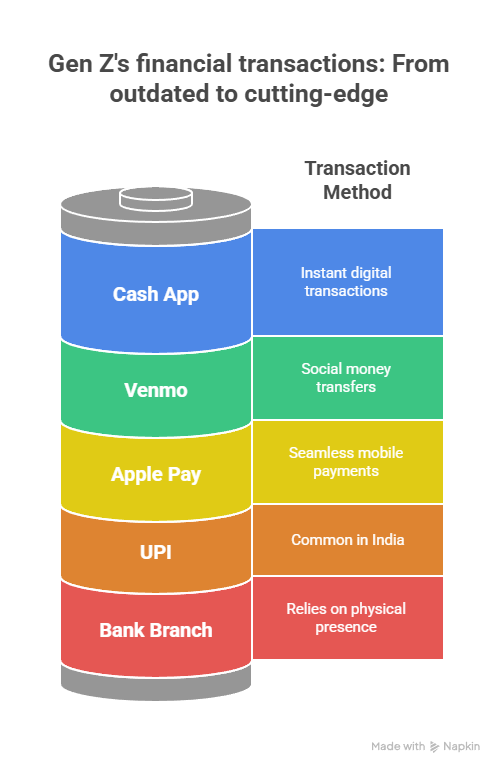
Gen Z doesn’t think of digital banking as innovative—it’s just how things are. While older generations still drive to the bank or write checks, Zoomers are managing their money with apps that update in real time. Ask them about a physical bank branch, and they’ll probably shrug. For them, that’s as outdated as dial-up internet.
Apps like Cash App, Venmo, Apple Pay, and even UPI (for Gen Z in India) dominate their transactions. Whether it’s splitting pizza with roommates or paying rent, it’s all happening with a few swipes on a phone.
They’re not just rejecting cash. They’ve outgrown it.
“You might also enjoy our deep dive into The $100 Rule and Micro-Budgeting.”
Why Gen Z Crypto Trends 2025 Matter for Global Finance. What Gen Z Crypto Trends 2025 Tell Us About the Future
But Gen Z isn’t stopping at digital wallets. They’re looking deeper into the world of crypto, and many have already dipped their toes into this decentralized ocean.
Surveys show that a surprising chunk of this generation—over 50%—have tried or are interested in cryptocurrency. Even more eye-opening? They’re more likely to own crypto than invest in retirement funds like IRAs or 401(k)s.
It’s not just about flipping coins for quick profit (though let’s be honest, some are definitely in it for the gains). For many, it’s about freedom—the idea of not relying on traditional banks or governments to store and move money. It’s money that’s borderless, fast, and—ideally—transparent.
“Learn why Gen Z is ditching credit cards in our post on Debit Over Credit Trends.”
Real Story: How Sarah Switched from Savings to Satoshi
Take Sarah, a 23-year-old digital artist from Chicago. She’s your typical Gen Z—TikTok savvy, budget-conscious, and tired of banks sending overdraft alerts for fun.
Instead of setting up a traditional savings account, Sarah decided to try something new. She took $100 from a freelance gig and bought a small portion of Ethereum. No fancy setup. Just a phone, a crypto wallet, and a curious mindset.
“At first, I didn’t really get it,” she told me. “But the idea of having money that wasn’t controlled by a bank or taxed to death just felt… smart.”
Sarah’s not rich from it. She’s not living off crypto. But she’s learning, she’s watching the market, and she feels like she’s part of something bigger. It’s not about escaping the system—it’s about building a better one.
Is Cash Really Dying? Not Quite.
Now, before you say goodbye to your wallet, let’s be clear: cash still has a role, especially in lower-income communities or places where digital adoption is slower. Some Gen Z-ers still use it—especially those who prefer budgeting with hard limits or avoiding digital debt traps.
But even they often convert cash into digital form as quickly as possible. It’s rarely kept long. Most would rather track their spending on an app than stuff their money in an envelope.
So no, cash isn’t dead. But it’s definitely on life support.
“According to Triple-A’s latest research, crypto ownership is expanding fastest among Gen Z globally.”
Decentralization: Why Gen Z Believes in It
Here’s the thing—Gen Z grew up watching banks collapse, data breaches go viral, and credit card debt become a generational curse. So when they hear about decentralized finance (DeFi)—systems without middlemen, hidden fees, or opaque rules—it makes sense to them.
They’re not just buying Bitcoin or Ethereum. They’re joining Web3 communities, staking coins, using blockchain to support artists, and testing out new ways to store and grow wealth.
To Gen Z, crypto isn’t a wild risk. It’s an alternative system they trust more than the one that came before it.
The Road Ahead: A Financial Hybrid
So what does the future hold? The likely answer: both.
Cash will still exist, but in smaller circles. It may stick around for street vendors, emergency kits, or places with limited internet. But the default mode of money will be digital—and crypto will increasingly play a role.
Banks and fintech companies need to wake up to this. If they’re not offering sleek mobile experiences, crypto integration, or educational tools for Gen Z, they’re already behind.
This generation isn’t just asking for change. They’re building it, coding it, and investing in it.
According to a recent Financial Times report, “nearly a third of Gen Z began investing by university age,” driven by user-friendly mobile apps and accessible financial content
Final Thoughts: Gen Z Is Leading the Charge
The future of money isn’t one-size-fits-all. It’s a hybrid of the familiar and the futuristic. Gen Z’s financial style blends practical saving, digital habits, and a bold curiosity for new tools like crypto and decentralized apps.
They want control, speed, and purpose in how they handle money. And as their financial influence grows, so will the systems they support.
So, next time you reach for your wallet, think of this: your Gen Z cousin might already be paying in crypto—and planning to stake their next paycheck in the blockchain.
The future of money? It’s already here. And Gen Z is holding the keys.