Setting SMART financial goals for 2025 and beyond helps build long-term stability.
“SMART financial goals for 2025 are essential for achieving stability and success in your financial journey.” Setting SMART financial goals is key to achieving financial stability and success. SMART goals are Specific, Measurable, Achievable, Relevant, and Time-bound. They offer a clear plan for financial planning. This way, individuals can tailor their financial plans to fit their needs and goals, making planning more effective.
“Have you ever set a savings goal but lost track after a few months? That’s where SMART goals come in; they keep you accountable.”
🎧 For those who prefer listening, this blog on SMART Financial Goals 2025 is available in audio format too.

Financial planning is about managing your finances well. Setting SMART goals is a vital step in this process. SMART goals help you focus on your financial goals, use your resources wisely, and track your progress. With SMART goals, you can make smart financial decisions, ensuring you’re moving towards your goals.
“How to Set SMART Financial Goals for 2025” brings many benefits. You’ll have better financial clarity, improve your budgeting, and make better financial choices. SMART goals give you a way to check your financial progress, adjust as needed, and keep your eyes on your long-term goals. “With inflation still hovering around 4% in 2025, setting SMART savings goals has become even more important.”
To keep yourself on track, check out my post on how to monitor your progress over time and tweak goals if needed: https://pennypowerplay.com/tracking-financial-goals-progress-august-2025/
Introduction to SMART Financial Goals for 2025
SMART financial goals are made to be actionable, guiding your financial planning. By setting specific, measurable, achievable, relevant, and time-bound goals, you can create a plan that meets your unique financial needs and goals. “In 2025, with dynamic economic changes and the development of individual financial equipment, it is more important to update and review smart goals regularly than ever to remain financially flexible.”
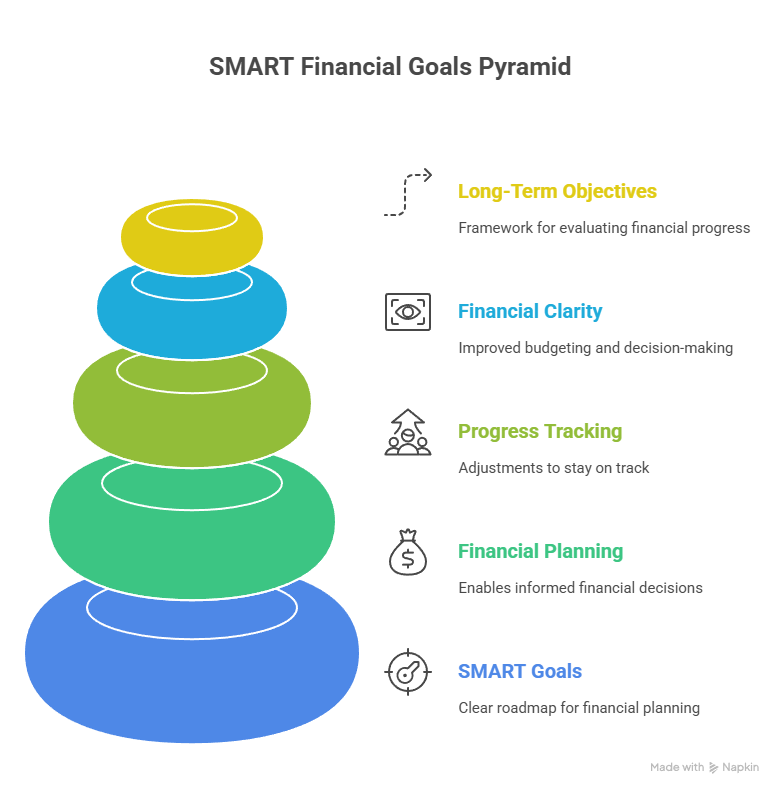
Key Takeaways
- Setting SMART financial goals is essential for achieving financial stability and success.
- SMART goals provide a clear roadmap for financial planning, helping individuals prioritize their financial objectives.
- Financial planning with SMART goals enables individuals to make informed decisions about their financial resources.
- SMART goals help individuals track progress over time, making adjustments as needed to stay on track.
- Effective financial planning with SMART goals leads to increased financial clarity, improved budgeting, and enhanced financial decision-making.
- SMART goals provide a framework for evaluating financial progress and staying focused on long-term financial objectives.
“How to Create SMART Financial Goals for 2025”

Setting SMART financial goals is key to managing money well. SMART stands for Specific, Measurable, Achievable, Relevant, and Time-bound. Knowing what makes a goal SMART helps people plan their finances better and reach their goals.
Good money management starts with knowing your financial situation and goals. SMART goals help create a plan for financial stability. This means assessing your current finances, identifying what needs work, and creating a plan to meet your financial goals.
For example, due to an increase in increased expenses in 2025, you can set a smart goal to save an emergency fund equivalent to three months of expenses by the end of the year, which starts at $ 250 per month and is adjusted upwards as income increases. “
What Makes a Goal SMART?
A SMART goal is clear and doable. It’s specific, measurable, and fits with your values and finances. For example, saving $1,000 for an emergency fund in 6 months is a SMART goal. It’s clear, measurable, and achievable.
Why Traditional Financial Goals Often Fail
Traditional financial goals often fail because they’re too vague. Saying you want to “save more money” is not specific or measurable. SMART goals help avoid these pitfalls and lead to financial success.
“In the 2025 in particular, the economic environment transmitted rapidly, specific and adaptable goals are important for financial security.”
The Psychology of Successful Goal Setting
Setting successful goals needs motivation, commitment, and positive thinking. SMART financial goals give a sense of purpose and direction. They help stay motivated and focused. Breaking down big goals into smaller tasks makes the process less daunting.
“It is important to build flexibility in their goals, as the financial uncertainties that occur in 2025 must use their plans under new circumstances.”
Avoid common pitfalls by reading about the top mistakes people make when they’re setting financial goals: https://pennypowerplay.com/mistakes-in-financial-goal-setting-2025/
“Benefits of Sticking to SMART Financial Goals for 2025”
To set effective financial goals, you need to make them clear. This means setting specific targets, like saving for a house or paying off debt. By making these goals clear and reachable, you can create a path to success. Think about how your investment and savings plans can help you achieve these goals.
When setting your financial goals, think about what you want to achieve. Ask yourself: What are my short-term and long-term financial goals? What steps can I take to get there? How will I track my progress? Answering these questions helps you make a detailed plan and stay focused.
Some important things to consider when making your financial goals specific include:
- Identifying your financial priorities, such as saving for retirement or paying off high-interest debt
- Developing a comprehensive savings plan that aligns with your investment strategies
- Breaking down large goals into smaller, manageable tasks to help you stay on track
By following these steps and creating a specific plan, you can set yourself up for success. Remember to regularly review and adjust your plan as needed to ensure you’re on track to meet your objectives.
“Use updated 2025 financial apps or AI-operated calculators to define and improve your goals, whether for purchase, education or digital investment.”
“According to Investopedia, using the SMART framework making your financial goals specific, measurable, achievable, relevant, and time-bound can dramatically improve your accountability and outcomes.”
Establishing Measurable Financial Targets
SMART Financial Goals 2025: Common Mistakes to Avoid
To get better at managing money, setting clear goals is key. You need to watch your income, spending, and how you’re paying off debt. This way, you can see if you’re getting closer to your money goals and tweak your plan if needed.
Some important money metrics to keep an eye on are:
- Net worth
- Emergency fund savings
- Debt-to-income ratio
- Credit score
These numbers give a full picture of your financial health. They help you spot where you can do better and make smart choices about your money.
Using tools like budget apps or spreadsheets can help you stay focused. Setting specific money goals, like paying off a certain debt or saving a certain amount, can also keep you motivated.
By setting clear money goals and tracking your progress, you’ll understand your financial situation better. This can lead to better money management and a more stable financial future.

| Financial Metric | Target Value | Current Value |
| Net Worth | $10,000 | $5,000 |
| Emergency Fund | 3 months’ expenses | 1 month’s expenses |
| Debt-to-Income Ratio | 30% | 40% |
“When you track calculations such as net worth, emergency funds and inches, you can consider that the average emergency fund in 2025 may now require at least three months living, reflecting high costs and financial precautions can be increased.”
For those seeking to understand the most reliable way to build wealth over time, read this comprehensive guide on Compound Interest Long Term Investing.
Setting Achievable Money Goals
Setting money goals is key in financial planning. You need to know your financial limits and aim for goals that are both challenging and reachable. Look at your income, expenses, and savings to set goals. Budgeting is important because it helps you use your money wisely.
To make money goals achievable, break them down into smaller tasks. Start by making a budget and tracking your spending. This will show you where your money goes. Then, find ways to save money for your goals. Important steps for setting money goals include:
- Assessing your financial capabilities
- Creating a budget and tracking expenses
- Setting realistic targets
- Regularly reviewing and adjusting your goals
“Take advantage of the latest automatic savings facilities and target-based management equipment-these digital solutions can help save and achieve your 2025 money destinations.”
By following these steps and using budgeting and financial planning daily, you can reach your money goals. Stay focused and keep going. If you need help, don’t hesitate to ask.
Because staying consistent is hard, I share tips in this article on how to stay motivated for long-term savings even when progress seems slow: https://pennypowerplay.com/stay-motivated-long-term-savings-2025/

Ensuring Your Financial Goals Are Relevant
Setting financial goals is all about relevance. They should match your life stage, values, and the economy. Money management and investment strategies help make your goals achievable.
A good financial plan considers different life stages. It might be saving for a house or planning for retirement. Your investment strategies should change with your life, keeping your goals reachable. For example, a young person might save for emergencies, while a retiree aims to keep their wealth safe.
“In 2025, relevance can mean distance work costs can plan for expenses, distribute money to digital assets or benefit from recently introduced government savings accounts.”
Aligning Goals with Life Stages
- Check your current finances and find areas to improve
- Set clear, measurable goals that fit your life stage and values
- Create a money management plan to reach your goals
Aligning your financial goals with your life stage gives you purpose. This motivation helps you stay focused on your goals. It leads to a more secure financial future through smart investment strategies and money management.
Creating Time-Bound Financial Objectives
Setting deadlines for financial goals is key to success. The “T” in SMART stands for Time-bound. It helps break down big goals into smaller tasks with deadlines.
For example, when making savings plans, setting a timeline is crucial. You might aim to save for a vacation or retirement. This makes your goals more achievable.
To create time-bound goals, prioritize tasks. Focus on debt reduction and make a schedule. Here’s how to do it:
- Identify the goal: Know what you want to achieve, like paying off debt or saving.
- Set a deadline: Pick a specific date to reach your goal.
- Break it down: Split the goal into smaller tasks with deadlines.
- Track progress: Keep an eye on your progress and adjust as needed.

“Set quarterly posts against your annual goals and take advantage of new goals-deadline features in the top financial planning app for 2025.”
By following these steps, you can make steady progress towards your financial goals. Whether it’s debt reduction or savings plans, setting deadlines is crucial. Remember, tracking your progress is key to success.
Common Pitfalls in Financial Goal Setting
Many people make mistakes when setting financial goals. It’s important to learn about financial literacy to avoid these errors. One big mistake is making choices based on feelings, not facts, which can ruin budgeting.
A good plan helps you stay focused and avoid making decisions based on emotions. Here are some common mistakes to watch out for:
- Emotional decision making: Letting feelings guide your money choices can lead to bad decisions.
- Unrealistic expectations: Setting goals that are too high can make you feel let down and discouraged.
- Lack of flexibility: Not changing your financial plan when things change can hold you back.
Knowing these common mistakes helps you avoid them and set better financial goals. This means learning about financial literacy and budgeting well.
If you’re looking to reach goals faster, here’s how you can increase your income without adding extra work hours: https://pennypowerplay.com/how-increase-income-without-extra-hours-in-2025/
It’s key to set financial goals with a clear mind. Take time to learn about your options. This way, you can make smart choices that help you reach your money goals.
Transition on financial apps: Although technical equipment is useful, you can always make the recommendations again and remain informed of broad financial rounds.
To avoid common mistakes in setting financial goals, you need knowledge, discipline, and flexibility. By focusing on financial literacy and budgeting, you can achieve long-term financial success.
| Pitfall | Consequence | Solution |
| Emotional decision making | Poor financial choices | Develop a rational decision-making process |
| Unrealistic expectations | Disappointment and discouragement | Set achievable and realistic goals |
| Lack of flexibility | Stagnation and inability to adapt | Regularly review and adjust financial plans |
Tools and Resources for Financial Goal Tracking
Effective financial planning and money management need the right tools and resources. There are many options, making it hard to choose the best one. A reliable system is key for tracking financial goals.
A good financial plan combines digital apps, budgeting worksheets, and professional services. Digital apps make it easy to track expenses and set goals. Budgeting worksheets give a detailed look at income and expenses. Professional services offer expert advice for long-term goals.
Digital Planning Apps
“In 2025, popular equipment and individual capitals such as Cleo, Monarch and YNAB’s new AI-operated versions offer smarter automation, increased security and easy integration with all your financial accounts.”
Professional Financial Services
Professional services offer personalized guidance for those seeking it. Financial advisors create custom plans and give investment advice. They provide ongoing support to keep you on track. Using these resources helps you make better financial decisions, leading to stability and security.
“Final Thoughts on SMART Financial Goals for 2025”
Conclusion: Taking Action on Your Financial Future
Starting your journey to set SMART financial goals for 2025 is exciting. Success comes from taking action and being open to learning. Use investment strategies and financial literacy to guide you towards your goals.
Building wealth and financial stability takes time. Stay patient and keep moving forward. Celebrate your small victories and ask for help when you need it. With hard work and a positive attitude, you can make your financial dreams come true.
“Update your goals regularly and squeeze new, safe financial devices in 2025 to keep you forward and achieve your goals.”
FAQ
What is a SMART financial goal?
A SMART financial goal is clear and well-defined. It is Specific, Measurable, Achievable, Relevant, and Time-bound. This type of goal helps you plan your financial future better and increases your chances of success.
Why are traditional financial goals often unsuccessful?
Traditional financial goals often fail because they are too vague. They lack clear goals and timelines. SMART goals fix these issues, making them more effective for reaching your financial goals.
How do you make a financial goal specific?
To make a financial goal specific, define it clearly. For example, aim to save a certain amount for a house or pay off a specific debt. Avoid vague goals like “save more money” and aim for specific targets instead.
What are some key financial metrics to track?
Key financial metrics include income, expenses, savings rate, debt levels, credit score, and investment performance. Tracking these helps you see how close you are to your financial goals.
How can you ensure your financial goals are achievable?
To make sure your goals are achievable, assess your current financial situation. Look at your income, expenses, and resources. Set goals that are challenging but realistic based on your situation.
Why is it important for financial goals to be relevant?
Financial goals should match your current life stage and values. They should also consider the economic conditions. Aligning your goals with these factors makes them meaningful and purposeful.
How do you create time-bound financial objectives?
To set time-bound financial goals, specify a deadline. For example, aim to save a certain amount by the end of the year. Break down big goals into smaller tasks with deadlines to track your progress.
What are some common pitfalls in financial goal setting?
Common pitfalls include making emotional decisions and setting unrealistic goals. Also, not being flexible with your goals as circumstances change. Avoiding these pitfalls ensures your goals are effective and sustainable.
What tools and resources are available for tracking financial goals?
Many tools and resources help track financial goals. These include digital planning apps, budgeting worksheets, and professional financial services. They help you monitor your progress and stay on track with your goals.
“In 2025, how can financial apps help make my goals easier to achieve?”
In 2025, financial apps are smart automation, real-time expenses and investment tracking, customizable GOL reminders and advanced data visualization-all in one place. Several AIs use budget Tweet to suggest, send notifications and automate savings, making it easier to hit the goals and adapt as a change of life.
Related Articles