The $230 iPhone Pocket: Apple’s Masterclass in Pricing Psychology, Ecosystem Lock-in, and the AI of Desire
Introduction: The $230 Pouch That Isn’t a Pouch
In the world of finance and technology, we often focus on the big numbers: the multi-trillion-dollar market caps, the quarterly earnings reports, and the seismic shifts caused by generative AI. But sometimes, the most profound business lessons are hidden in plain sight, wrapped in a simple, $230 accessory.
Enter the iPhone Pocket.
On the surface, it’s a 3D-knitted case, a collaboration with the iconic design house ISSEY MIYAKE. It’s a simple textile object designed to hold your iPhone and a few essentials. But to the discerning eye the student learning market dynamics, the professional building a brand, or the investor seeking high-margin opportunities, it is anything but simple.
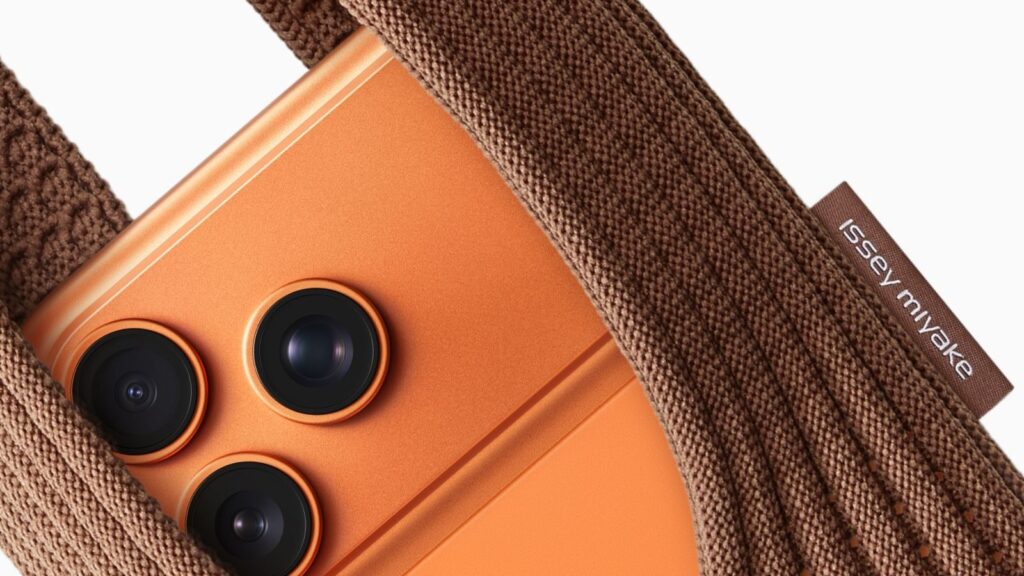
A close-up look at the knitted pocket design that turned a simple phone accessory into a premium fashion statement.
“Why This $230 Pocket Matters”
The iPhone Pocket is not a pouch. It is a money lesson. It is a tangible, wearable case study in pricing psychology, design-led consumer behavior, and the ruthless efficiency of the Apple ecosystem.
Prefer listening? Here’s a short audio summary of this article.
This article will dissect this single product to reveal the nine critical business and financial lessons it holds, providing a sharp, value-packed analysis for our audience of students, professionals, and investors. We will uncover how Apple turns a basic item into a premium product, the AI that predicts your desire, and the fashion angle that is quietly reshaping the tech landscape.
1. How Apple Turns a Basic Item Into a Premium Product: The Art of Framing
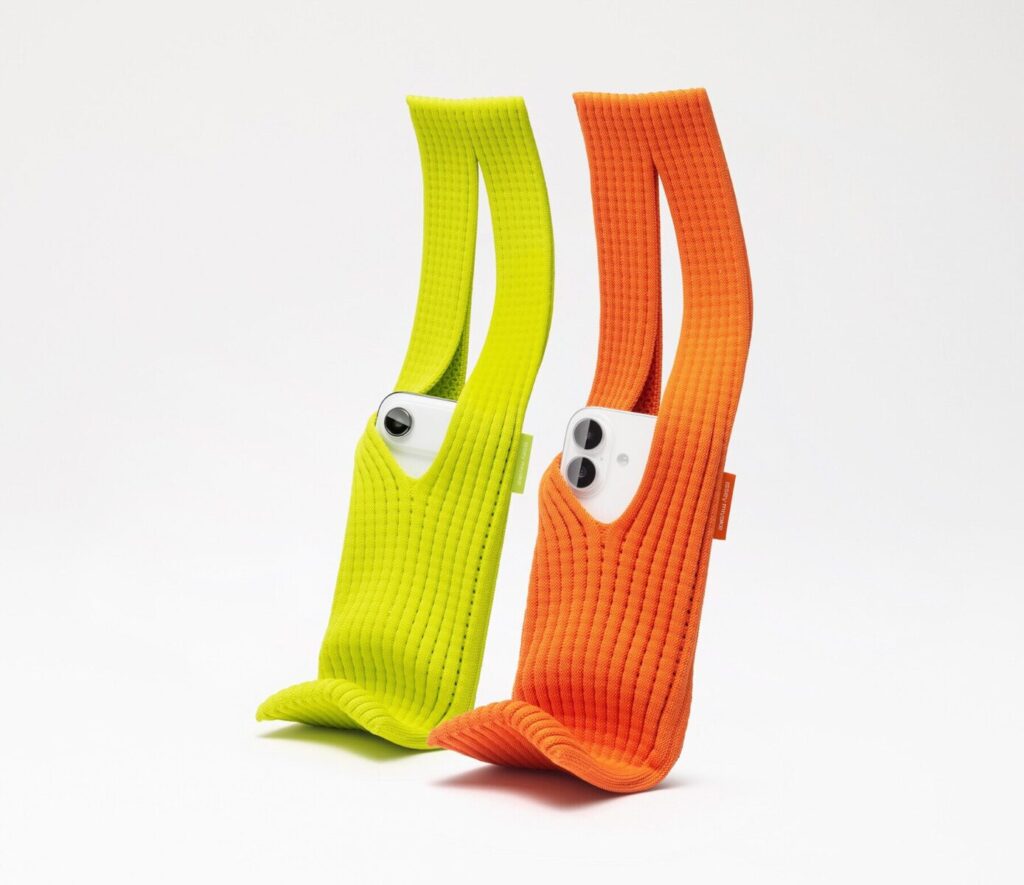
Bright, minimal and intentionally simple these knitted iPhone Pockets show how design and color psychology turn basic accessories into premium products.
The first and most crucial lesson is in framing. The iPhone Pocket is, materially, a simple 3D-knitted case. It’s a piece of fabric. But Apple never calls it a pouch, a sleeve, or a holder. They frame it as a design object, a “beautiful way to wear and carry an iPhone,” and a reinterpretation of ISSEY MIYAKE’s “A Piece of Cloth” concept.
This is the alchemy of branding.
Apple sells emotion, identity, and belonging, not just fabric. The product’s value is not in its utility which could be replicated for a fraction of the cost but in the story it tells about the person wearing it. It signals an appreciation for minimalist design, a connection to a high-fashion brand, and, most importantly, membership in the exclusive Apple club. The premium price is not a cost; it is a toll for entry into this identity.
To understand how pricing shapes financial decisions at a broader level, you can explore my post on the psychology of saving money and consumer spending habits.
2. Pricing Psychology Behind the Product: The Anchor and the Signal
The price tag$149.95 for the short strap and $229.95 for the long strap is the second, and perhaps most fascinating, lesson. This is not a random number; it is a meticulously calculated psychological lever.
High Price Signals “Premium”
The high price signals “premium,” guiding consumers to feel that the product is special, high-quality, and worth the investment. This is the price-quality heuristic in action. If it were priced at $29, it would be seen as a cheap novelty. At $230, it is a statement piece.
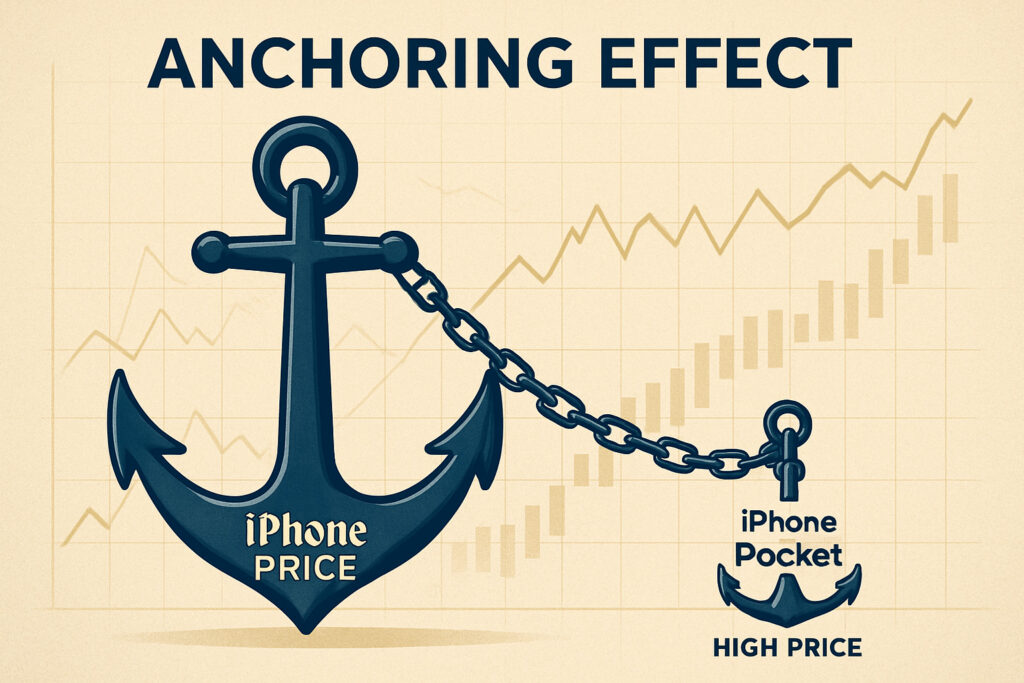
The Anchoring Effect
The most powerful psychological tactic at play is the anchoring effect. When users have already paid $1,000 to $1,600 for the iPhone itself, a $230 accessory feels significantly cheaper in comparison. The iPhone is the anchor, making the accessory seem like a minor, almost impulsive, add-on. This cognitive bias is a masterstroke in upselling.
Scarcity and Novelty
The product is launched as a special-edition release and is only available at select Apple Store locations and online in a few countries. This manufactured scarcity and novelty dramatically increase its perceived value. FOMO (Fear of Missing Out) is a powerful driver, pushing consumers to buy now before the opportunity and the status gone.
If you’re curious about how artificial intelligence is transforming personal finance and the way people make purchase decisions, read my breakdown on AI-driven money management apps
3. Why People Buy Things They Don’t Really Need: The Emotional Brain
Why would anyone buy a $230 knitted case when the iPhone already fits in a pocket? The answer lies in the battle between the emotional and logical brain.
The emotional brain makes the decision, the logical brain justifies it later.
People buy lifestyle upgrades, not utility upgrades. The iPhone Pocket is not a solution to a problem; it is an enhancement of a feeling. It taps into:
•FOMO: If it’s new and Apple sells it, people assume it’s worth a look. The collective buzz validates the purchase.
•Social Currency: In an age of visual sharing, the accessory is a prop. It’s a way to signal status and taste in a photograph or a short video.
•The Justification Loop: The buyer first feels the desire (emotional brain), makes the purchase, and then rationalizes it with logic: “It protects my phone,” “It’s a designer collaboration,” or “It’s an investment piece.”
This behavior is a core tenet of modern consumerism and a vital lesson for anyone in marketing or product development.
4. Apple’s Design-Led Behaviour Influence: The Aesthetic of Social Media
Apple’s design choices are not merely aesthetic; they are a form of behavioral influence.
The iPhone Pocket is designed to be visually striking, pairing a clean, minimalist form with playful, “aesthetic” color options like Lemon, Mandarin, and Peacock. This matters because Gen Z and students share more visually on platforms like Instagram and TikTok.
•Design becomes a status signal and creates social currency.
The product is optimized for the flat lay, the mirror selfie, and the “What’s in my bag?” video. The design doesn’t just look good; it performs well on social media, turning every buyer into an unpaid brand ambassador. This is a subtle but powerful form of marketing that leverages the user’s desire for social validation.
5. What This Means for Students, Professionals, and Investors

From Student to Investor, the iPhone Pocket provides a critical, shared lesson in engineered perception and high-margin accessory strategy.
The iPhone Pocket is a textbook example that offers distinct, actionable insights for different segments of our audience:
| Audience | Key Lesson from the iPhone Pocket | Actionable Insight |
| Students | Pricing and Perception: How perceived value is engineered. | Learn to identify and analyze psychological pricing tactics in real-world markets. |
| Professionals | Branding as a Skill: The power of narrative over material cost. | Understand that branding is becoming a core business skill, not just a marketing function. Invest in your personal and corporate narrative. |
| Investors | Accessory Margins: Boosting profits without R&D. | Recognize that high-margin accessory lines are a critical, low-risk component of a tech giant’s financial health, boosting overall profitability. |
For investors, the accessory line is a financial engine. While the iPhone requires billions in R&D, the iPhone Pocket is a low-cost-to-produce item that brings in high-margin profits, directly boosting the company’s bottom line with minimal extra investment.
Investors who want to see how tech companies use ecosystem strategies to boost profitability may find this article on TCS–TPG’s AI data center deal insightful
6. How This Fits Into Apple’s Bigger Ecosystem Strategy: The Lock-in Effect
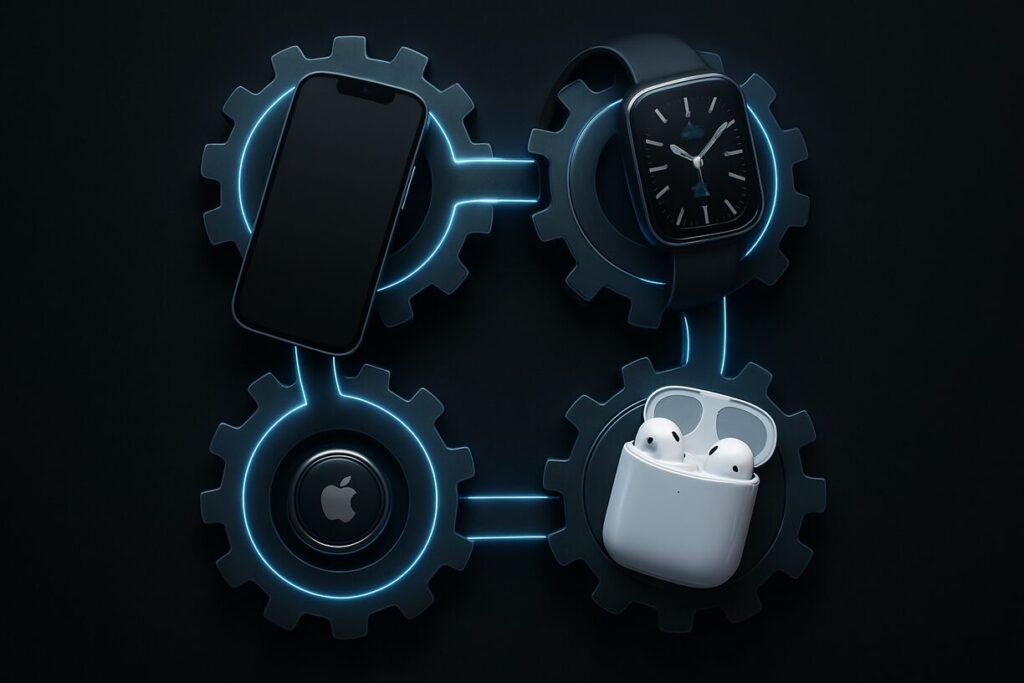
Apple’s ecosystem works like connected gears, pulling users deeper with every device.
The iPhone Pocket is a small piece in a much larger, meticulously constructed puzzle: the Apple ecosystem.
Accessories increase ecosystem lock-in.
Every accessory, from the AirPods to the Apple Watch to this new Pocket, makes it slightly harder and more expensive for a user to leave the Apple family. The more you own, the deeper you are integrated. This is the switching cost strategy in its most elegant form.
Furthermore, Apple is slowly expanding its “wearable + carry” segment. This is a strategic move to own more of the user’s life and body. Each small product strengthens brand loyalty and prepares the user for the next large product launch, whether it’s a new iPhone, a Vision Pro headset, or a future category. The accessory is the gateway drug to the next big purchase.
7. The AI Angle: Predicting and Triggering Desire
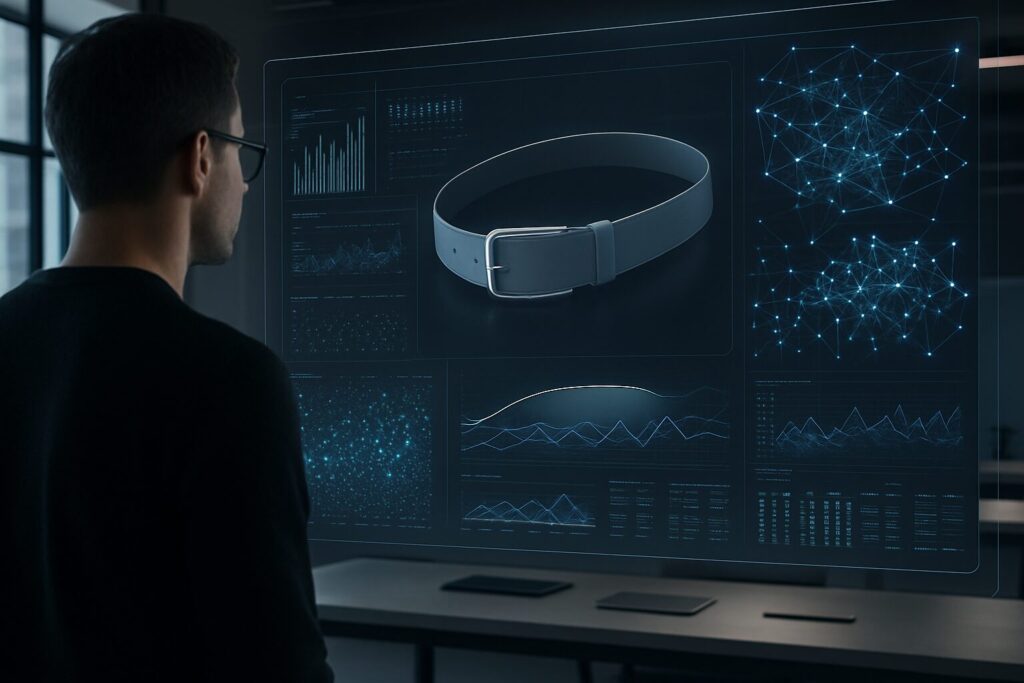
The accessory is a triumph of AI-driven predictive design, where algorithms micro-target consumer desire to ensure maximum profitability.
The most futuristic lesson in this simple knitted case is the role of Artificial Intelligence.
Apple is not guessing which accessories will sell. They are using data and behavioral insights to predict accessory trends with startling accuracy.
•Hyper-personalisation and product micro-targeting are improving each year.
AI helps them understand which design features, which colors, which textures, which strap lengths trigger buying decisions in specific demographics (e.g., Gen Z in Asia vs. professionals in Europe). They analyze millions of data points on purchasing patterns, social media trends, and even fashion forecasts to ensure the product is launched at the precise moment of peak desirability. The iPhone Pocket is a product of predictive design, where AI informs the human designers on how to manufacture desire.
8. The Fashion Angle: Tech’s New Frontier
For our LinkedIn audience, the fashion angle is critical. This product is a clear signal that Apple is stepping deeper into lifestyle and fashion, not just technology.
•Fashion + tech is a huge category, and Apple wants dominance.
The collaboration with ISSEY MIYAKE, a name synonymous with high-end, conceptual fashion, is a deliberate move. The product looks like a designer accessory, a piece of wearable art, not a tech add-on. This strategy allows Apple to compete not just with Samsung and Google, but with Louis Vuitton, Gucci, and Prada. By blurring the lines, they capture a new, high-spending consumer segment that values aesthetics and brand heritage as much as, or more than, technical specifications.
High pricing often goes beyond materials and production costs; it becomes a signal of status and exclusivity. Forbes explains how luxury brands justify these elevated prices
9. The India-Specific Angle: Branding in Price-Sensitive Markets
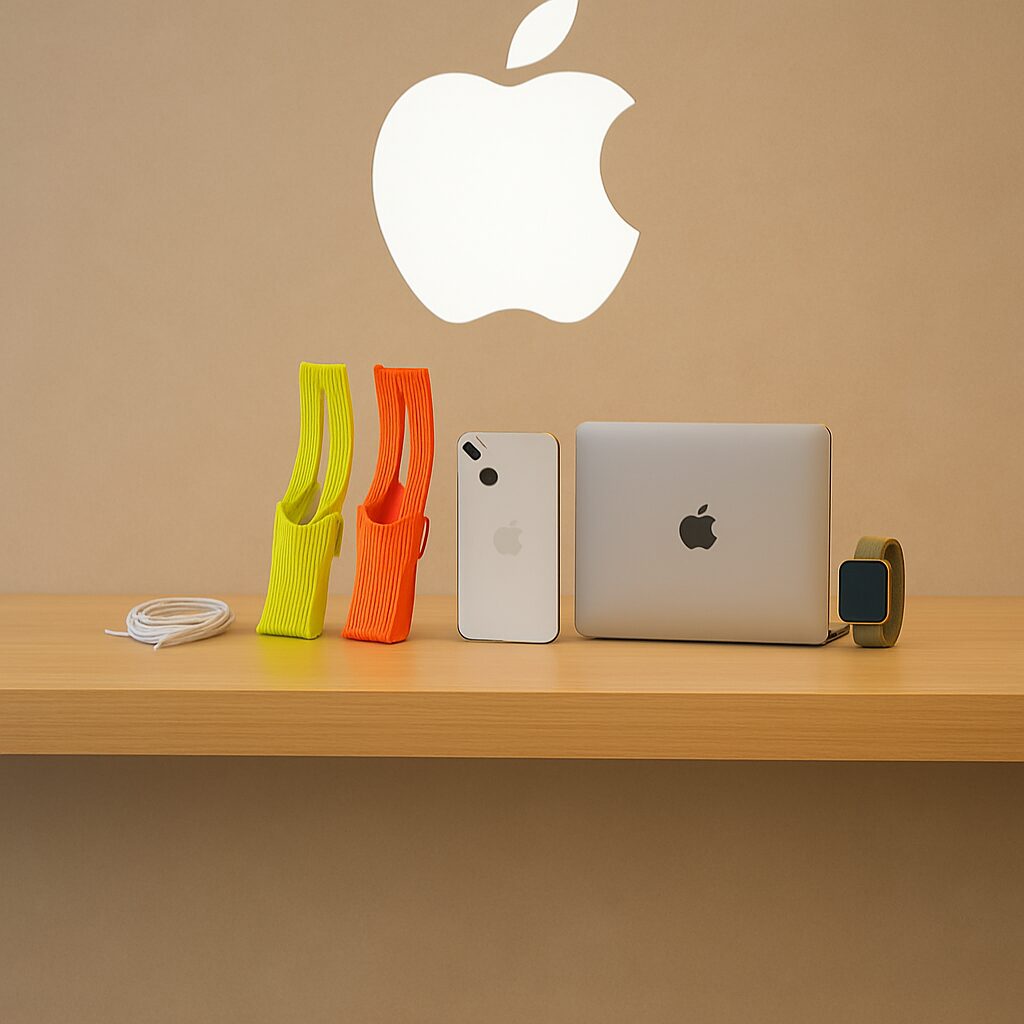
The India-Specific Angle: Branding in Price-Sensitive Markets
The optional, but highly insightful, India-specific angle provides a powerful lesson in global branding.
Apple’s success in India demonstrates how premium branding can work even in price-sensitive markets. While the iPhone itself remains a luxury item, accessories like the iPhone Pocket or even the perception of its existence reinforce the brand’s premium status.
Young Indian buyers value brand identity and aesthetic factors more than before.
For many, a high-end accessory becomes an entry point into the Apple ecosystem. It’s a more accessible way to own a piece of the aspirational brand, reinforcing loyalty that will hopefully translate into a full iPhone purchase down the line. It’s a long-term investment in brand equity.
Shifts in global trade policies also impact product pricing and consumer sentiment, as explained in this detailed analysis of the Trump Trade War’s market impact
Final Takeaway: The Money Lesson
Let’s be clear about the final takeaway.
Apple didn’t launch a pouch.
They launched a money lesson on pricing psychology, branding, and consumer behavior. The iPhone Pocket is a physical manifestation of a brilliant business strategy:
1.Anchor High: Use the iPhone’s price to make the accessory seem reasonable.
2.Frame as Art: Use design and storytelling to justify a massive markup.
3.Leverage AI: Predict and trigger consumer desire with data.
4.Lock-in: Deepen ecosystem integration with every small purchase.
For those of us who study finance, business, and technology, the iPhone Pocket is a required reading. It shows that in the modern economy, the greatest margins are found not in the material, but in the mind.
Frequently Asked Questions (FAQs)
Q1: What is the iPhone Pocket, and why is it so expensive?
A: The iPhone Pocket is a special-edition, 3D-knitted case designed in collaboration with ISSEY MIYAKE. It is expensive because its price is based on perceived value and branding, not material cost. The high price is a deliberate psychological tactic (a price-quality signal) that positions it as a premium, high-fashion accessory, leveraging the anchoring effect of the already expensive iPhone.
Q2: How does the iPhone Pocket relate to Apple’s ecosystem strategy?
A: It is a key component of Apple’s ecosystem lock-in strategy. Every accessory a user buys increases their investment in the Apple brand, making it harder and more costly to switch to a competitor. It also allows Apple to expand its high-margin “wearable + carry” segment, boosting overall profitability.
Q3: What is the “AI Angle” in this product?
A: The AI angle refers to Apple’s use of predictive analytics and behavioral data to inform the product’s design and launch. AI helps them understand which design features, colors, and marketing narratives will trigger the highest buying intent in specific target demographics, essentially manufacturing consumer desire.
Q4: What is the main lesson for investors from this accessory?
A: The main lesson is the power of high-margin accessory lines. These products require minimal R&D compared to core products like the iPhone, yet they generate significant revenue and gross profit margins (often estimated in the 60-75% range), providing a stable and lucrative boost to the company’s financial performance.
Ready to Master the Psychology of Money?
The iPhone Pocket is just one example of how the world’s most successful companies use psychology and strategy to build wealth. If you’re ready to move beyond the headlines and understand the real mechanics of money, finance, and investment, you need a playbook.
Visit PennyPowerPlay.com today to access our exclusive resources on financial literacy, market analysis, and the psychology of wealth creation.
Do you see the iPhone Pocket as a fashion-driven price premium that strengthens Apple’s ecosystem, or a product that stretches branding too far? I’d love to hear your take.
Click here to start your financial power play at PennyPowerPlay.com