Last month, the Bank of Japan shocked markets… Now, in Q1 2026, we are seeing the ripple effects
If you opened your crypto app recently and felt your stomach drop, you are not alone.
🎧 Prefer listening? Here’s a short audio summary of this article.
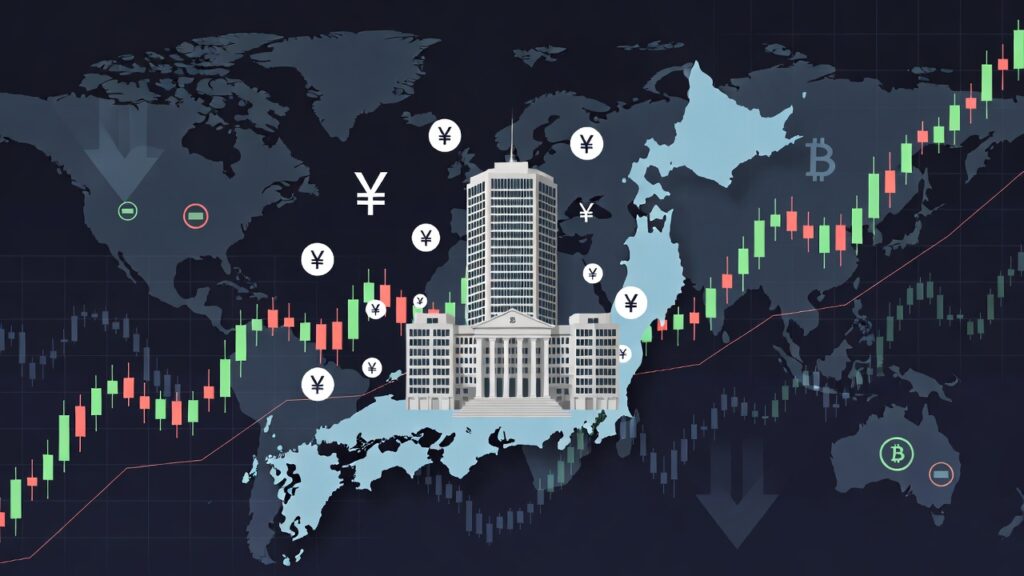
Japan Interest Rate Decision 19 December 2025: Why Markets Are Nervous
If you opened your crypto app recently and felt your stomach drop, you are not alone.
Bitcoin fell sharply from around $89,800 to nearly $86,000, and it did not happen slowly. The move was fast, sudden, and brutal. Within just 60 minutes, more than $203 million worth of long positions were liquidated. That kind of move creates panic not just in crypto, but across global markets.
What makes this fall confusing is that there was no major negative crypto news at that exact moment. No big exchange collapse. No ban announcement. No hacking scandal. Yet prices fell hard.
This is usually the moment when fear spreads the fastest.
Extreme Fear Has Entered the Market
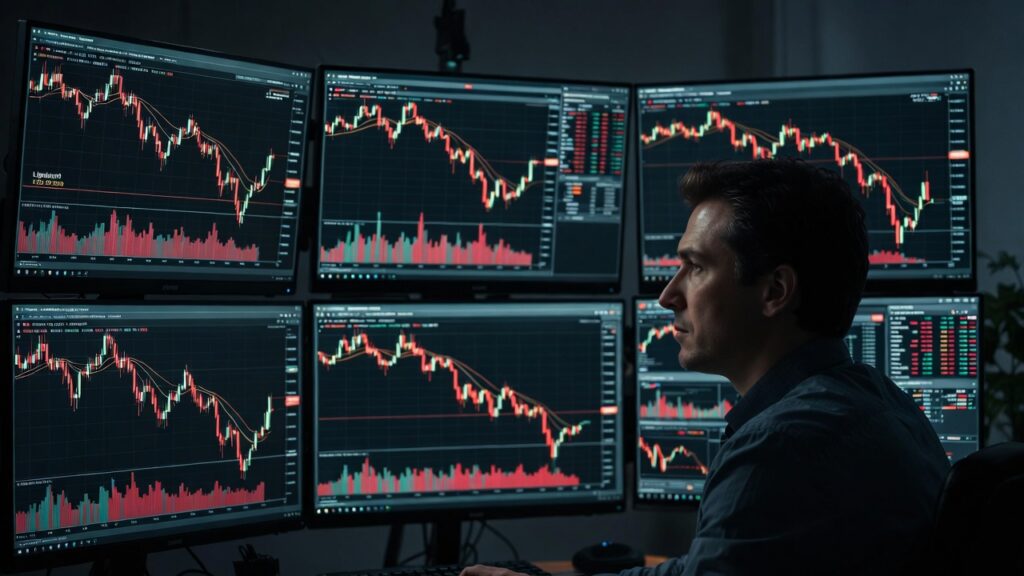
The Fear and Greed Index dropped to 11, a level that signals extreme fear. This does not happen often. Historically, readings below 15 have appeared only during major panic events such as the COVID crash, the FTX collapse, or deep bear market bottoms.
Here is the interesting part that many investors forget.
When fear becomes extreme, markets are often closer to a bottom than a top. This does not mean prices will instantly bounce back. It means most weak hands have already sold, and forced selling is happening.
Who Really Got Hurt in This Crash
This crash did not hurt everyone equally.
Spot investors, those who simply bought Bitcoin and held it without leverage, mostly survived. Yes, their portfolio value went down temporarily, but they were not forced out.
The real damage happened in the futures market.
Futures traders use leverage. Some use 10x, 20x, or even 50x leverage. When price moves against them quickly, exchanges automatically liquidate their positions. This creates a chain reaction of selling.
For every screenshot you see on social media showing huge futures profits, there are hundreds of silent losses. Leverage trading hides pain very well.
This is why professional investors often repeat a simple rule:
“Leverage transfers money from impatient traders to patient investors.”
This crash is a reminder of that truth.
The Real Root Cause: Japan and the Unwinding of the Carry Trade
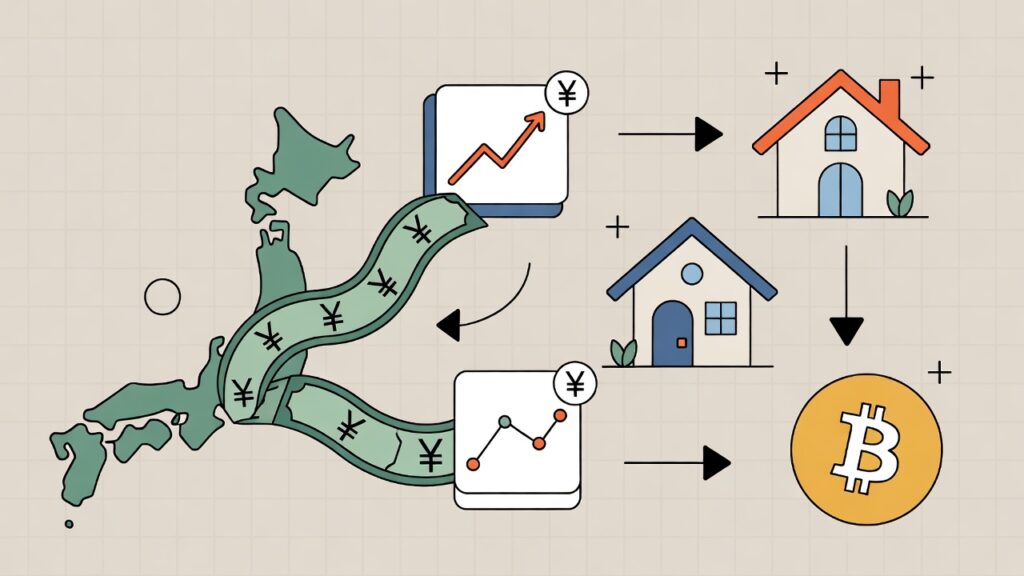
To understand why this crash happened, you need to zoom out. This was not just about crypto. It was about global money flow, and Japan is at the center of it.
What Is the Yen Carry Trade?
For nearly 30 years, Japan kept interest rates close to zero. In some periods, rates were even negative.
This created a powerful opportunity.
Investors borrowed Japanese yen at very low cost, converted it into US dollars, and invested that money into higher-return assets like:
- US stocks: Investors used cheap yen to buy US stocks, especially tech shares, chasing higher returns. When Japan raises rates, this money flows back, causing US stocks to fall.
- Bonds: Yen-funded money moved into higher-yielding US and global bonds to earn better interest. Rising Japanese rates reduce this advantage, leading to bond selling.
- Emerging markets: Investors sent borrowed yen into fast-growing economies for higher growth and yields. When the carry trade unwinds, money exits these markets quickly.
- Real estate: Low-cost yen loans were used to buy global property assets for stable long-term returns. Higher yen costs force investors to sell or pause new investments.
- Crypto assets like Bitcoin: Cheap yen helped fund risk assets like Bitcoin during bull markets. When the yen strengthens, investors sell crypto first to repay loans, causing sharp drops.
This strategy is known as the Yen carry trade.
It worked because borrowing was cheap and stable. As long as the yen stayed weak and interest rates stayed low, investors made money.
The Massive Scale of This Trade
Official estimates put the carry trade at around $3 trillion. But many analysts believe the real number is much higher.
When you include hedge funds, banks, institutions, and offshore structures, the actual exposure could be $15–20 trillion.
That means a huge part of global markets was quietly funded by cheap Japanese money.
What Changed in Japan
Japan’s economy is finally experiencing something it did not see for decades: inflation.
Inflation in Japan has risen close to 3%, forcing the Bank of Japan to act. As a result:
- Interest rates are moving toward 0.75%: To control rising prices, the Bank of Japan is increasing interest rates. Higher rates make borrowing more expensive and slow down excessive spending.
- This is the highest level since 1995: Japan has not seen interest rates this high in nearly 30 years. This shows how serious the inflation situation has become and marks a major shift from Japan’s long-standing low-rate policy.
- Japan is slowly ending its ultra-easy money era: For decades, Japan kept interest rates extremely low to support growth. Now, by raising rates, the country is slowly pulling back cheap money, which impacts global investors who depended on Japan for low-cost funding.
This may sound small compared to US or Indian interest rates, but for Japan, it is a big shift.
According to the Bank of Japan policy statement, the shift toward higher rates reflects rising inflation pressures.
Why This Triggers Selling Everywhere
When Japanese rates rise, borrowing yen becomes more expensive. At the same time, the yen starts strengthening.
If the USD/JPY pair falls below 150 or 145, it becomes dangerous for carry traders.
Why?
Because their loans are in yen. A stronger yen means their debt becomes more expensive in dollar terms. That leads to margin calls.
To repay yen loans, investors are forced to sell assets across the world. Stocks fall. Crypto falls. Emerging markets fall.
Bitcoin becomes a victim, not because it is weak, but because it is liquid and easy to sell quickly.
This is exactly what we are seeing now.
The ETF Scare and Why History Is Repeating Itself
Fear in markets is rarely about one thing. It builds from multiple layers.
Another layer worrying investors is Japan’s ETF holdings.
Japan’s Massive ETF Balance
Over the years, the Bank of Japan bought a huge amount of ETFs to support its stock market. Today, it holds roughly $534 billion worth of ETFs.
Japan has already said that it plans to slowly sell these ETFs, starting around 2026.
Important point:
This selling will not happen overnight. It may take decades, possibly even 90 to 100 years, to fully unwind.
But markets do not wait for reality. They price risk early.
Historical Correlation With Bitcoin
There is a clear pattern between Japan tightening policy and Bitcoin falling.
- March 2024: Japan signaled tighter policy. Bitcoin fell around 23%
- July 2024: Another rate adjustment. Bitcoin fell around 26%
- January 2025: Further tightening fears. Bitcoin fell around 31%
Each time, panic looked similar. Sharp drop. Fear everywhere. Liquidations.
Yet after each event, Bitcoin eventually stabilized and recovered.
This does not guarantee immediate recovery now, but it shows that this is not a new story.
Why December 19 Matters
Markets are especially nervous ahead of December 19, when the Bank of Japan is expected to give important policy signals.
Professional investors hate uncertainty. When they are unsure, they reduce risk first and ask questions later.
That is why volatility often increases before major decisions, not after them.
The Indian Perspective: Why Indian Investors Are More Exposed

India is now one of the fastest-growing crypto markets in the world.
India’s Crypto Demographics
India has around 20 million crypto users. The largest group is between 18 and 25 years old.
This is a young, ambitious, and tech-friendly generation. Many entered crypto during bull markets and learned investing through social media.
A strengthening yen and global rate shifts can also impact emerging market currencies, something we’ve already seen in India’s case as explained in our detailed analysis of the Indian rupee fall in 2025.
This global uncertainty makes portfolio structure even more important for Indian investors.
Portfolio Structure Is a Big Risk
Data shows that Indian investors:
- Hold Bitcoin as the most owned asset: Most Indian crypto investors keep Bitcoin in their portfolio because it is seen as the safest and most trusted cryptocurrency. It is often treated as long-term digital gold rather than a short-term trade.
- Trade Ethereum the most: Ethereum is traded more frequently because it has strong daily price movements and is widely used in DeFi and NFTs. This makes it popular among active traders looking for short-term opportunities.
- But hold over 60% of their portfolio in small altcoins: A large part of Indian portfolios is still invested in small altcoins hoping for quick gains. These coins are highly risky and fall much faster during market panic, which can cause heavy losses.
- Sharp sell-offs driven by fear are not new, and similar patterns were visible during recent corrections, which we covered in detail in our post on the market correction in November 2025.
This is risky.
Small altcoins fall much harder during panic. A 10% Bitcoin drop can mean a 30–50% altcoin crash.
Professional investors understand this. They focus on survival first, returns second.
Regulation Reality in India
The RBI has clearly stated that Bitcoin has no intrinsic value. Taxes are high. Rules are strict.
Yet adoption continues.
Wallets like MetaMask adding Bitcoin support show that technology continues to move forward, even when regulation remains cautious.
This creates a confusing environment for Indian investors, where growth exists, but clarity does not.
Strategy: How Smart Investors Navigate This Chaos
This is the most important part of the discussion.
For long-term investors, the Japan interest rate decision 19 December 2025 should be viewed as a liquidity reset, not the end of the market cycle.
This is exactly why diversification matters during global liquidity shocks, something we explain step-by-step in our guide on building a diversified investment portfolio in 2025.
The Golden Rule of Investing
Across history, one simple rule works in almost every asset class:
Buy during extreme fear. Sell during extreme greed.
This applies to stocks, real estate, gold, and crypto.
When fear is extreme, prices already reflect bad news. When greed is extreme, risk is hidden.
Professional investors do not chase excitement. They wait for discomfort.
Smart Asset Allocation in Crypto
A healthy crypto portfolio looks boring during bull markets, but survives crashes.
A balanced structure:
- 50–60% Bitcoin
- 20–30% Ethereum and large-cap projects like Solana
- Small exposure to high-risk altcoins, only if you understand them
This protects capital during panic and allows participation during recovery.
Time Horizon Matters More Than Entry Price
Retail investors think in weeks. Professionals think in years.
A 4–5 year time horizon changes everything. Short-term volatility becomes noise. Forced selling stops affecting you.
Bitcoin has gone through multiple 70–80% crashes in its history. Each time, long-term holders were rewarded.
Safe Havens During Uncertainty
In the short term, gold and silver often perform well when global uncertainty rises.
Bitcoin is still volatile, but over the long term, it is increasingly behaving like digital gold.
The current panic does not mean the bull cycle is over. It means liquidity is being reshuffled.
Final Thoughts: Panic Is Loud, Opportunity Is Quiet
The Japan interest rate decision 19 December 2025 is not just a local policy move, but a global liquidity event that investors cannot ignore.
Looking ahead, this policy shift may be remembered as a turning point that forced investors to rethink risk, leverage, and long-term positioning.
This market crash feels scary because it is sudden and global.
This policy shift is one of the key reasons global liquidity is tightening across stocks, crypto, and other risk assets.
For investors confused between human judgment and automated strategies during volatile periods, we’ve broken this down clearly in our guide on human vs AI investing and how each reacts to market stress.
But it is not random.
It is driven by macroeconomic shifts, leverage unwinding, and fear of future tightening. These cycles repeat across decades.
Retail traders react emotionally.
Professional investors prepare calmly.
Long-term investors survive by design.
Extreme fear does not last forever. It creates the foundation for the next phase.
If you can stay patient, reduce leverage, and think long term, this period may look very different when you look back five years from now.
Sometimes the best investment decision is not buying or selling.
It is staying rational when everyone else is panicking.
FAQs: Japan Interest Rate Decision 19 December 2025
1. What is the Japan interest rate decision on 19 December 2025?
The Japan interest rate decision on 19 December 2025 refers to the Bank of Japan’s policy announcement on interest rates. Investors are watching closely because Japan is slowly moving away from decades of ultra-low interest rates, which affects global liquidity.
2. Why did Bitcoin and crypto markets fall ahead of this decision?
Bitcoin and crypto fell mainly due to fear and leverage unwinding, not because of bad crypto news. Rising Japanese interest rates can strengthen the yen, forcing global investors to sell risk assets like crypto to repay yen-based loans.
3. What is the yen carry trade, and why does it matter now?
The yen carry trade involves borrowing cheap Japanese yen and investing it in higher-return assets like stocks, bonds, and crypto. As Japan raises rates, this trade becomes risky, leading to forced selling across global markets.
4. Does a Japan rate hike mean the crypto bull market is over?
Not necessarily. Short-term volatility can be severe, but long-term crypto cycles depend on adoption, liquidity, and time. Many investors see this phase as a liquidity reset rather than the end of the bull cycle.
5. How does Japan’s interest rate decision impact Indian investors?
Indian investors are affected through global market volatility, currency movements, and crypto price swings. Since many Indian portfolios hold high exposure to small altcoins, sudden global shocks can cause larger losses.
6. What should long-term investors do during extreme market fear?
Long-term investors should avoid panic selling, reduce leverage, and focus on asset allocation. Historically, periods of extreme fear have created better entry points for patient investors rather than short-term traders.
7. Is Bitcoin becoming digital gold during global uncertainty?
Bitcoin is still volatile, but over time it has started behaving like digital gold during liquidity cycles. While gold and silver often perform better in the short term, many investors believe Bitcoin plays a similar role over the long term.