🎧 Prefer listening instead of reading? this article on Short-Term vs Long-Term Financial Goals.
“Short-Term vs Long-Term Financial Goals are the foundation of a solid money plan in 2025. Whether you’re saving for a vacation or building retirement wealth, knowing the difference helps you stay on track.”
“Why Short-Term vs Long-Term Financial Goals Matter”
“Understanding Short-Term vs Long-Term Financial Goals is the foundation of a smart money plan in 2025. Financial goals should be clear, like ‘stash $400 every month until I’ve got six grand in my emergency fund.’”
Why Bother Splitting ‘Them Up?
Honestly, just tossing all your goals in one messy pile? That’s begging for confusion. Splitting ’em up by how soon you need the cash way smarter. You can actually see where your money’s going, freak out less, and, hey, line up your risks so you’re not betting the farm on next month’s rent. Plus, you might even pull off those wild dreams before you’re buying a sports car out of existential dread.
“Paying off credit card balances or personal loans is one of the most effective short-term financial goals, and our Debt to Financial Success Guide walks you through proven steps to eliminate debt faster.”
Real Definitions & Realistic Deadlines
- Short-term = money you’ll need in less than 3 years. Liquidity is king, don’t gamble it.
- Mid-term = 3–7 years out. You can get a little spicy with growth, but don’t go wild.
Long-term = 7+ years. You want that money to multiply, so you can stomach some ups and downs.
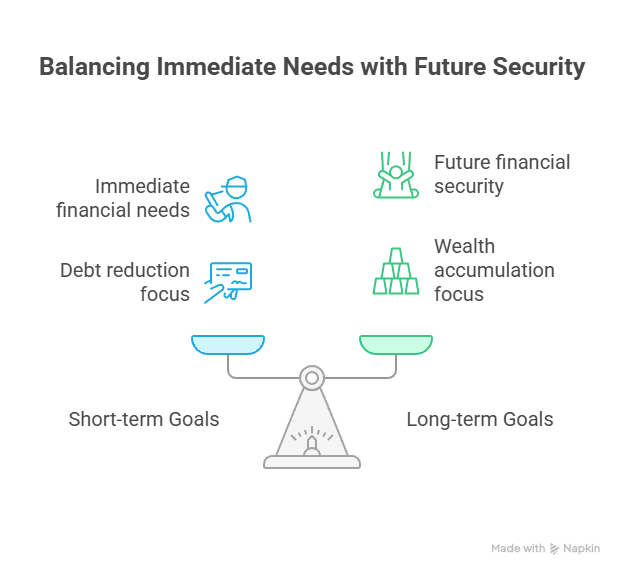
“Concrete Examples of Short-Term vs Long-Term Financial Goals”
What Are Short-Term vs Long-Term Financial Goals?
Short-term (under 3 years):
- Beefing up emergency savings (3–6 months’ expenses)
- Killing off credit card balances
- Stashing cash for next year’s trip or wedding
- “Oh crap, my car broke” fund
Mid-term (3–7 years):
- Save to swap out your busted car
- Down payment for your dream pad
- Seed money for that side hustle
- Relocation fund if your job makes you move
“When comparing Short-Term vs Long-Term Financial Goals, the main difference is the timeline and the risk level you can take.”
Long-term (7+ years):
- Retirement accounts (401(k), IRAs, the whole alphabet soup)
- Kid’s college (529, baby)
- Financial freedom yes, that’s a goal
- Vacation home or legacy money
“Automating your savings helps you balance both Short-Term vs Long-Term Financial Goals without losing track.”
“For a detailed step-by-step guide on setting financial goals, check out Prof. Stacy, The Money Teacher’s guide which complements this article nicely.”
The Fast Facts Side-By-Side,
| Short-Term | Long-Term | |
| Time Frame | <3 years | 7+ years |
| Main Goal | Keep it safe & liquid | Make it grow |
| Urgency | Usually ASAP or soon | Marathon pace, not a sprint |
| Risk Level | Low, keep your shirt on | Medium to high (diversified) |
| Where to Park | HYSA, CDs, T-bills, MM funds | 401(k), IRAs, Index funds |
| How to Track | Dollar targets & deadlines | Contribution rates, net worth |
“Many people set short-term goals at the start of the year, and our Financial Resolutions 2025 article highlights practical resolutions you can adopt for smarter financial planning.”
Which Comes First?
Don’t overthink it start by stomping out high-interest debt. That credit card? Every dollar you pay down is money not wasted on interest.
Next, get your “life won’t implode” basics:
- Emergency stash (start with $1k, get to 3–6 months)
- Must-have insurance (health, life if you’ve got people depending on you, disability)
If your job matches 401(k) contributions, grab that free money. It’s literally a 100% return. Then, fund your short-term needs (think separate buckets don’t let vacation money mingle with rent). Finally, automate your long-term investing early compound interest loves early birds.
“To deepen your understanding of effective financial planning, explore this insightful article on Financial Strategy for a New Year by Paystand, which offers practical tips to help you align your short- and long-term financial goals.”
How to Actually Invest for Each
Short-term:
- HYSA for quick access
- Money market funds for a little boost
- CDs (ladder them for flexibility)
- T-bills, if you’re into that
- Maybe short-term bond funds if you’re okay with minor swings
Mid-term:
- Mix of CDs and short/intermediate bond funds
- Add a bit of stocks (20–40%) if you can sleep at night
Long-term:
- Go big with 401(k), Roth IRA, index funds
- HSA (if you qualify), let that money grow for future medical bills
- 529 for college
- Taxable brokerage if you want flexibility
Pro Tips
- Automate savings right when you get paid out of sight, out of mind
- Use separate accounts or label sub-accounts for each goal
- Write it down: goal, amount, deadline, monthly plan, where the money lives
“Financial planning experts often recommend setting goals using specific, measurable, achievable, relevant, and time-bound criteria learn more on this method over at Investopedia.“
Rookie Mistakes (Learn From My Facepalms)
- Throwing all your cash in one pot and hoping for the best
- No plan, no timeline, no clue
- Forgetting inflation (seriously, money loses value over time don’t ignore it)
- Starting retirement savings late, then YOLO-ing into risky stuff to “catch up”
- Letting lifestyle creep eat your raises and bonuses
- Investing your house down payment in meme stocks (just… don’t)
Cheat Sheets by Life Stage
Early Career (20s–early 30s):
- Build credit, stash cash
- Grab that 401(k) match
- Open a Roth IRA while taxes are chill
- Don’t make it complicated target-date funds work
“A strong emergency fund (3–6 months of expenses) can keep you out of financial holes, especially when parked in the right place Investopedia breaks down how to get one started.”
Mid-Career (30s–40s):
- Emergency fund gets bigger as life gets fancier
- Push retirement savings toward 15%+ if you can
- Start planning for big stuff house, new wheels, kids
…And so on, but you get the vibe. The main thing: just start, keep it real, and remember money’s a tool, not a master.
Late Career Moves (aka your 50s and 60s cue the classic rock playlist)
First off, if you’re in your 50s or early 60s, it’s time to start using those “catch-up” contributions for your 401(k) or IRA if you can swing it. The IRS basically hands you a bigger basket, so why not fill it?
Now’s also when you wanna get serious about your mortgage payoff plan and dial in your retirement income strategy. No more winging it, pull out the spreadsheets or whatever you use, and figure out what’s left to pay and how that lines up with your timeline.
Portfolio-wise? Maybe start sliding a bit more toward safer stuff as you get closer to actually needing that money. Not saying dump all your stocks, but maybe don’t go full YOLO on GameStop, either.
Oh, and Social Security? Don’t just guess. Check your claiming strategy and make sure your health coverage isn’t full of holes.
Mix It Up: Short- and Long-Term Goals
Honestly, the trick is to stay pumped about your money moves without forgetting the future-you. So, keep one or two short-term goals going at a time think: emergency fund, new fridge, whatever that way you get those “heck yeah!” moments.
But don’t ghost your long-term accounts. Even tossing in fifty bucks a month keeps the momentum alive. When a short-term goals wrapped? Roll that dough into your next big thing or just beef up your investments. It’s like financial recycling. Good for the planet? Not sure. Good for your wallet? Absolutely.
Keep Tabs & Pivot When Needed
Let’s be real: planning isn’t a “set it and forget it” deal. Here’s a rhythm that doesn’t suck:
- Every month: Glance at your cash flow, debts, and where your money buckets are at.
- Quarterly: Take a step back. Priorities still make sense? Time to shuffle things around?
- Annually: Gut-check your assumptions. Get a raise? Up those contributions, even a little.
Stuff That Helps
- Use a budget app or spreadsheet if you’re into that.
- Your brokerage/retirement dashboard has more info than you probably want, but hey, it’s all there.
- Try a one-page tracker with your goals, which account, timeline, and how much you’re chucking in each month.
Don’t Go It Alone
Seriously, tell someone your goals, a partner, friend, even your dog if he’ll listen. And when you hit a milestone, treat yourself. Doesn’t have to be a yacht. Maybe just pizza. “By mastering Short-Term vs Long-Term Financial Goals, you set yourself up for lasting financial success.”
FAQs
1) What’s a short-term goal, anyway?
Basically, anything you wanna pay for in the next three years. Emergency fund, kitchen upgrade, killing off that lingering credit card debt stuff like that.
2) Where’s the best spot for short-term goal money?
Park it somewhere safe and easy to grab: high-yield savings, money market funds, short-term CDs, Treasury bills. No risky business here; you want your cash when you need it.
3) How much should I stash for retirement?
Classic answer is 15% of your gross income, split between your 401(k) and IRAs. Can’t hit that? Start with whatever you can and bump it up each year. Progress over perfection.
4) Should I invest before knocking out credit cards?
Honestly? Nope. High-interest debt eats investment gains for breakfast. Clear it out, then ramp up investing. At the very least, grab any employer match while you’re at it.
5) How often do I need to rebalance?
Once or twice a year’s plenty, or if your mix gets way off target. No need to obsess, just keep it regular and low-drama.