Latest Update (Dec 2025):
Social Security has confirmed a 2.8% COLA for 2026, along with several other changes that affect retirees and working beneficiaries. These include higher earnings limits, a higher maximum monthly benefit, and changes to taxable wage caps. This article has been updated to reflect the latest developments.
“Social Security COLA 2026 is essential for retirees, the disabled, and other beneficiaries to maintain purchasing power in an inflationary economy.”
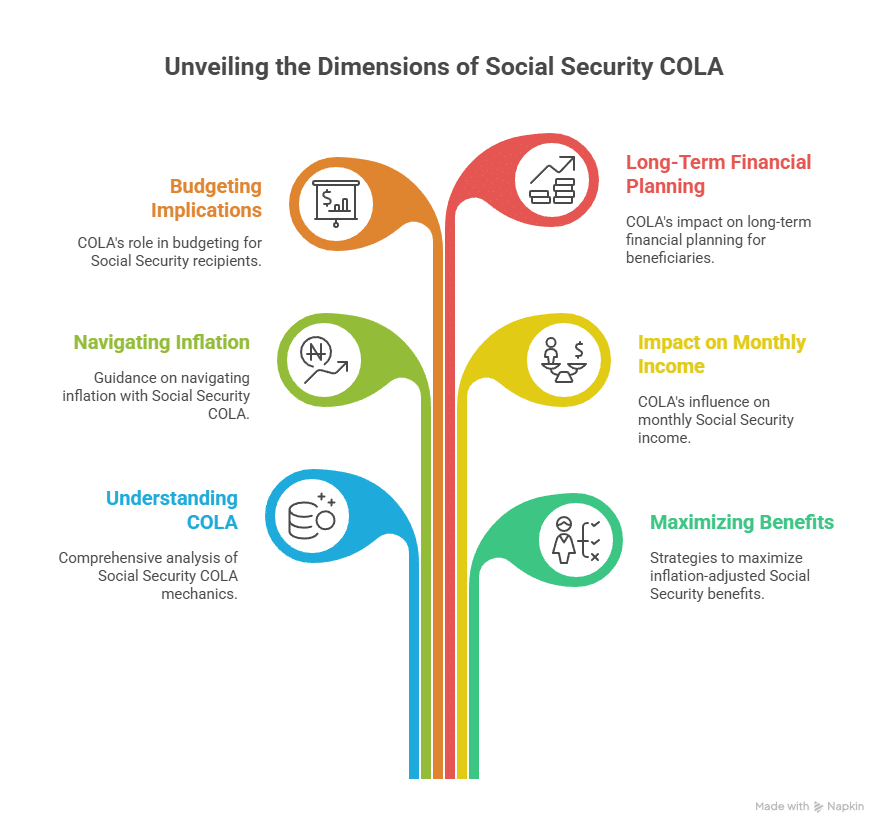
For Social Security recipients, the disabled, and other beneficiaries, it is essential to know how cost-of-living adjustments function. Social Security COLA will keep your benefits current with the rising cost of living, supporting purchasing power in the long run. It might look easy on the surface but influences your monthly income, budget, and long-term financial plan in ways that are routinely underappreciated.
This book offers a comprehensive analysis of Social Security COLA, the method used to calculate it, provides actionable items for beneficiaries, and dispels popular misconceptions.
“What is Social Security COLA 2026?”
For 2026, Social Security beneficiaries will receive a 2.8% COLA, reflecting easing inflation compared to earlier years but still helping protect purchasing power.
The Social Security cost-of-living adjustment, or COLA, helps safeguard beneficiaries against inflation. When the price of goods and services increases, fixed payments can be eroded. COLA guarantees that retirees, the disabled, and Supplemental Security Income recipients can still pay for daily expenses.
COLA is added automatically every year according to changes in the economy, making it a vital component of long-term financial planning for anyone on Social Security benefits.
Retirement Planning 2026
“To make the most of your Social Security COLA 2026, integrating it into your retirement planning 2026 can help ensure a secure and well-balanced financial future.”
“How Social Security COLA 2026 is Calculated”
Social Security COLA relies on the Consumer Price Index for Urban Wage Earners and Clerical Workers, or CPI-W. The Social Security Administration then compares the third quarter average CPI-W of the current year to the same period a year earlier. The percentage increase is then the COLA for the next year.
“Real-World Examples of Social Security COLA 2026”
- In 2022, Social Security benefits grew by 5.9 percent. For an average retired worker collecting $1,657 monthly, this meant an additional $98.
- In 2024, the COLA went up by 8.7 percent, taking the same average payment to about $1,802, a monthly increase of $145.
These instances demonstrate the impact of COLA on recipients across varying income levels, from lower-level recipients to those who receive more in benefits.
“For a detailed explanation of how Social Security COLA is calculated and its impact on beneficiaries, you can read this Britannica guide on Social Security Cost-of-Living Increase (COLA)
Economic Factors Behind COLA
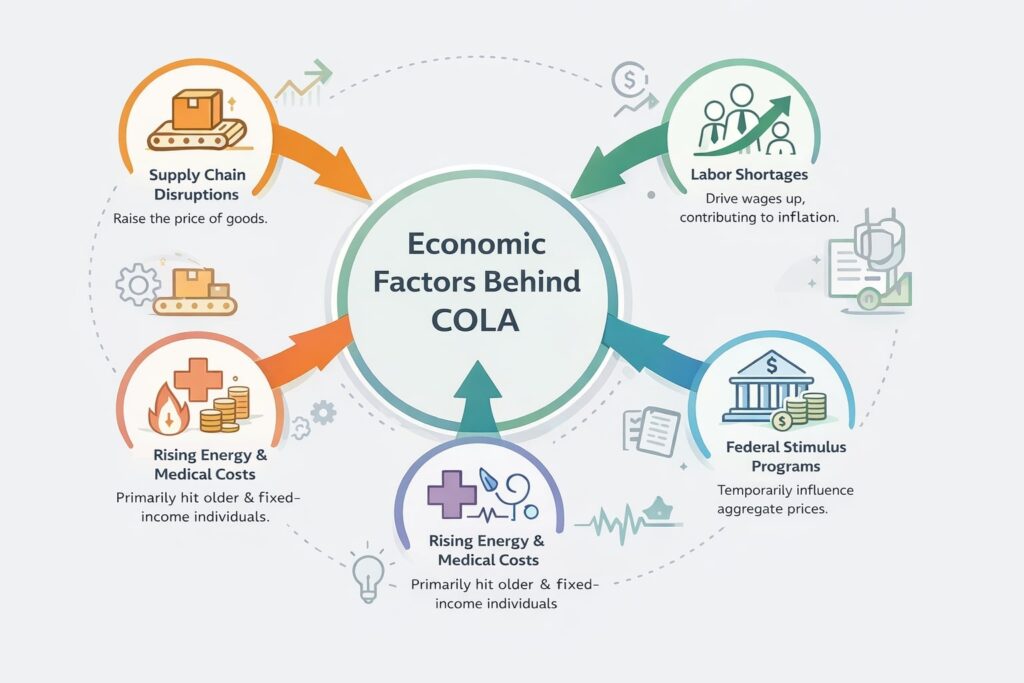
COLA is shaped by overall economic trends. Some of the main drivers are:
- Supply chain disruptions, which raise the price of goods.
- Labor shortages, which drive wages up and contribute to inflation.
- Federal stimulus programs, which can temporarily influence aggregate prices.
- Increasing energy and medical expenses, which primarily hit older individuals and fixed-income recipients.
By learning about these factors, beneficiaries can understand why certain years have bigger changes than others.
Smart Financial Goal Setting 2026
“Adjusting your budget and savings to reflect Social Security COLA 2026 increases is easier when you follow strategies from our guide on smart financial goal setting 2026
Who Qualifies and When Payments Arrive.
Every Social Security beneficiary is entitled to COLA. These include:
- Retired workers
- Social Security Disability Insurance beneficiaries
- Supplemental Security Income beneficiaries
Payment Schedules
COLA payment dates vary with the type of payment:
- Direct deposit is normally posted on the due date based on the birth month of the beneficiary.
- Paper checks adhere to standard mailing periods, which can differ by location.
- In case the payments are late, an inquiry with the Social Security Administration in a timely manner can sort out the problem.
“Planning Ahead for Social Security COLA 2026”
While COLA helps protect purchasing power, it works best when combined with a broader retirement strategy. These retirement savings tips for 2025outline how Social Security fits into a long-term financial plan.
COLA affects beneficiaries differently by retirement age:
- Early retirees get COLA on a lower base amount.
- Full retirement age recipients get the full increase.
- Delayed retirees get compounding COLA on a larger base payment, growing benefits over time.
Action Steps for Beneficiaries
As your monthly Social Security income changes in January, updating your spending plan can help avoid stress. This practical guide on budgeting tips for 2025 explains how to realign expenses when income shifts
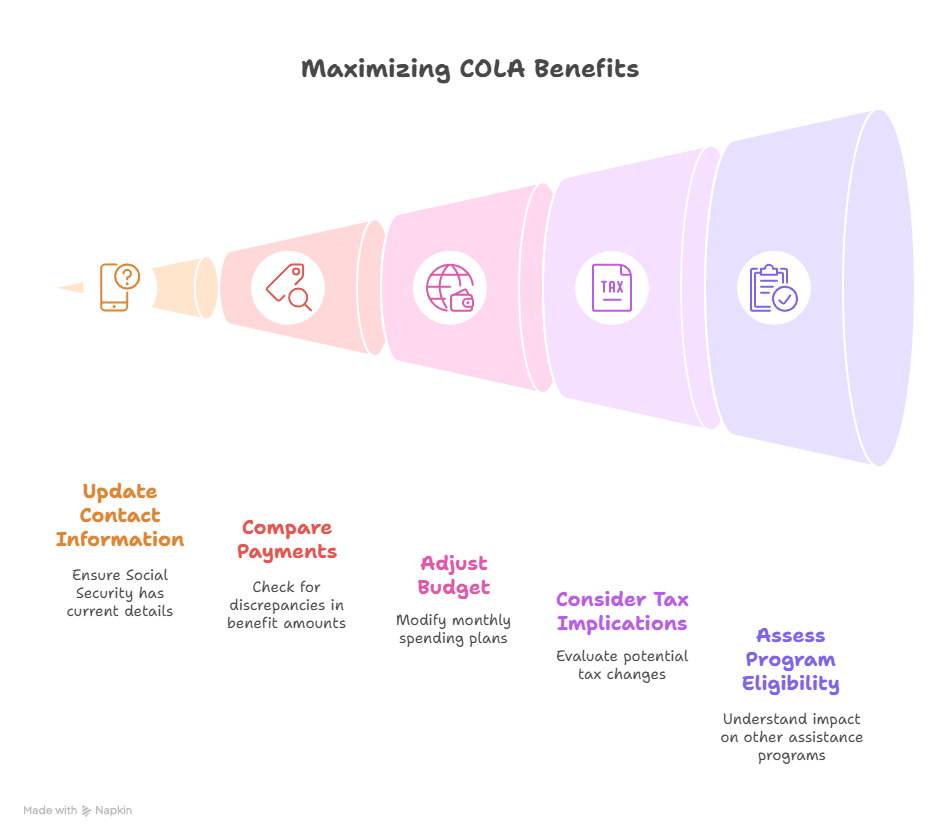
To get the most out of your COLA increase:
- Make sure your contact information is current with Social Security.
- Compare your January payment to previous months and report any differences.
- Adjust your monthly budgets to account for the new amount of benefit.
- Think about tax implications, because higher benefits could impact your tax bill.
- Understand how it will impact your eligibility for other programs of assistance, such as Medicaid or SNAP.
State-Specific Considerations
A higher COLA can also increase the taxable portion of your benefits. Understanding basic tax planning strategies for 2025 can help retirees prepare for potential tax changes linked to rising income:
https://pennypowerplay.com/tax-planning-2025/
COLA is determined federally, but the actual effect depends on the state. State income taxes, local cost-of-living variations, and access to state aid programs can affect how far your COLA boost will reach. A $100 COLA boost, for instance, can go farther in a low-cost state than in a high-cost state.
Additional items to consider are Medicare Part B premiums, which might counteract some of the net increase, and IRS caps on pension plan benefits, which might have an impact on your total retirement income strategy.
Social Security Myths Debunked
When you distinguish fact from myth, Social Security is less confusing. There are plenty of myths floating around regarding benefits, when to take them, and taxes. Here are six myths dispelled:
Myth 1: Social Security Benefits Will Not Be There When I Retire
Although Social Security’s long-term solvency is debated on the media, if you are already a beneficiary, you will not notice much difference. Those retired formerly should monitor changes to programs and adapt their plan accordingly.
Myth 2: Social Security Will Be the Biggest Source of Retirement Income
Social Security typically is a supplemental source of income. Most retirees will require other streams of income, e.g., 401(k)s, IRAs, pensions, or investments, to sustain their desired standard of living.
Myth 3: Social Security Benefits Don’t Keep Up With Inflation
This is not true. Social Security benefits are intended to keep up with inflation by way of annual COLA increases. From 1975 to 2009, COLA raises have varied between 14.3 percent in 1980 and 0.0 percent in some years such as 2009 and 2010.
Myth 4: You Can Outlive Social Security
You cannot outlive Social Security. Benefits are paid for life, and COLA guarantees that benefits do not lose their purchasing power.
Myth 5: I Should Wait as Long as Possible to Collect Benefits
Although waiting until age 70 will yield the highest monthly benefits, this is not the best approach for everyone. Health, life expectancy, capital growth, IRA distributions, and tax rates should influence your decision. Seeking advice from a financial planner five years in advance allows you to develop a personalized strategy.
Myth 6: Social Security Income Isn’t Taxable
As much as 85 percent of Social Security benefits can be subject to taxation based on your overall income. About 40 percent of recipients pay taxes on their benefits, so planning is essential.
Planning Ahead: Getting the Most from Your Social Security Benefits
Social Security COLA needs to be part of an overall financial plan. Follow these steps:
- Monitor past COLA trends in order to predict upcoming changes.
- Increase increases to enhance emergency funds or retirement funds.
- Reconsider debt repayment plans, applying excess to eliminate high-interest debt.
- Analyze long-term care insurance and other protections impacted by increasing expenses.
- Synch Social Security with other sources of retirement income for a tax-effective and diversified strategy.
Key Takeaways
- Social Security COLA keeps your benefits current with inflation.
- COLA computations use CPI-W and represent real economic conditions.
- Understanding how COLA impacts early, full, and delayed retirees is key to planning.
- State policies, Medicare premiums, and taxation may affect the net effect of COLA.
- Distinguishing myth from fact aids informed decisions on behalf of beneficiaries.
By knowing COLA, planning for its effect, and dispelling widespread misconceptions, you can navigate Social Security benefits with confidence and ensure financial security in the years ahead.
FAQ’s “Understanding Social Security COLA 2026”
1. What is a Social Security COLA, and how does it work?
Social Security COLA (Cost-of-Living Adjustment) is an annual increase to benefits designed to keep up with inflation. It is calculated based on changes in the Consumer Price Index for Urban Wage Earners and Clerical Workers (CPI-W) and automatically added to your Social Security payments each year.
2. Who is eligible to receive Social Security COLA?
All Social Security beneficiaries are eligible for COLA, including retired workers, Social Security Disability Insurance (SSDI) recipients, and Supplemental Security Income (SSI) beneficiaries.
3. When will I see the COLA adjustment in my Social Security payments?
COLA increases are reflected in your Social Security payments starting in January of the following year. Direct deposits are posted on your scheduled payment date based on your birth month, while paper checks follow standard mailing timelines.
4. How does my retirement age affect the COLA I receive?
Early retirees receive COLA on a lower base benefit, full retirement age recipients get the full increase, and delayed retirees enjoy compounding COLA on a higher base amount, which can grow benefits significantly over time.
5. Will Social Security COLA affect my taxes or other benefits?
Yes, higher Social Security benefits due to COLA could impact your federal taxes and eligibility for programs like Medicaid or SNAP. Additionally, state taxes and Medicare Part B premiums may offset some of your COLA increase.