Overview: From Precision Deals to Tariff Knocks
The Trump Tariff Strategy 2025 is shaping up to be a defining moment in global trade policy, triggering both anticipation and anxiety across financial markets.
Trump Tariff Strategy 2025 has upended global trade norms. From aggressive tariffs to bilateral deals, here’s how the policy is reshaping the world economy.
Trump’s Tariff Strategy 2025 is dominating headlines again—this time with a twist. After launching the bold “Liberation Day” tariffs, the administration has pivoted toward precision-driven bilateral trade deals. From Japan to Indonesia, the world is reacting—and fast.
The world economy rattled this spring when, up to that point, President Trump initiated his most-aggressive trade offensive by broadly imposing tariffs on dozens of nations under the so-called “Liberation Day” tariffs. Global trading partners, market watchers, and even American companies prepared for the economic consequences of expansive tariffs.
Then several months have gone by, and whether by design or circumstance, the outlook has evolved since that time. It appears that President Trump is injecting calmness into his trade strategy with a more measured approach. The administration is flexing its trade muscles by altering the current framework of trade with agreements—bilateral treaties with countries like Indonesia, Philippines, Japan—while addressing both domestic economic and legal backlash.
Okay, picture this: since May 19, 2025, the world’s been riding a rollercoaster—no seatbelts, just vibes.
Way more “rollercoaster at midnight” than “9-to-5 spreadsheet snooze.”
Timeline of Trump Tariff Strategy 2025
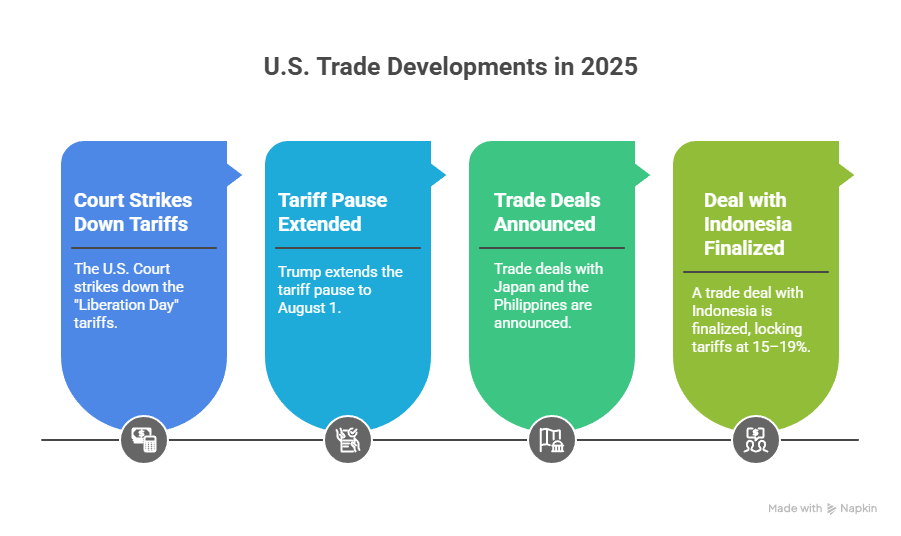
May 28 Court Ruling: Legal Roadblock to Trump’s Tariff Agenda
On May 28, the U.S. Court of International Trade found that President Trump exercised his authority under the International Emergency Economic Powers Act (IEEPA) beyond the limitations of the Act when he implemented sweeping reciprocal tariffs starting on April 2.
Tariffs ranged from 15% – 27% on imports. The court said there wasn’t a legitimate national emergency to justify these tariffs, as required by IEEPA. The court tossed the tariffs, but left a temporary freeze—meaning they remain in place pending appeal.
Next Key Date: July 31, 2025 – The Federal Circuit hears oral arguments. This could make or break Trump’s entire tariff strategy. 🇯🇵 July 22: Trump–Japan Deal Brings Stability and Investment
Gen Z’s evolving attitude toward economic policy is also playing a major role in how trade strategies are perceived, as discussed in our article on why Gen Z is ditching credit cards and embracing debit.
Japan Deal: A Turning Point in Trump Tariff Strategy 2025
15% flat tariff on Japanese goods entering the U.S. $550 billion Japanese investment in U.S. automotive, semiconductor, and energy sectors New access for U.S. farmers—especially rice and soybeans.
How the Market Reacted to Trump’s Tariff Strategy 2025
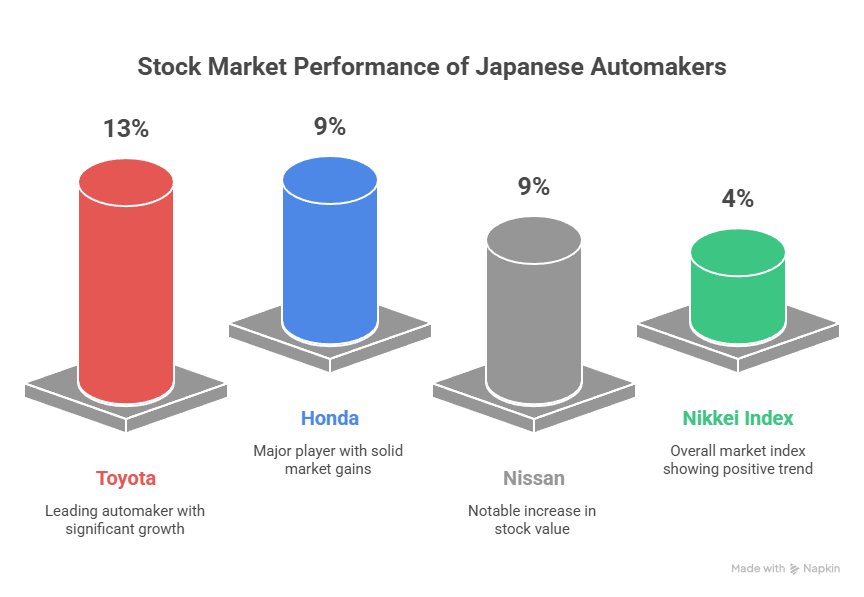
Toyota: +13%, Honda: +9%, Nissan: +9%, Nikkei Index: ↑ nearly 4%
Analysts warn that the Trump Tariff Strategy 2025 could result in a cascade of retaliatory actions, particularly from China, Europe, and Japan.
This deal defused the threat of a looming 25–27.5% auto tariff and reassured global investors.
🇵🇭 🇮🇩 The Philippines and Indonesia Followed His Lead Following Japan, Trump struck bilateral deals with Southeast Asian countries: 🇵🇭 The Philippines: 19% tariff on Philippine imports to the U.S.
Philippines lifted tariffs on U.S. instruments Focus areas: Digital markets, agriculture, infrastructure 🇮🇩 Indonesia: 19% flat reciprocal tariff Jakarta removed restrictions on mineral exports Benefits for U.S. EV and battery suppliers in recycling key minerals. These agreements align with Trump’s model: “Really reciprocal but somehow flexible”—aggressive tariffs + open trade incentives.
For a broader perspective on how U.S. economic uncertainty is influencing global finance, check out our deep dive into the credit downgrade by Moody’s and its global implications.
Countdown to August 1, 2025
Time’s almost up—August 1, 2025, is fast approaching. President Trump hit the pause button on new tariffs for 90 days, but only for countries willing to come to the table and have real, one-on-one trade talks. If they showed up, they got a break. If not? Well, the clock’s ticking, and tough tariffs could be right around the corner.. No talks, no break. Simple as that. This was extended From the Date 9th July 2025 to 1st August 2025.
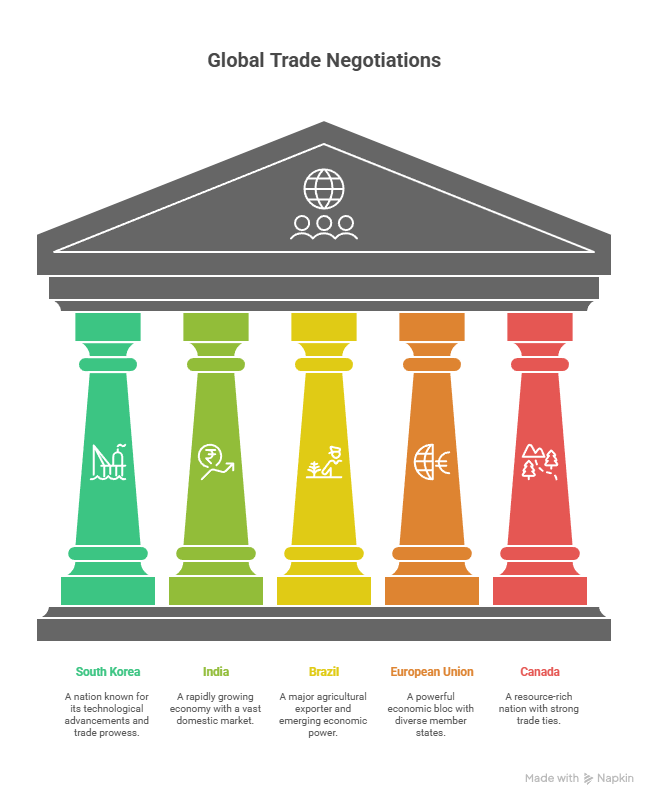
What Happens After August 1, 2025?
If no deals are made, these countries could face sector-specific tariffs up to 50%.
Revenue Is Up—But at What Cost?
“Liberation Day” tariffs have raised $64 billion in 2025 so far
Treasury Secretary Bessent expects $300 billion by year-end
But it comes at a cost:
Average U.S. household: $1,296/year in hidden tariff costs
Deutsche Bank says businesses are paying most of the costs—for now
Analysts warn consumer prices may rise by late 2025
Industry Impact of Trump Tariff Strategy 2025
GM’s Response to Trump’s Tariff Strategy 2025 On July 22, General Motors revealed major losses: Operating profit down $1.1 billion (Q2) Net income: $1.9 billion (35% drop) Revenue: $47 billion (2% drop) Estimated 2025 tariff costs: $5 billion
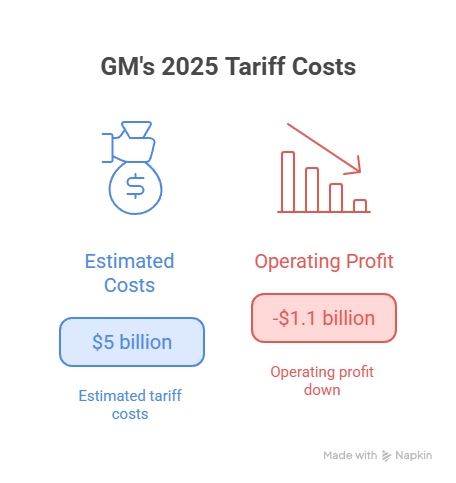
GM’s Response:
$4 billion investment in U.S. factories (Michigan, Tennessee, Kansas, New York). Goal: Increase domestic output, reduce import reliance. GM stock still fell 3–8%. Rival Stellates reported $350 million in tariff losses (first half of 2025). Market Attitude: Surprisingly Positive. Despite legal battles and company losses: S&P 500 and Dow Jones hover near all-time highs Investors see Trump’s deals (e.g., Japan) as using tariffs strategically, not permanently
Some call this strategy the “TACO Trade”: Tariff-As-Conditional-Offer
Lawmaker Pushback: The Trade Review Act
Bipartisan concern is growing over unchecked executive power in trade.
The Trade Review Act of 2025: Introduced by Senators Cantwell (D–WA), Grassley (R–IA), and Rep. Bacon (R–NE). If a tariff lasts over 60 days, Congress must approve it. Trump’s allies argue it weakens America’s hand. Critics say it restores balance and predictability. Could this shift trade policy from the White House to Capitol Hill? Time will tell.
According to the Brookings Institution’s recent analysis, Trump’s tariff approach is aimed at forcing reciprocity from major trade partners like China and Japan.
From Multilateralism to Bilateral Deals
A shift from multilateral to bilateral trade: Each country now negotiates its own tariff rate, funding, and enforcement terms Moving away from WTO-style global trade blocs.
Supporters:
✔️ Economic justice for U.S. industries
Critics:
❌ Instability and fragmentation
What’s Next?
July 31, 2025: Federal court to hear IEEPA appeal. August 1, 2025: Deadline for remaining countries to make deals—or face high tariffs. Q3 Economic Watch: Look out for inflation signs in consumer vehicles, electronics, and retail.
Final Word: So, Is Trump Crushing It With Tariffs?
Honestly, the guy started out swinging with tariffs like a bull in a china shop, and now—bam—suddenly he’s playing 4D chess with trade deals. Wild turnaround, if you ask me.
As the U.S. heads toward the election cycle, the Trump Tariff Strategy 2025 will likely remain at the center of policy debates, especially among trade economists and manufacturing lobbyists.
✅ Trump secured billions in investment
✅ Struck deals with key Asian partners
✅ Reinforced “America First” image
But… Legal fights rage on, Companies push back,Congress is stepping in As August approaches, the real test is whether Trump can keep making Japan-style deals—or whether backlash forces a reset.
Final Thought:
Trump’s Tariff Strategy 2025 is a gamble—combining tough talk with selective diplomacy. Will it pay off, or will the economic backlash dominate headlines? Only time (and trade data) will tell.
💬 Let us know in the comments—or share this post if you think others should be watching these trends!
FAQs
1. What are “Liberation Day” tariffs and why were they introduced?
The “Liberation Day” tariffs were sweeping import taxes imposed by President Trump in spring 2025, targeting dozens of countries. The goal was to rebalance trade, boost U.S. manufacturing, and challenge what the administration called “unfair foreign competition.”
2. What’s the current legal status of Trump’s tariff strategy?
On May 28, 2025, a U.S. federal court ruled Trump exceeded his authority under the IEEPA. While the tariffs remain in place for now, the outcome of the appeal—set to be heard on July 31—could determine whether these tariffs are permanently scrapped or allowed to continue.
3. Which countries have signed bilateral deals with the U.S. so far?
As of July 22, 2025, Japan, the Philippines, and Indonesia have struck bilateral trade deals with the Trump administration. These deals involve reciprocal tariffs, reduced barriers, and commitments to investment and market access.
4. How are Trump’s tariffs affecting American households and businesses?
While the tariffs have raised $64 billion in revenue this year, the average U.S. household is paying an estimated $1,296 more annually in hidden costs. Businesses—especially automakers like GM—have faced billions in losses due to increased import costs.
5. What could happen after August 1, 2025?
If countries don’t finalize trade deals by August 1, they could face steep, sector-specific tariffs—potentially up to 50%. This deadline is part of Trump’s 90-day pause strategy meant to incentivize one-on-one negotiations.