AI investing for beginners has become one of the easiest ways to start building wealth in 2026. You no longer need a finance degree, stockbroker, or large bank account to begin investing. With AI-powered investing apps and robo advisors, beginners can start investing with as little as $10 using only a smartphone.
If you want a deeper understanding of how artificial intelligence is transforming budgeting, investing, and saving money, explore ourUltimate Guide to AI and Personal Finance in 2026.
AI Investing for Beginners: How It Works in 2026

For many beginners, AI investing removes the fear and confusion that traditionally stopped people from entering the stock market.
AI investing means using artificial intelligence and algorithms to manage, automate, and optimize your investment decisions. Instead of you manually picking stocks or trying to time the market, an AI-powered platform does it for you based on your goals, risk tolerance, and timeline.
AI investing is growing because the entire AI economy is expanding rapidly across industries.
These platforms are often called robo-advisors, but modern AI investing tools go far beyond simple automation. They use machine learning to:
- Analyse thousands of market data points in real time
- Rebalance your portfolio automatically when markets shift
- Optimise your taxes with strategies like tax-loss harvesting
- Adjust your investment mix as you get closer to your goals
In short, AI does the heavy lifting. You just set your goals and let it work.
As explained in our complete AI finance overview, robo advisors are only one part of the rapidly growing AI personal finance ecosystem.
How AI Investing Works for Beginners
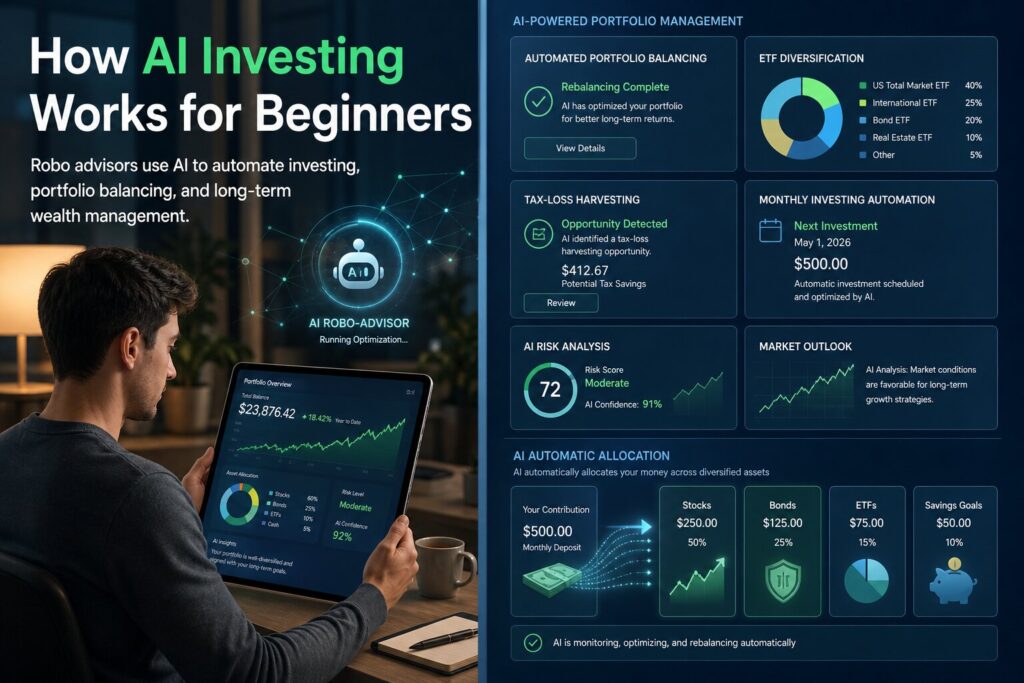
Here’s the honest truth: most beginners fail at investing because of emotion they panic-sell when markets dip or get greedy and chase trends. AI removes that human error from the equation.
For readers who want the bigger picture, this complete AI personal finance guide explains how AI can support budgeting, saving, investing, and everyday money decisions.
Here’s why AI investing is ideal if you’re just starting out:
- No experience needed: The AI makes all the investment decisions for you.
- Low minimums: Many platforms let you start with as little as $1.
- Automatic diversification: Your money is spread across many assets automatically.
- Set it and forget it: You don’t need to check your portfolio every day.
- Lower fees: AI-managed portfolios charge far less than human financial advisors.
For anyone who doesn’t know where to start, AI investing is genuinely one of the smartest entry points into building long-term wealth.
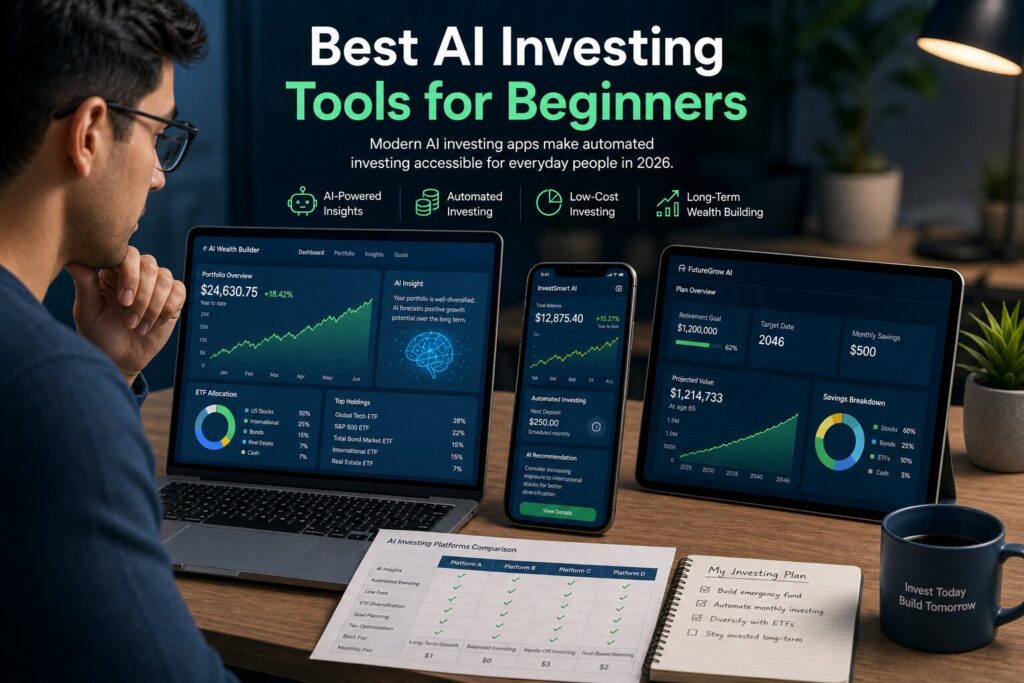
Top AI Investing Tools for Beginners in 2026
Here are the best AI investing platforms that are beginner-friendly, affordable, and trusted:
| Platform | Minimum Deposit | Fees | Best For |
|---|---|---|---|
| Betterment | $0 | 0.25% | Beginners |
| Wealthfront | $500 | 0.25% | Goal Planning |
| M1 Finance | $100 | Free/$3 | Custom Portfolios |
| Schwab | $5,000 | $0 | Larger Accounts |
1. Betterment
Betterment is one of the original robo-advisors and still one of the best. It asks you a few questions about your goals and risk tolerance, then builds you a personalised portfolio of ETFs. It automatically rebalances and offers tax-loss harvesting on premium plans.
- Minimum: $0 to start
- Fee: 0.25% per year (Digital plan)
- Best for: Hands-off beginners who want a guided experience
For a deeper look at how automated portfolios work, you can explore Betterment’s official platform here: https://www.betterment.com
2. Wealthfront
Wealthfront is known for its powerful automated features and financial planning tools. It offers a Path tool that helps you visualise your financial future and gives AI-driven advice on saving, investing, and retirement.
- Minimum: $500
- Fee: 0.25% per year
- Best for: Beginners who want goal-based financial planning
3. M1 Finance
M1 Finance is a hybrid between a robo-advisor and a DIY investing app. You choose from pre-built portfolios (called ‘Pies’) or build your own, and M1 automates everything from there. Great for beginners who want a little more control.
- Minimum: $100 ($500 for retirement accounts)
- Fee: Free (M1 Premium costs $3/month)
- Best for: Beginners who want to customise their portfolio
4. Schwab Intelligent Portfolios
Offered by one of America’s most trusted financial institutions, Schwab’s AI-powered platform charges zero management fees. Your money is invested in a diversified mix of ETFs and automatically rebalanced.
- Minimum: $5,000
- Fee: $0 management fee
- Best for: Beginners who have a larger sum to start with and want a trusted brand
How to Get Started with AI Investing (Step by Step)
Here’s exactly how to start AI investing “today, no experience required:”
- Choose a platform from the list above based on your starting budget and goals.
- Create your account this usually takes 5–10 minutes. You’ll need your ID and bank details.
- Answer the onboarding questions about your risk tolerance, investment timeline, and financial goals.
- Fund your account even $10 or $50 is enough to begin on most platforms.
- Let the AI build and manage your portfolio automatically.
- Set up automatic monthly deposits to keep building your wealth consistently.
That’s it. The AI handles everything else rebalancing, reinvesting dividends, and optimising your tax exposure.
Pro Tip
Start small. Even $25/month invested consistently over 10 years can grow into a significant
amount thanks to compound interest. The most important thing is to start not to start big.
How Much Money Do You Need to Start AI Investing?
This is the question most beginners ask first. The great news is you need far less than you think:
- $0 – $10: Betterment and some micro-investing apps like Acorns
- $100 – $500: M1 Finance, SoFi Invest
- $500+: Wealthfront, most full-featured platforms
- $5,000+: Schwab Intelligent Portfolios (no management fee)
The key takeaway: don’t wait until you have thousands saved up. Starting with $50 today is infinitely better than waiting for the ‘perfect’ amount.
Risks of AI Investing for Beginners
AI investing is powerful, but it’s not risk-free. Here are the main things to be aware of:
- Market risk: AI can’t prevent losses in a market downturn. Your portfolio can still go down in value.
- Over-reliance on automation: AI works best with long-term goals. Don’t expect it to react perfectly to sudden market events.
- Fees add up: Even 0.25% per year is money leaving your portfolio. Compare fees before choosing a platform.
- Not personalised for complex situations: If you have complex tax situations or need specific financial planning, a human advisor may still be needed.
The bottom line: AI investing is excellent for building long-term wealth, but understanding these risks helps you set realistic expectations.
If you’re completely new to investing, the U.S. Securities and Exchange Commission provides a helpful beginner guide explaining the basics of investing, risks, and how markets work: https://www.investor.gov/introduction-investing
AI Investing vs Traditional Investing: Which Is Better for Beginners?
This is a great question, and we cover this in depth in our AI and Personal Finance 2026 guide. But here’s a quick breakdown:
AI Investing vs Traditional Investing
✅ AI Investing: Low fees | Automated | No expertise needed | Best for: long-term, passive investors
⚖️ Traditional Investing: Higher fees | Manual | Requires knowledge | Best for: active traders, complex portfolios
For 95% of beginners, AI investing wins. It removes the two biggest barriers to investing: not knowing what to do, and not having time to manage it.
5 Tips for AI Investing Beginners
- Invest consistently: Set up automatic monthly deposits. Even $50/month makes a huge difference over time.
- Don’t touch it: AI investing works best when you leave it alone. Resist the urge to withdraw during market dips.
- Enable tax-loss harvesting: If your platform offers it, turn it on. It can save you hundreds per year in taxes.
- Reinvest your dividends: Make sure dividends are set to automatically reinvest. This accelerates compound growth.
- Review annually, not daily: Check your portfolio once a year to make sure your goals haven’t changed. That’s it.
A 24-year-old student working part-time may not have thousands to invest. But with AI investing apps allowing automatic deposits of just $25 per month, even small consistent investing habits can slowly grow into long-term wealth over time.
Frequently Asked Questions
AI investing for beginners works best when investors stay consistent and focus on long-term goals.
Is AI investing for beginners safe in 2026?
AI investing is as safe as traditional investing meaning your money is subject to market risk, but it’s not more dangerous than a regular investment account. All major AI investing platforms are regulated and SIPC-insured in the US.
Can AI investing make me rich?
AI investing helps you build wealth steadily over time. It’s not a get-rich-quick scheme. Think of it as the smart, consistent path to financial freedom rather than a shortcut.
What if the market crashes?
AI investing platforms are designed for long-term growth. During a market crash, the AI will often automatically rebalance your portfolio buying more of what’s fallen in price, which positions you better for the recovery.
Do I pay taxes on AI investing gains?
Yes, investment gains are taxable. However, many AI platforms offer tax-loss harvesting to reduce your tax bill. Always consult a tax professional for your specific situation.
For many people, AI investing for beginners removes the complexity that once made investing feel intimidating.
Final Thoughts: Your First Step to AI-Powered Wealth
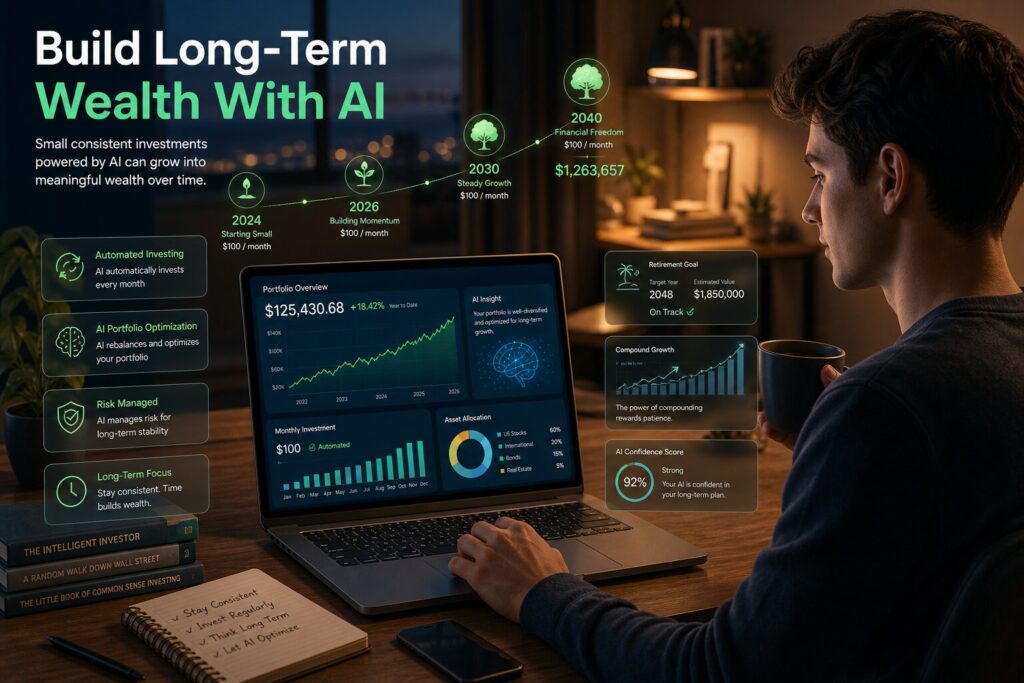
“AI investing is no longer a luxury for the wealthy elite. In 2026, it has become an accessible tool that everyday people can use to start building long-term wealth.” in 2026. Whether you start with $10 or $10,000, the most important step is simply getting started.
Pick a platform, set up automatic deposits, and let the AI do what it does best: make smart, data-driven decisions on your behalf while you focus on living your life.
For a deeper look at all the ways AI is transforming your financial life from budgeting to saving to investing read our complete Ultimate Guide to AI and Personal Finance in 2026. It’s your go-to resource for building wealth with AI this year.