Can you get a home loan without ITR or if you receive your salary in cash?
Yes, a home loan without ITR may be possible in some situations.
But there is an important difference between “no ITR” and “no income proof.”
A bank or housing finance company still needs to understand how much you earn, whether your income is stable, whether you can repay the EMI, and whether the property is acceptable as security.
If your income is genuine but your documentation is weak, the challenge is usually not proving that you want to buy a house.
The challenge is proving your repayment capacity.
This article explains the realistic options for:
- Self-employed people without ITR
- Employees receiving cash salary
- People without salary slips
- Small business owners earning mostly in cash
- Applicants with low declared income
- Applicants who have good bank transactions but limited income documents
Short Answer: A home loan without ITR or with cash salary can be possible, but approval depends on the lender, your income pattern, bank statements, employment or business stability, credit history, property documents and overall financial profile. It is usually harder than a normally documented home loan.
Can I Get a Home Loan Without ITR?
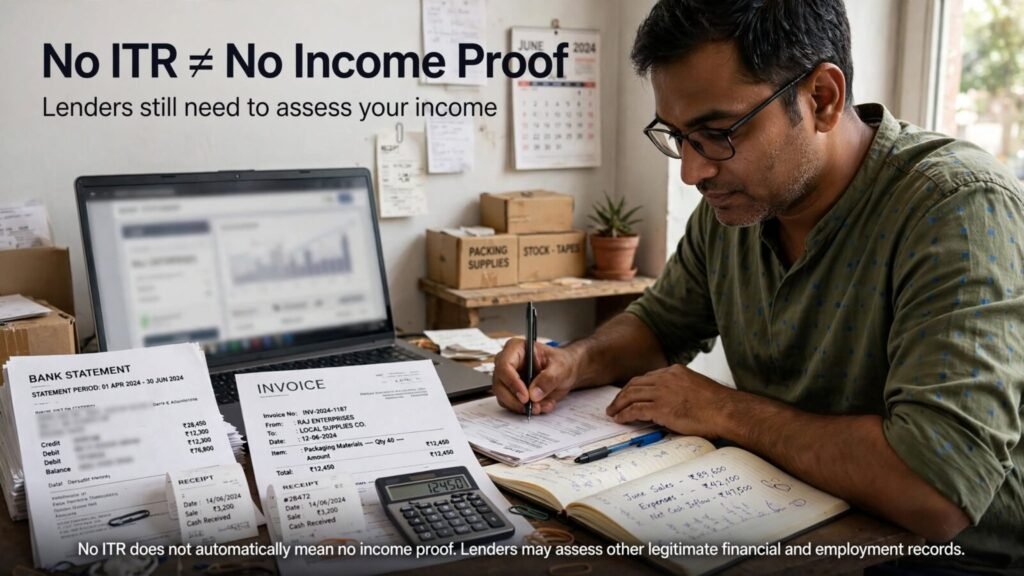
Yes, but it depends on why you do not have ITR and what other evidence of income you can provide.
For example, there is a big difference between these two applicants:
Applicant A
Earns ₹50,000 per month, receives the money regularly in a bank account, has a stable business, maintains good bank records, but has not filed ITR.
Applicant B
Earns ₹50,000 per month in cash, has no salary slip, very little bank activity, no formal business records and no ITR.
Both may say: “My income is ₹50,000 per month.”
But from a lender’s point of view, these are very different cases.
The first applicant has a financial trail that may help the lender understand the income.
The second applicant has very little documentary evidence.
That is why “no ITR home loan” does not automatically mean easy approval.
1. Home Loan Without ITR for Self-Employed Applicants
This is one of the most common situations.
You may be a:
- Small shop owner
- Trader
- Contractor
- Freelancer
- Commission-based worker
- Small manufacturer
- Service provider
- Professional
- Business owner
You may genuinely earn enough to pay a home-loan EMI, but you may not have regular ITRs showing that income.
What will the lender want to understand?
The lender will generally want evidence around:
- How long you have been in business
- How stable your income is
- How money comes into your bank account
- Your existing loans and EMIs
- Your credit history
- Your business activity
- Your financial transactions
- The value and legal status of the property
For self-employed applicants, mainstream lenders can require formal income documents. Current lender material shows that requirements can include ITRs, financial statements, bank statements and other business-related documents depending on the applicant profile.
For some self-employed applicants, ITR may still be a core requirement, so do not assume that bank statements or business records will always be accepted instead.
Can bank statements help?
Yes.
Bank statements can help demonstrate the actual movement of money through your account.
For example:
Suppose you say your business earns around ₹70,000 per month.
Your bank account shows regular business credits of ₹60,000 to ₹80,000 every month for the last 12 months.
That is much more useful than having an account with very little activity and simply telling the lender that you earn ₹70,000.
However, bank statements generally should be treated as supporting evidence, not as a guaranteed replacement for ITR.
The lender decides what income documents it will accept.
My Experience
In home-loan cases, one of the biggest mistakes I have seen borrowers make is focusing only on their income amount.
They say: “I earn ₹80,000 per month. Why won’t the bank give me a ₹40 lakh loan?”
The lender looks at a different question: “Can this income be verified and is it sustainable enough to support the proposed EMI?”
That difference is extremely important.
A borrower with ₹60,000 of well-documented income can sometimes be easier to assess than someone claiming ₹1 lakh but providing almost no supporting evidence.
2. Home Loan for Cash Salary Employees
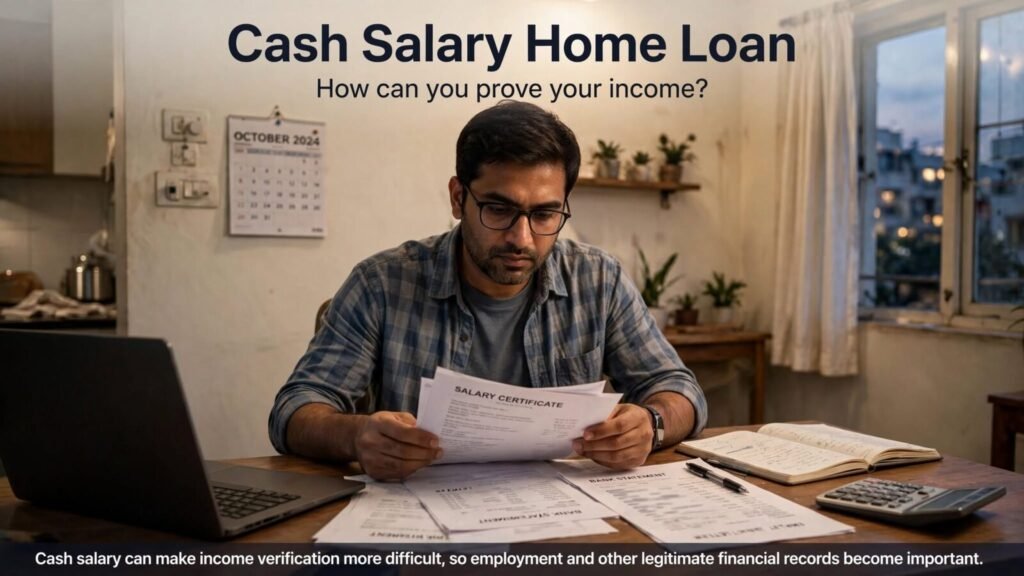
Now let’s look at salaried employees.
Suppose your employer pays you ₹35,000 per month in cash.
You do not receive a salary directly in your bank account.
You also don’t have regular salary slips.
Can you get a home loan?
It can be difficult, but it is not automatically impossible.
The lender will need some way to establish that:
- You actually work for the employer
- Your employment is genuine
- Your income is regular
- Your employer can verify your employment and salary
- You have sufficient repayment capacity
The problem becomes bigger when several things are missing at the same time.
For example:
Cash salary + no salary slip + no bank salary credit + no Form 16 + no ITR
This creates a weak income profile.
On the other hand:
Cash salary + employment proof + employer confirmation + regular bank deposits + stable employment + good credit history
may give the lender more information to evaluate.
What Documents Can Help With Cash Salary?
Depending on the lender and your employment profile, useful supporting documents may include:
- Employment or appointment letter
- Employer identity card
- Salary certificate
- Employer confirmation
- Salary register or wage records where available
- Bank statements showing regular deposits
- Form 16, if available
- ITR, if available
- EPF-related records, where applicable
- Other employment-related documents
The exact list varies by lender.
Do not assume that one document automatically replaces another.
Practical Tip
Practical Tip
If you receive legitimate cash salary, start organizing your employment and income records well before applying for a home loan.
Keep your salary certificate, employer confirmation, employment records and bank statements properly documented. Where appropriate, deposit legitimate income through normal banking channels and maintain records showing the source of the money.
Do not create artificial deposits or transactions simply to make your bank statement look stronger.
3. Home Loan Without Salary Slip
This is another common search query.
Suppose you work for a small company.
You receive your salary regularly but your employer does not provide a formal salary slip.
What can you do?
The answer depends on what other documents are available.
A lender may look at a combination of:
- Bank statements
- Employment proof
- Employer certificate
- Salary certificate
- Form 16
- ITR
- Credit history
- Existing loan repayment
- Employment continuity
Current home-loan documentation from major lenders shows that income proof can include combinations of salary slips, bank statements, ITRs and financial statements, depending on the applicant.
Example
Rahul earns ₹45,000 per month.
He has worked for the same company for four years.
His salary is credited into his bank account every month.
He has no salary slip, but his employer can provide an employment and salary certificate.
His bank account shows regular salary credits.
He also has a good CIBIL history.
This is a much stronger case than: “I earn ₹45,000 but I have no documents.”
The first applicant gives the lender multiple ways to verify his income.
4. Self-Employed and Mostly Cash Income
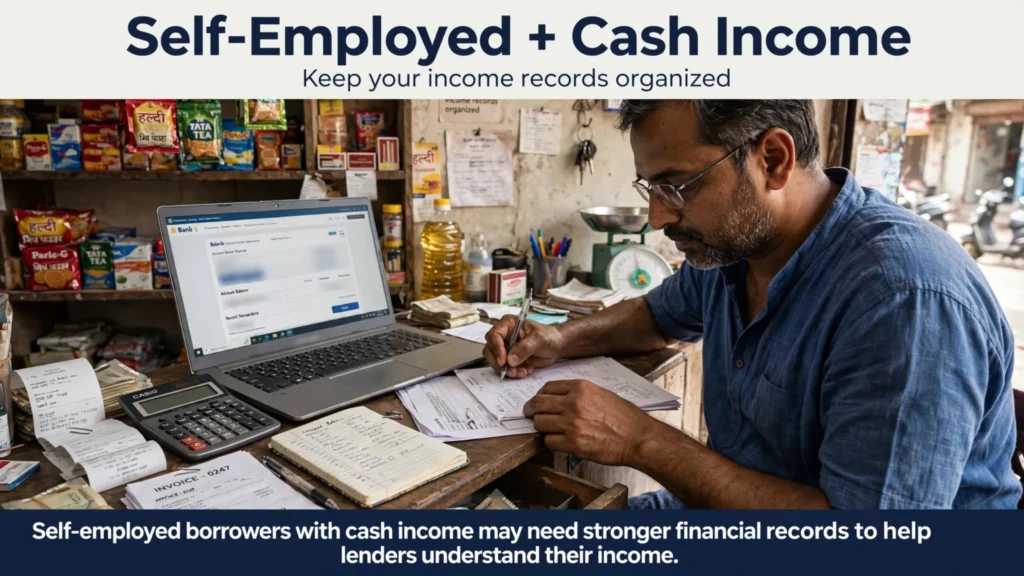
This is more difficult.
Imagine a small business owner earns ₹80,000 per month but most customers pay in cash.
Only ₹20,000 to ₹30,000 is deposited into the bank.
The applicant may genuinely earn ₹80,000.
But the lender cannot simply accept the verbal statement.
The lender needs to assess the verifiable income.
This is where many borrowers become disappointed.
They calculate their eligibility using their actual income, while the lender may calculate it using the income it can reasonably establish from the documents and financial records.
What can strengthen the case?
Depending on the business, you may have:
- Business bank statements
- GST returns
- Business registration
- Udyam registration
- Shop and establishment documents
- Invoices
- Receipts
- Accounting records
- Financial statements
- ITR, if available
- Existing loan repayment history
- Proof of business continuity
Not every document will apply to every business.
The objective is to build a consistent and credible financial picture.
5. What If My Declared Income Is Low?
This is slightly different from having no ITR.
Suppose your actual income is ₹70,000 per month, but your declared taxable income is much lower.
You may think: “I earn enough to pay the EMI, so the bank should consider my actual income.”
The problem is that the lender has to assess the income it can verify.
A low declared income can therefore reduce your eligible loan amount.
Example
Suppose two applicants want a ₹40 lakh home loan.
Applicant A
- Documented income: ₹70,000
- Good bank records
- Stable employment
- Good credit history
Applicant B
- Claims income: ₹70,000
- Documented income: ₹35,000
- Limited supporting evidence
The second applicant may not receive the same eligibility simply because both people say they earn ₹70,000.
6. Can Bank Statements Replace ITR?
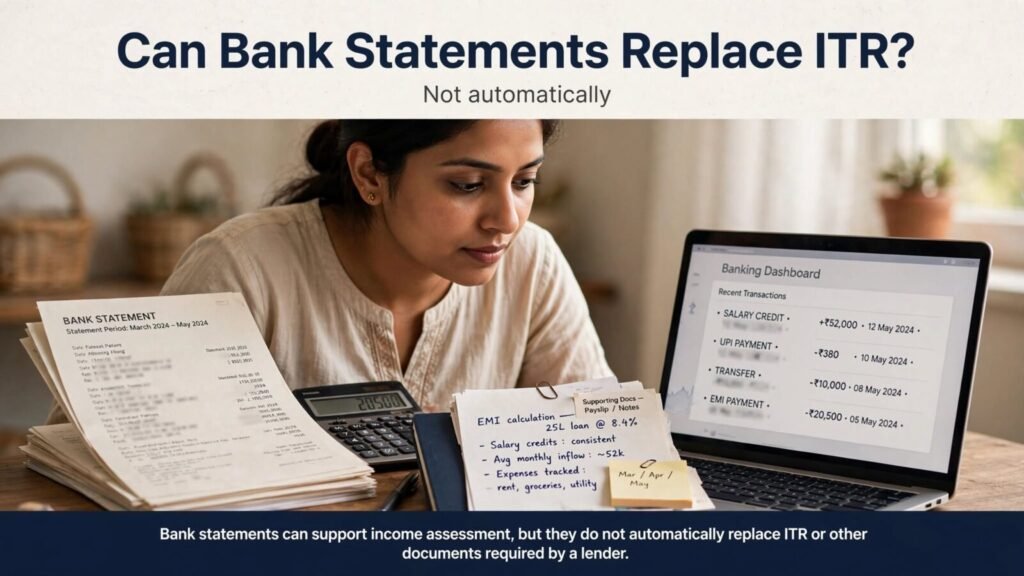
This is one of the most important questions.
Usually, you should not think of a bank statement as a guaranteed replacement for ITR.
A bank statement can provide useful evidence of cash flow, but the lender decides which documents are sufficient for income assessment.
For example, a bank statement can show:
- Salary credits
- Business receipts
- EMI payments
- Regular expenses
- Existing liabilities
- Savings behaviour
- Cheque transactions
- Cash deposits
But a bank statement does not automatically explain the source and nature of every transaction.
Practical Tip
If you are planning to apply for a home loan in the next 6–12 months, start maintaining clean financial records now.
Try to avoid:
- Unexplained large cash deposits
- Frequent transfers between your own accounts without a clear reason
- Missed EMI payments
- Overuse of credit cards
- Irregular unexplained income patterns
A clean financial history can make your profile easier to understand.
7. What Documents Should I Keep Ready?
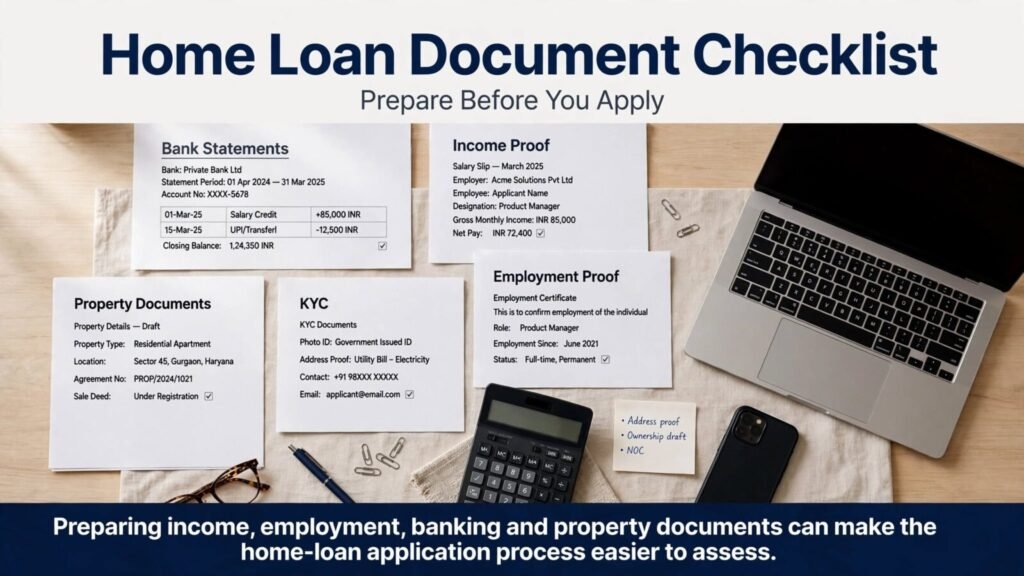
If you have no ITR or have cash income, prepare as much legitimate documentation as possible.
Basic Documents
- PAN Card
- Aadhaar or other accepted KYC
- Address proof
- Bank statements
- Existing loan statements
- Credit history details
- Property documents
If You Are Salaried
Keep:
- Appointment letter
- Employment ID
- Salary certificate
- Salary slips, if available
- Form 16, if available
- Bank statements
- Employer confirmation
If You Are Self-Employed
Keep:
- Business registration documents
- GST documents, if applicable
- Udyam registration, if applicable
- Business bank statements
- Personal bank statements
- Invoices
- Receipts
- Financial statements
- ITR, if available
- Proof of business continuity
If You Receive Mostly Cash
Keep legitimate evidence showing:
- Where the money comes from
- Your employment or business activity
- Regularity of income
- Business continuity
- Bank deposits
- Existing repayment history
The more consistent the story, the easier it is for the lender to assess.
8. Will Banks Give a Home Loan Without ITR?
There is no universal yes or no.
Different lenders have different credit policies.
A mainstream bank may have stricter income-document requirements, while another lender may evaluate a particular applicant using a different combination of documents.
That does not mean that NBFCs or HFCs automatically approve every no-ITR applicant.
You still have to demonstrate repayment capacity.
Reality Check
Be careful with advertisements saying: “₹50 lakh home loan without ITR.”
or
“100% home loan for cash salary.”
These headlines can be misleading.
A lender may have a product or assessment method that works for certain profiles, but that does not mean everyone without ITR will qualify.
Before paying any processing fee, ask:
- What income documents are accepted?
- How will my income be calculated?
- Is bank statement-based assessment available?
- What minimum business or employment history is required?
- What property documents are required?
- What happens if the income cannot be verified?
Get the answer in writing wherever possible.
9. How Can I Improve My Eligibility Before Applying?
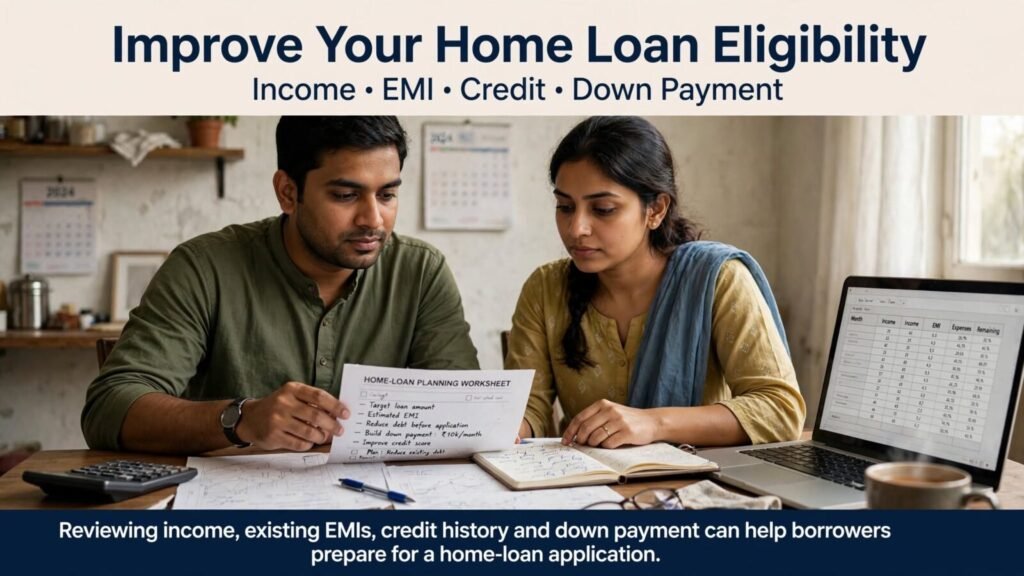
If you are planning to buy a house but your income documentation is currently weak, don’t rush into multiple loan applications.
First improve the profile.
Step 1: Maintain Clean Bank Statements
Try to keep your income and regular financial activity traceable.
Step 2: Reduce Existing EMIs
Existing personal loans, vehicle loans and other EMIs reduce your repayment capacity.
Reducing unnecessary debt can improve your home-loan eligibility.
Step 3: Maintain Your Credit History
Pay your EMIs and credit-card bills on time.
Avoid applying for multiple loans simultaneously.
Step 4: Organize Income Documents
Keep employment, business and financial documents together.
Step 5: Build a Larger Down Payment
A higher down payment means you need to borrow less.
For example, if the property costs ₹50 lakh:
A ₹40 lakh loan means you need ₹10 lakh from your own funds, apart from applicable transaction costs.
If you can arrange ₹15 lakh, your loan requirement may fall to ₹35 lakh.
A lower loan requirement can make the overall case more comfortable, subject to lender and property rules.
Step 6: Consider a Co-Applicant
A spouse or eligible family member with stable and well-documented income may strengthen the overall application.
But remember:
A co-applicant does not magically remove the documentation problem.
The lender will still assess both applicants.
10. Example: Cash Salary Applicant
Let’s take a practical example.
Suresh earns ₹45,000 per month.
He works for a small private company.
His salary is paid in cash.
He has:
- 5 years with the same employer
- Employer confirmation
- Regular cash deposits
- Good credit history
- No major existing loans
- ₹12 lakh available for the purchase
- A property costing ₹45 lakh
Can he get a home loan?
Possibly, but the lender will need to establish his income.
His five-year employment history and other supporting evidence can help.
But if he has:
- No salary certificate
- No bank trail
- No ITR
- No Form 16
- No employer documentation
the case becomes much more difficult.
The lesson is simple:
The problem is not only the absence of ITR. The problem is the absence of verifiable income evidence.
11. Example: Self-Employed Applicant Without ITR
Now consider Priya.
She runs a small tailoring business.
Her average monthly income is around ₹60,000.
She does not currently have ITRs.
However, she has:
- A business bank account
- Regular customer payments
- Business registration
- Two years of bank statements
- Consistent business activity
- Good credit history
- No major existing EMI
Her case is different from someone who has no financial records at all.
The lender may still require additional documents and may not accept the application without formal income documentation.
But she has something important:
a financial trail that can help explain her income.
My Experience: Don’t Start With the Loan Amount
One of the biggest mistakes borrowers make is starting the conversation with: “I need a ₹50 lakh home loan. Which bank will give it to me?”
For applicants with unusual income documentation, I would reverse the process.
Start with:
What can I prove?
Then ask:
How much loan can my documented income support?
Then:
Which type of lender is suitable for my profile?
This approach can save you from wasting time applying to lenders whose documentation requirements you cannot currently meet.
No ITR Home Loan: Quick Checklist
Before approaching a lender, ask yourself:
Income
- Do I have a regular source of income?
- Is my income stable?
- Can I explain where the money comes from?
Banking
- Do I have regular bank transactions?
- Are my statements reasonably clean?
- Are there unexplained large cash deposits?
Employment / Business
- Can my employer verify my salary?
- If self-employed, can I prove business continuity?
- Do I have registration, invoices, GST or other applicable records?
Credit
- Do I have a good repayment history?
- Do I have existing EMIs?
- Have I recently applied for several loans?
Property
- Are the property documents complete?
- Is the property legally acceptable to the lender?
- Is the property valuation likely to support the proposed loan?
If several answers are “No,” improve the profile before applying.
Should You Apply for a Home Loan Without ITR?
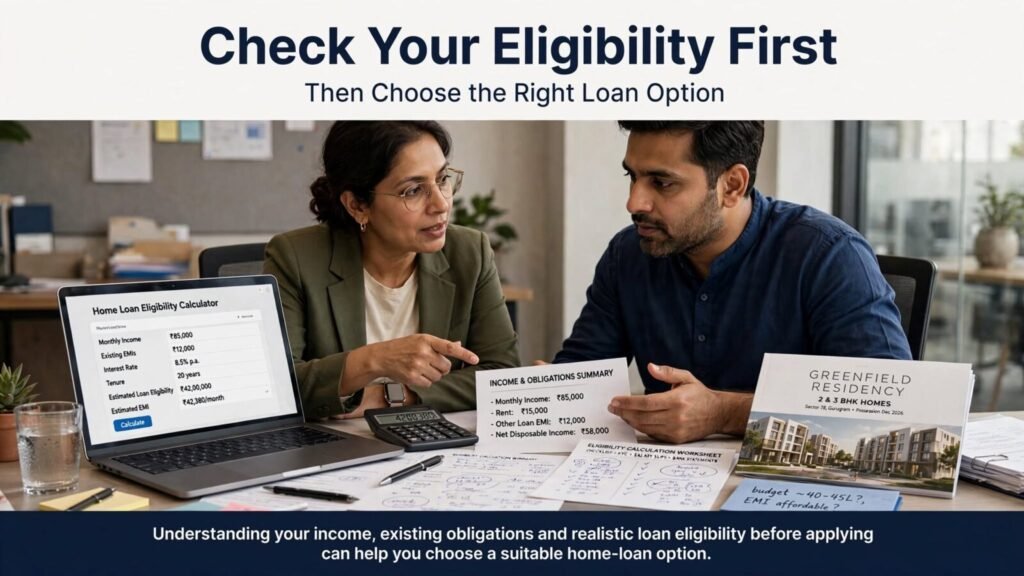
It depends on your situation.
It may be worth exploring if:
- Your income is genuine and reasonably stable
- You have strong bank records
- Your employment or business is established
- You have good credit history
- You can provide alternative income evidence
- Your property documents are strong
Be cautious if:
- Your income is entirely undocumented
- You have no meaningful bank trail
- You have unstable income
- You have several existing EMIs
- Your credit history is weak
- You are relying only on verbal income claims
In such cases, improving your documentation first may be a better strategy.
Final Takeaway
Getting a home loan without ITR is not the same thing as getting a home loan without income proof.
A lender still needs confidence that you can repay the loan.
If you are self-employed, your business records, bank transactions and other financial documents may help the lender understand your income.
If you receive a cash salary, employment proof, salary confirmation, banking history and other legitimate documents can strengthen your application.
But there is no universal rule saying: “No ITR = No Home Loan”
and there is also no universal rule saying: “No ITR = Home Loan Guaranteed.”
Your chances depend on the complete financial picture.
If you are planning to apply, first understand how much loan you can realistically afford, then identify the documents you can provide, and only after that approach suitable lenders.
You can also use the PennyPowerPlay Home Loan Planner to get a starting estimate of your EMI, affordability and loan requirements before approaching a lender.
PennyPowerPlay Home Loan Planner
Related Articles
Home Loan Eligibility for Self-Employed Applicants
Understand how lenders assess income, business stability, ITR, bank statements and eligibility.
Home Loan Eligibility for ₹30,000, ₹50,000, ₹75,000 & ₹1 Lakh Salary
Home Loan Application Checklist: Documents You Need
Complete Home Loan Guide in India
Home Loan Tax Benefits in India
Important Note
Lender requirements can change and may vary based on your income type, employment or business profile, credit history, property, loan amount and location.
The examples in this article are for general guidance and do not guarantee loan approval. Always confirm the latest income-document and eligibility requirements directly with the lender before applying.
Frequently Asked Questions
FAQ 1: Can I get a home loan without ITR in India?
Yes, it may be possible depending on your income profile and lender. However, no ITR does not mean no income verification. The lender may ask for bank statements, financial records, employment proof, business documents or other evidence.
FAQ 2: Can I get a home loan if I receive my salary in cash?
It can be possible, but cash salary can make income verification more difficult. Employment proof, employer confirmation, salary documentation and a consistent banking history can help.
FAQ 3: Can bank statements replace ITR for a home loan?
Not automatically. Bank statements can support income assessment, but whether they are sufficient depends on the lender and applicant profile.
FAQ 4: Can self-employed people get a home loan without ITR?
Some self-employed applicants may have options depending on their overall financial profile and the lender’s policy. However, the lender may still require alternative income documents or may ask for ITR before approving the loan.
FAQ 5: Can I get a home loan without a salary slip?
Possibly. Other documents such as bank statements, employment proof, salary certificates, Form 16 or employer confirmation may help, depending on the lender’s requirements.
FAQ 6: Which lender gives a home loan without ITR?
There is no single lender that can be guaranteed to approve a home loan without ITR for every applicant. Requirements vary by lender, income type, loan amount, credit profile and property.
Remember: Don’t choose a lender simply because an advertisement says “No ITR Home Loan.” First understand how that lender will verify your income and calculate your eligibility.
About the Author
Ashok Satpute is the founder of PennyPowerPlay.com, helping Indian homebuyers understand home loans, eligibility, EMI affordability, documentation, property costs and borrowing decisions.
He has 8+ years of experience in banking and housing finance, with experience across ICICI Bank, HDFC Home Loans, Axis Bank, DHFL/Piramal Housing and PNB Housing.
His goal is simple:
Help Indian families make better home-loan decisions before they commit to decades of repayment.